Sign in. It’s quick, free and it’s up to you.
An account is an optional way to support the work we do. Find out more.
Sign in. It’s quick, free and it’s up to you.
An account is an optional way to support the work we do. Find out more.
IT’S A DAY of rest, and you may be in the mood for a quiet corner and a comfy chair.
We’ve hand-picked some of the week’s best reads for you to savour.
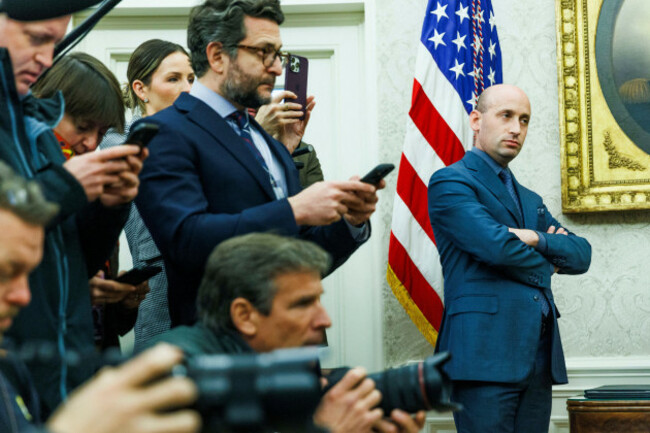
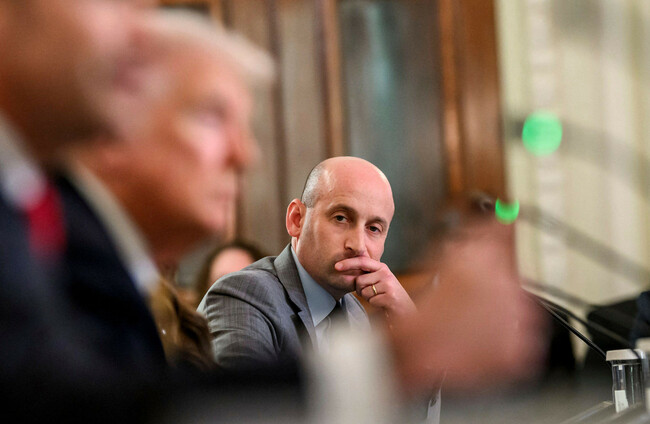
Stephen Miller is Donald Trump’s deputy chief of staff for policy. This in-depth piece looks at the extent of his power in the White House.
(The Atlantic, approx 21 mins reading time)
Along with Secretary of State Marco Rubio, Miller was the chief force behind Trump’s decision to capture the Venezuelan strongman Nicolás Maduro. “We are a superpower, and under President Trump, we are going to conduct ourselves as a superpower,” Miller told CNN’s Jake Tapper on Monday, articulating a worldview that started with the fear of immigration but has gradually expanded to a broader national-security and rule-of-law argument. (In this Darwinian vein, Miller also declared that the U.S. military could seize Greenland without a fight, echoing a social-media post that his wife, Katie Miller, had made two days earlier, showing an American flag superimposed on a map of the icy landmass alongside the word: SOON. NATO leaders have nervously affirmed Denmark’s claim to the territory.)
Miller’s official titles—he is also the director of the interagency Homeland Security Council—understate the full sweep of his purview. Steve Bannon, a former Trump adviser and a Miller ally, describes him as Trump’s “prime minister.” Miller has a role in nearly every area about which he cares deeply: immigration and border security, yes, but also national security, foreign policy, trade, military action, and policing. He may draft a flurry of executive orders one day, lead a meeting on lowering domestic beef prices the next, and travel to deliver a fiery speech of his own—think Trump at his angriest and most dystopian, without any of the president’s impish humor—the following week. (Miller declined to comment for this story.)
Another great piece from C.J. Chivers, reported over the course of 18 months and multiple trips to Ukraine, on the scary new weapons being developed and used there: AI-enhanced drones.
(The New York Times, approx 47 mins reading time)
As a safeguard against A.I.-powered weapons slipping the leash, humanitarians and many technologists have long advocated keeping “humans in the loop,” shorthand for preventing weapons from making homicidal decisions alone. By this thinking, a trained human must assess and approve all targets, as Lipa and Bober did, ideally with the power to abort an individual strike and a kill switch to shut an entire system down. Strong guardrails, the argument goes, are necessary for accountability, compliance with laws of armed conflict, legitimacy around military action and, ultimately, for human security.
Schmidt has emphasized the necessity of human oversight. But at the end of a flight, some semiautonomous weapons in Ukraine can already identify targets without human involvement, and many Ukrainian-made systems with human override are inexpensive and could be copied and modified by talented coders anywhere. Some of those designing A.I.-enhanced weapons, who consider their development necessary for Ukraine’s defense, confess to unease about the technology that they themselves conjure to form. “I think we created the monster,” said Nazar Bigun, a young physicist writing terminal-attack software. “And I’m not sure where it’s going to go.”

The Irish actress speaks about growing up in Kerry, getting her break on a reality TV show to find the next Nancy for the musical Oliver and being tipped for an Oscar for her performance in the much talked-about.
(British Vogue, approx 28 mins reading time)
Long before shooting began, Buckley borrowed a prosthetic belly from production just “to feel the weight of it”, wearing it to potter round the garden we’re wandering through. Her husband, she tells me with a laugh, “would be like, ‘My wife is insane? She’s insane!’” – though he’s cutting an endearingly eccentric figure himself today, trimming the grass with the baby strapped to his chest. Counterintuitively, or not, she credits playing Agnes with inducing her to become a mother; embodying someone who’d lost a child, she tells me, tapped a “deep need” in her to “find” her own. Filming wrapped in September 2024; a few days later, Buckley was pregnant. She watched the final edit a month from her due date, then brought her daughter in to see it as a newborn, “my first time out of the house”. Another particularly notable press screening: the one in New York City, where “everybody was crying so much that by the end the security guard left and went to the local CVS and just bought loads of packets of tissues”.
For decades, a team of scientists have dedicated themselves to tracking down the DNA of the Renaissance polymath. In this intriguing piece, Richard Stone writes about how they finally think they’ve found it.
(Science, approx 19 mins reading time)
One possibility stems from an 1863 excavation at Amboise by novelist and impresario Arsène Houssaye, who found a skull he thought was Leonardo’s and a lock of whitish blond hair that he speculated came from Leonardo’s beard. The lock vanished for decades, then resurfaced in 2019, when a private collector allowed it to go on display at the Museo Ideale Leonardo da Vinci. LDVP plans to radiocarbon date a single strand; if it is the right age, Ausubel says, “then it may make sense to sacrifice another [strand] to get DNA.” One big advantage of prizing ancient DNA from a hair is that its surface can be scrubbed of contaminating DNA from other sources, adds LDVP member Rhonda Roby, a forensic biologist with the Alameda County Sheriff’s Office who helped verify the remains of Tsar Nicholas II.
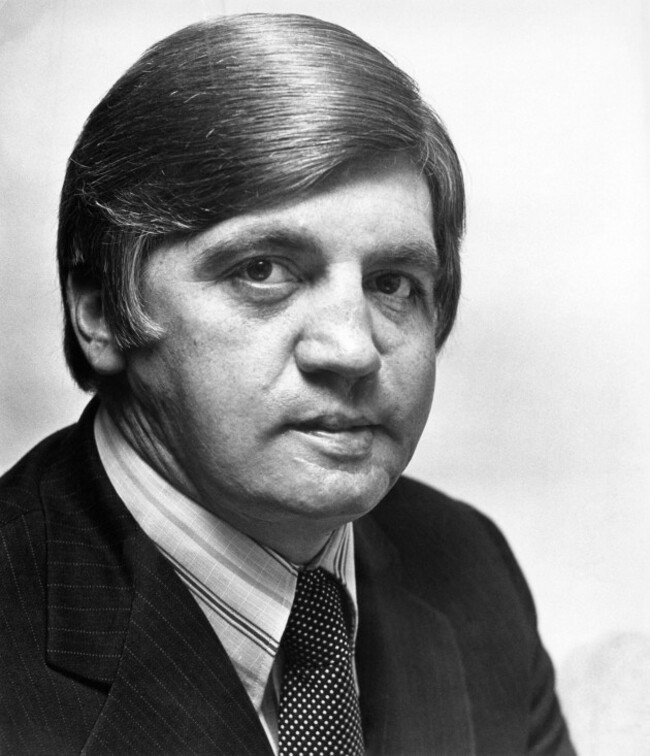
When his wife was killed, this famous tough-guy sheriff from Tennessee’s story was adapted into the 1973 film Walking Tall. But last year, he became the prime suspect in her murder. Was his heroic crime fighter story all a lie?
(Rolling Stone, approx 23 mins reading time)
When Pauline met Pusser, he was just 21 to her 28. He liked her as well as her children, which was more than her first husband ever had. They married on Dec. 5, 1959. A week later, for reasons that remain murky and are depicted quite differently in Walking Tall, Pusser and two pals decided to travel back to Adamsville, an eight-hour trip on a good day, and ended up at the Plantation Club, where they got into a fight with the owner, W.O. Hathcock. Later, Pusser said it was revenge for the attack two years earlier; Hathcock, who swore out an assault and attempted-murder complaint, claimed Pusser and his friends were out to rob him. The trio were acquitted in a jury trial thanks to multiple witnesses, including Pauline, swearing he was out of state at the time.
Katie Gatens speaks to residents in the territory’s capital about Donald Trump’s threats to take over the island, and whether it might bring them independence.
(The Times, approx 10 mins reading time)
Last week the White House called the acquisition of Greenland a “national security priority”, citing Russian and Chinese threats in the Arctic, adding that “utilising the US military is always an option at the commander-in-chief’s disposal”. Despite a 1951 treaty allowing US military bases on the territory, Trump told The New York Times last week that ownership of Greenland was “psychologically needed for success”. Then, on Friday, during a meeting with oil executives, Trump said: “We’re doing Greenland the easy way or the hard way.” Many Greenlanders have been left feeling powerless and frightened. “It’s out of our control. That’s the difficult thing,” said Heilmann. She said she had been having tough conversations with her two young children, who have seen Trump’s comments on TikTok. Walking her Finnish lapdog puppy in the snow in Nuuk, Fiona Ostermann, 20, said that she and her parents, who were born in the capital, were seriously considering leaving for Denmark or Finland. “Somewhere [Trump] can’t occupy,” she said, because “he talks about buying us and that’s quite scary”.

Yesterday marked ten years since David Bowie died. Here’s a longread about the character that made him famous.
(Rolling Stone, approx 35 mins reading time)
He had been singing and playing rock & roll since 1962, and making quaint and eccentric albums since 1967, to little attention. His progress had proved so fitful that he wondered if he wanted to continue with it. He saw himself, he said, as an actor; he wanted to use his face and body, his voice and songs to play roles, outlandish ones. Then, in 1971, he realized he could combine it all — music and theater — into one character: Ziggy Stardust, an otherworldly being who came to Earth to save it, but instead found rock & roll; who sang about change and pain, and played the music better than anybody; whose vanity soared out of range, and who had the charisma to fuck anybody he desired, woman or man; and whose aspirations delivered him to ruin, his best purposes unfinished. That character had made David Bowie famous, and it formed an audience and community around his singularity.

To embed this post, copy the code below on your site











have your say