Sign in. It’s quick, free and it’s up to you.
An account is an optional way to support the work we do. Find out more.
Sign in. It’s quick, free and it’s up to you.
An account is an optional way to support the work we do. Find out more.
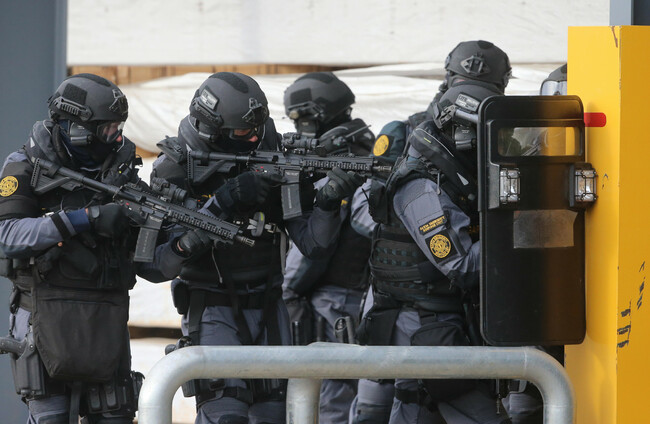
IRELAND’S SECURITY LEGISLATION is outdated in a number of ways, and it should be amended in order to ensure the safety of the State and to protect the human rights of citizens, a former High Court judge has said.
George Birmingham, the Independent Examiner of Security Legislation, has warned that the shifting nature of security threats facing Ireland and developments in modern communication technology make it necessary to amend existing legislation.
Some of the legislation covered in the report is already due to be changed since the government agreed to strengthen surveillance and interception capabilities in January of this year, which Justice Minister Jim O’Callaghan said was “long overdue”.
Those threats, Birmingham noted in his first annual report since his office was established in April last year, include Islamic terrorism, right- and left-wing terrorism, “single issue terrorism” and “lone wolf” attackers.
“The threat the country faces has evolved and broadened in recent years,” Birmingham wrote in his commentary on the annual report.
He said that for most of the history of the State, security concerns and the legislation used to address them primarily focussed on the IRA and its offshoots, but now “the threats are multipronged”.
“Islamist terrorism is a significant cause of concern,” he said, noting that such terrorist activity may occur within Irish jurisdiction or be planned and carried out from within Ireland against targets in the UK.
With this list of threats in mind, as well as advancements in communication technology, Birmingham was tasked with examining three pieces of legislation annually.
Those laws are the Interception of Postal Packets and Telecommunications Messages (Regulation) Act 1993, the Criminal Justice (Surveillance) Act 2009 and the Communications (Retention of Data) Act 2011.
All three set out the limitations placed on gardaí and other agents of the State when it comes to surveillance.
While stressing the need for a balance to be struck between the need to counter criminal and terrorist activity and the right to privacy of citizens, Birmingham has laid out a number of areas in which the legislation is lacking and made recommendations about how to fill in those gaps.
When it comes to intercepting communications, the examiner noted that the existing legislation does not account for the existence of digital communications like WhatsApp messages. He recommended amending the law to include them.
He also recommended the law provide for “lawful access to all communications, including encrypted communications, incorporating appropriate safeguards”.
Birmingham also said the process for acquiring permission to intercept communications is currently too complicated, and recommended the government “examine potential models for prior judicial authorisation of interception applications”.
Similarly, he recommended the process for gardaí getting authorisation for surveillance and the use of tracking devices be simplified and sped up.
Regarding the Retention of Data Act, Birmingham said the legislation should make specific reference to the Police Ombudsman, which it currently does not.
“If the view is taken, as I think is in fact the case, that the Police Ombudsman should have the same powers available to her in this area as those that are available to An Garda Síochána, that should be specifically and directly provided for by statute,” he said.
Another issue Birmingham found with the law is the one-year time limit on the retention of data by communications companies, although he noted that there is likely very little the government could do because of EU regulations.
Along with his recommendations, Birmingham noted early in his comments the need to ensure the protection of people’s rights.
“There can be legitimate concern whether overreach is possible and whether legislation sufficiently addresses matters in relation to the safeguarding of human rights and civil liberties,” he said.
“A failure to have sufficient regard for human rights and civil liberties concerns may mean that the legislation is less effective than intended and ultimately may leave Ireland a less safe, less secure and less free, tolerant and democratic State.”

To embed this post, copy the code below on your site
















have your say