We need your help now

Support from readers like you keeps The Journal open.

You are visiting us because we have something you value. Independent, unbiased news that tells the truth. Advertising revenue goes some way to support our mission, but this year it has not been enough.

If you've seen value in our reporting, please contribute what you can, so we can continue to produce accurate and meaningful journalism. For everyone who needs it.

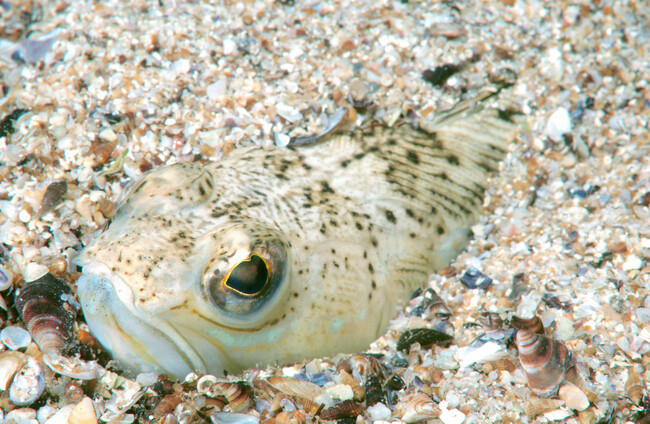
The weever fish (pictured) lurks in sandy areas of shallow waters with only its fin visible. Alamy Stock Photo

Woman burns hands trying to remove poison after sting from venomous fish in Co Donegal

The woman was stung by a weever fish while bathing at Linsfort Beach in Buncrana.

A WOMAN IN Co Donegal burned her hand while trying to remove a poisonous sting she received from a weever fish.

She said she was left in excruciating pain after being stung by the tiny fish while bathing at Linsfort Beach in Buncrana.

Earlier in the summer, warnings were issued about the venomous fish, which can be found buried in sand around the Irish coastline.

The weever fish lurks in sandy areas of shallow waters with only its fin visible, and gives a painful sting to unsuspecting swimmers and walkers who cross its path.

The woman who was stung contacted her local county councillor asking him to issue a warning to local bathers in the area.

She also included this picture of her toe following the painful experience.
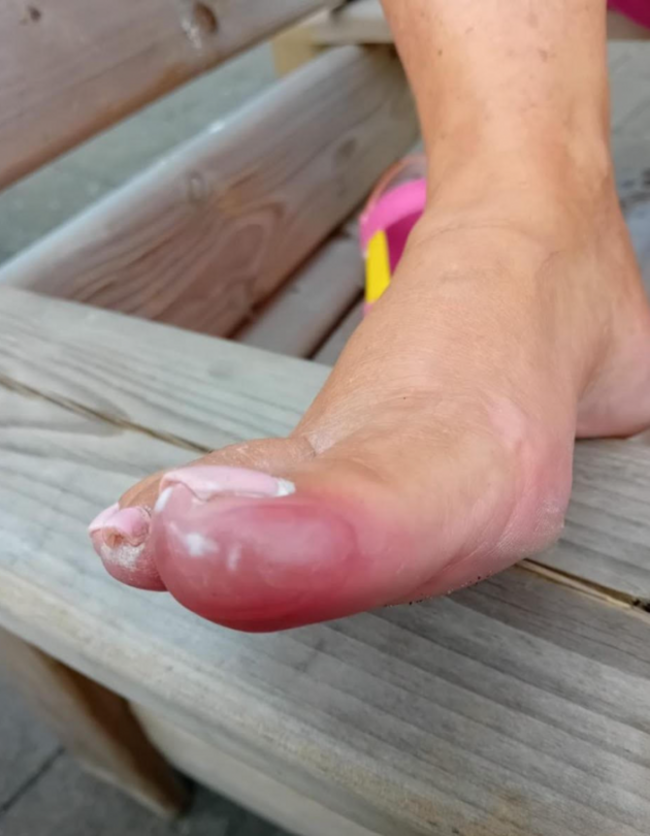
Screenshot 2025-08-29 111227 The woman's foot after she was stung by a weever fish. Stephen Maguire Stephen Maguire

Donegal County Councillor Jack Murray issued a statement on social media warning people to take care.

“This lady advises that the poison was so strong that she burned her hands removing the sting. Enjoy the beaches, but take care,” said Cllr Murray.

There has been a spate of such stings across coastal counties in recent weeks.

It has led to the National Poisons Information Centre issuing guidelines warning people how to react if they are stung by weever fish.

Unlike most fish, weever fish have no swim bladder, meaning that they sink to the bottom as soon as they stop swimming.

They are difficult to see because they spend most of their time buried under the sand, but they have sharp spines containing venom on their dorsal fin.

Standing on a weever fish results in immediate intense, burning pain with the most intense pain coming in the first two hours and can result in swelling, numbness and warmth.

The NPIC has issued a list of guidelines for people to follow if they are stung by the tiny pest:

  • Seek assistance from a lifeguard, if available,
  • Submerge the affected limb or wound in hot water, as hot as can be tolerated for up to 90 minutes or until pain is easing,
  • As the sting can result in numbness, immerse the unaffected limb too, as this may prevent inadvertent scalding,
  • Cold applications may worsen the discomfort,
  • Paracetamol can be considered to relieve pain. Care should be taken when pain relief is given that thermal burns do not occur due to the effects of the pain-killer masking the temperature of the water used,
  • The puncture site should be examined and embedded spines removed,
  • Seek medical attention from a doctor as a tetanus and/or antibiotics may be required,
  • Call the NPIC on 01 8092166 if you stand on a weever fish.

Readers like you are keeping these stories free for everyone...
A mix of advertising and supporting contributions helps keep paywalls away from valuable information like this article. Over 5,000 readers like you have already stepped up and support us with a monthly payment or a once-off donation.

View 27 comments
Close
27 Comments
This is YOUR comments community. Stay civil, stay constructive, stay on topic. Please familiarise yourself with our comments policy here before taking part.
Leave a Comment
    Submit a report
    Please help us understand how this comment violates our community guidelines.
    Thank you for the feedback
    Your feedback has been sent to our team for review.

    Leave a commentcancel

     
    JournalTv
    News in 60 seconds