Sign in. It’s quick, free and it’s up to you.
An account is an optional way to support the work we do. Find out more.
Sign in. It’s quick, free and it’s up to you.
An account is an optional way to support the work we do. Find out more.
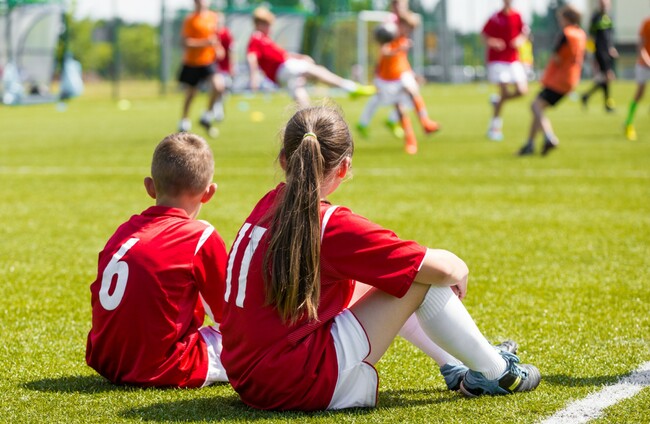
IRISH RESEARCHERS ARE teaming up with the GAA in the largest ever research project to tackle issues with young people’s physical health.
In 2014, a Dublin City University (DCU) study found that 89% of adolescents in Ireland have not mastered fundamental movement skills they should have mastered by the age of six – such as running, skipping and kicking a ball.
Researchers from the Insight Centre for Data Analytics and DCU’s School of Health and Human Performance are joining forces with the GAA and the Dublin GAA to find a solution to the problem.
The Moving Well – Being Well project will test the physical ability of 3,000 primary school students in the next three months across the island of Ireland.
Researchers will then create a plan to be adopted by schools and delivered by DCU and Insight researchers, as well as Games Promotion Officers from the GAA from September onwards.
Training sessions are currently underway with the Games Promotion Officers and it is hoped teachers will also be trained in the future. After the plan has been implemented, students will be retested to see how it’s working.
‘A potential catastrophe for public health’
Dr Johann Issartel of Dublin City University’s School of Health and Human Performance said the results of the 2014 study were “an unprecedented low”.
It’s a potential catastrophe for public health because the inability to perform fundamental Movement Skills leads to an aversion to sports and exercise later in life.
Pat Daly, the GAA’s Director of Games Development and Research, said: “I don’t think we need to be alarmist here but there is a problem and this project aims to tackle it in the most child-centred, activity-based, learner-led, achievement-oriented, fun-filled and value-laden manner possible.”
Professor Noel O’Connor of the Insight Centre added: “This is the largest project of its kind anywhere in the world … We will be assessing 3,000 children and with novel interventions, we will potentially reach 130,000 by the end of the project.”

To embed this post, copy the code below on your site












have your say