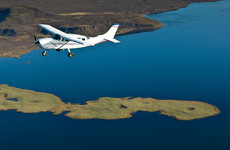
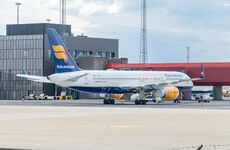
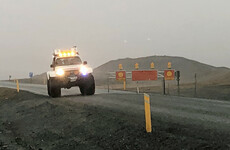
The airline said that it safely flew a test plane through a ‘red zone’ for volcanic ash yesterday and incurred no damage – however experts have said the plane never entered a danger zone.
Eurocontrol says that about 500 European flights were cancelled today as a result of the ash cloud, but disruptions to flights in UK air space are expected to have ended by tomorrow.
Ryanair has expressed its displeasure with the disruption, believing it to be unnecessary. The IAA has said that all Irish airports remain open and added that it will update the situation later today.
President Obama won’t be the only one inconvenienced by ash from the Grimsvotn volcano, however IAA says it still doesn’t expect any disruptions to air travel in Irish space in the next 24 hours.
Met Éireann says it is monitoring the situation, but the IAA is not expecting any disruptions to flights in Irish air space over the next 24 hours. The EU has confirmed that the ash looks likely to enter British and Irish airspace shortly.
History shows that previous eruptions in Grimsvotn have not had much influence on flight traffic — unlike the massive disruption caused last year by Eyjafjallajokull.
In todays Fix: Poland remembers the victims of last year’s plane crash in western Russia; an Oxford academic cancels his book launch in NUI Maynooth over Lucinda Creighton’s “anti-Turkish and anti-gay” comments; and we hear Obama’s first campaign song. Maybe.
The British and Dutch governments are preparing to sue Iceland after the country’s electorate rejected a second proposal to repay billions of euro of lost deposits.
Nine things you need to know by 9am: It’s census day today so every household must fill out their forms; Barack Obama could be set to line out at Croke Park; a new poll finds support for the coalition; and Gay Byrne will be back on our screens every Friday.
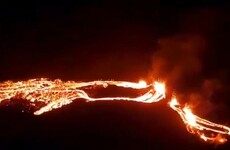
OFFICIALS ON VOLCANIC watch in Iceland have said that meltwater is flooding from a glacial lake there – this could indicated that the volcano underneath is about to erupt.

Reuters is reporting that Iceland’s Civil Protection Department spokeswoman Gudrun Johannesdottir says water is pouring from Iceland’s biggest glacier, Vatnajokull. It lies about 100km from Eyjafjallajokull, the volcano which erupted in April, grounding thousands of flights across Europe because of fears of volcanic ash interfering with airplane engine systems.

Vatnajokull glacier lies on a number of volcanic “hotspots” and the Civil Protection Department fears that the floodwater could signal an increase in geological activity below the surface.
ICELAND HAS begun talks with the European Union concerning its possible accession.
Belgium’s foreign minister and President-in-office of the Council, Steven Vanackere, said that it is “confident that Iceland has the capacity, has the determination and the commitment” to become a member of the European Union.
However he added that serious efforts will be required on Iceland’s part before the country will meet accession criteria – particularly in the areas of fisheries, agriculture, rural development, environment, free movement of capital and financial services.
Issues like whale hunting and the collapse of Icelandic bank Icesave are likely to be the most difficult points of negotiations.
Fisheries
Up until relatively recently, Iceland was a rural nation. Industries like agriculture and fisheries are still closely guarded, local enterprises. However, this does mean that food prices are expensive which is one reason for potential domestic support for EU accession.
From Ireland’s point of view, Iceland’s fishing industry is a significant issue. Irish fishermen particularly depend on mackerel fishing as a source of income but their quota is about half that of Iceland’s (which has a population of just 308,910), which Ireland complains is unfair.
Following failed talks on the issue in early 2010, the Irish Minister of Agriculture, Fisheries and Food, Sean Connick, wrote to the European Commission to complain that Iceland’s fishing habits threaten mackerel stock and encourage the Faroe islands to overfish.
Financial services
The Icelandic bank Icesaver failed in the wake global financial crisis, resulting in many British and Dutch investors losing their deposits. Reykjavik has been found to be legally responsible for the loss by European trade authority and ordered to pay back €3.8bn, which is – unsurprisingly – extremely unpopular with Icelandic voters.
Iceland has been told that it will not be able to enter the EU without resolving the issue.
The Icelandic whaling industry is also a point of contention. Iceland’s application will not be likely to be accepted unless they stop hunting whales.
AT A HIGH-profile US Senate meeting, technology giant Apple was accused of using Ireland as a ‘tax haven’.
The multinational firm, which employs 4,000 people in Ireland, reportedly avoided paying €34 billion in US taxes by negotiating a tax rate of less than 2 per cent with the Irish government – significantly lower than that nation’s 12.5 per cent statutory rate.
The Senate heard that American children are losing out on education because Apple is transferring profits to Irish subsidiaries.
However, the Taoiseach Enda Kenny has denied that Ireland is a tax haven and rejected claims that authorities had negotiated deals with multi-national companies.
So, today we want to know, what do you think? Should Ireland be tougher on multi-national companies when it comes to tax?