Sign in. It’s quick, free and it’s up to you.
An account is an optional way to support the work we do. Find out more.
Sign in. It’s quick, free and it’s up to you.
An account is an optional way to support the work we do. Find out more.
A PREVIOUSLY UNKNOWN species of meat-eating dinosaur from 80 million years ago has been unearthed in Argentina.
The fossil found in Patagonia — an area rich in bone discoveries from the late Cretaceous period — is named Murusraptor barrosaensis, according to the study in the open-access journal PLOS ONE.
It may reveal more about the origins of the group known as the megaraptorids, the dinosaur family known as the Giant Thieves, researchers have said.
These dinosaurs walked on two legs, bore large sickle-shaped toe claws and were fast, agile and smart.
They also had voracious appetites, which led to the nickname “giant thief”.
Beautifully preserved
Lead researcher Rodolfo Coria said:
A new meat-eating dinosaur, Murusraptor barrosaensis, has been discovered from 80 million year old rocks from Patagonia, Argentina.
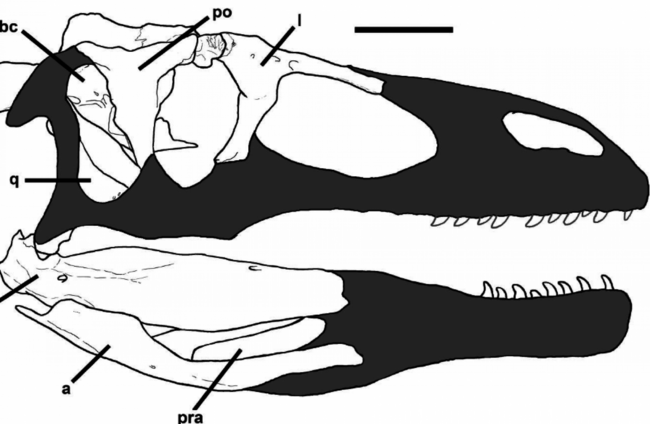
“Although incomplete, the beautifully preserved bones of Murusraptor unveil unknown information about the skeletal anatomy of megaraptors, a highly specialised group of Mesozoic predators.”
Some members of the family have been found in Australia and Japan, but this represents a new species.
Other well known megaraptorids include the Megaraptor, Orkoraptor, and Aerosteon.
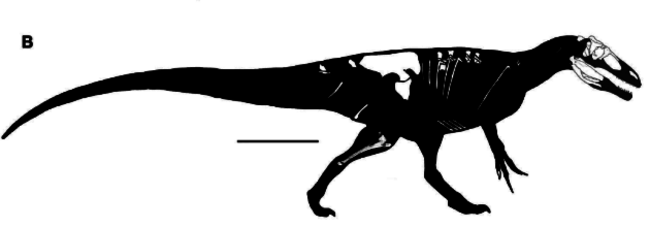
The specimen appears to be immature, but the authors suggest that the species is larger and more slender than Megaraptor and comparable in size with Aerosteon and Orkoraptor.
Braincase
It represents one of the most complete megaraptorids found, with an unusually intact braincase.
This fossilised partial skeleton was discovered in Sierra Barrosa, in northwest Patagonia.
Researchers said:
It is one of the most complete megaraptorids found, with an unusually intact brain case.
The dinosaur appears to have been a juvenile, but may have grown “larger and slenderer than Megaraptor and comparable in size with Aerosteon and Orkoraptor”.
The lead researchers are Rodolfo Coria from the Consejo Nacional de Investigaciones Cientificas y Tecnicas, Argentina, and Phillip Currie from the University of Alberta in Canada.

To embed this post, copy the code below on your site














have your say