Sign in. It’s quick, free and it’s up to you.
An account is an optional way to support the work we do. Find out more.
Sign in. It’s quick, free and it’s up to you.
An account is an optional way to support the work we do. Find out more.

EVERYONE’S PATH TO success is different.
For some, it can be straight forward enough but others encounter more twists, turns, and bumps along the way.
Billionaire Mark Cuban, for example, faced hardship when he first started. When Cuban got to Dallas, he “was struggling — sleeping on the floor with six guys in a three-bedroom apartment,” he wrote in ”How To Win At The Sport Of Business.” On the other hand, Starbucks CEO Howard Schultz was a salesman dreaming of good coffee.
To prove that no two paths to success are the same, we’ve highlighted what Cuban, Schultz, and 8 other successful people were doing at age 25…
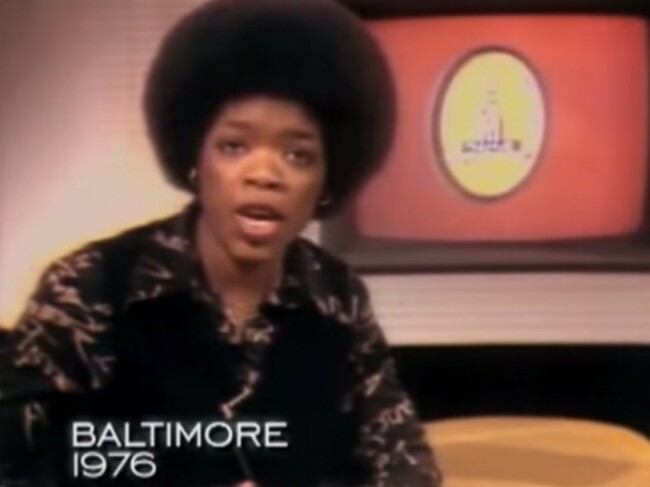
According to the Huffington Post, Winfrey was fired from the 6 p.m. news slot at Baltimore’s WJZ-TV in 1977 at age 23.
In 1978, a 24-year-old Winfrey was recruited to co-host WJZ’s local talk show ”People Are Talking.” While there, she also hosted the local version of “Dialing for Dollars.”
Winfrey remained in Baltimore throughout her mid- and late-20s, until moving to Chicago in 1983 to host “A.M. Chicago” for WLS-TV.

At age 20, Branson opened his first record shop, then a studio at 22, and launched the label at 23. By 30, his company was international.
Those early years were tough, he told Entrepreneur: “I remember them vividly. It’s far more difficult being a small-business owner starting a business than it is for me with thousands of people working for us and 400 companies. Building a business from scratch is 24 hours, 7 days a week, divorces. It’s difficult to hold your family life together; it’s bloody hard work and only one word really matters — and that’s surviving.”

After graduating from the University of Virginia, Fey moved to Chicago and hung around acting workshops and even worked as the childcare registrar at a YMCA before improv troupe Second City invited her to join.
Fey told The New Yorker that she joined Second City because she “knew it was where a lot of SNL people started,” and in 1997 she sent scripts to “Saturday Night Live” producer Lorne Michaels, who then hired her as a writer.
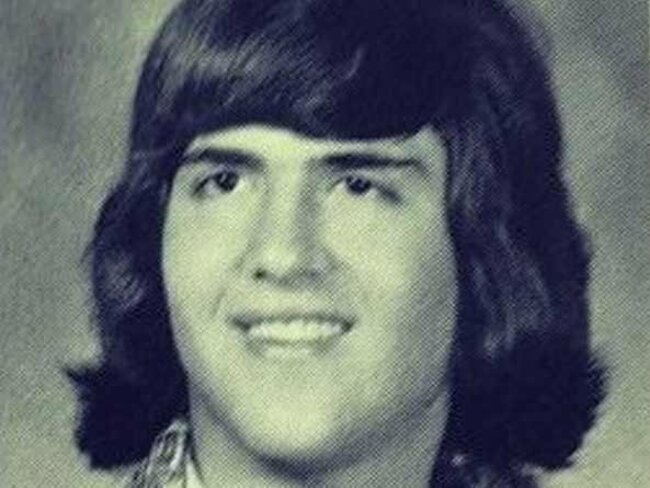
At age 25, Cuban had graduated from Indiana University and had moved to Dallas. He started out as a bartender and then a salesperson for a PC software retailer. He got fired because he wanted to go close a deal rather than open a store in the morning. That helped inspire him to open his first business, MicroSolutions.
“When I got to Dallas, I was struggling — sleeping on the floor with six guys in a three-bedroom apartment,” Cuban writes in his book ”How to Win at the Sport of Business.” “I used to drive around, look at the big houses, and imagine what it would be like to live there and use that as motivation.”

Rowling was 25 years old when she came up with the idea for Harry Potter during a delayed four-hour train ride in 1990.
She started writing the first book that evening, but it took her years to actually finish it. While working as a secretary for the London office of Amnesty International, Rowling was fired for daydreaming too much about Harry Potter, and her severance check would help her focus on writing for the next few years.
During these years, she got married, had a daughter, got divorced, and was diagnosed with clinical depression before finally finishing the book in 1995. It was published in 1997.
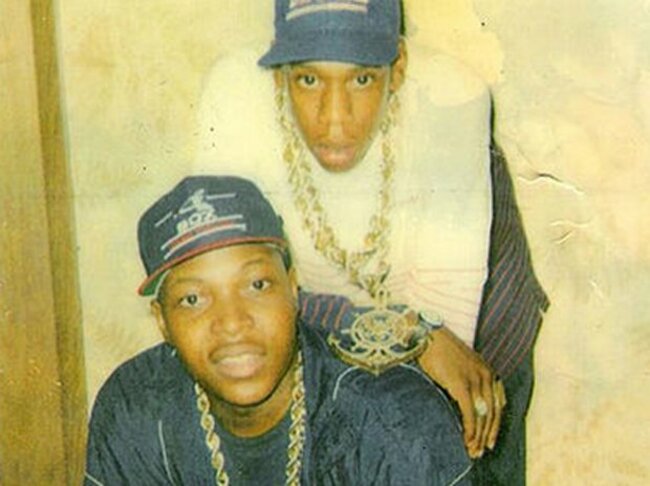
Born Shawn Carter, Jay Z grew up in a housing project in Brooklyn, New York, and became known as “Jay Z” at the age of 20. For the next few years he appeared alongside various other rappers, but “remained relatively anonymous” until he founded the record label Roc-A-Fella Records at the age of 27 with two other friends. The same year, Jay Z released his first album, “Reasonable Doubt.”
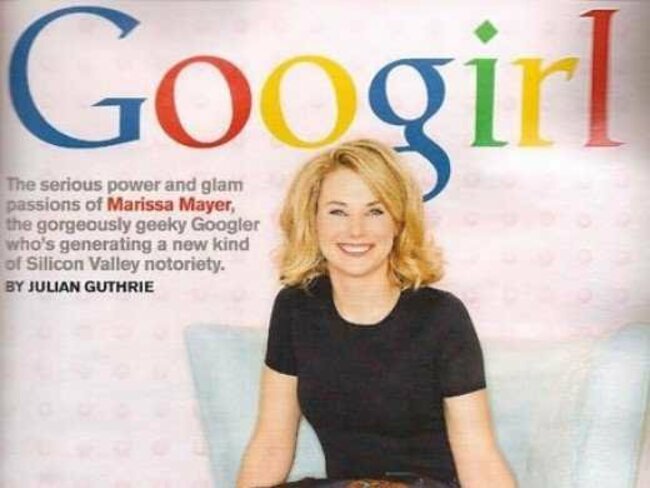
At 24, Mayer became employee No. 20 at Google and the company’s first female engineer. She remained with the company for 13 years before moving on to her current role as CEO of Yahoo.
Google didn’t have the sorts of lavish campuses it does now, Mayer said in an interview with VMakers, “During my interviews, which were in April of 1999, Google was a seven-person company. I arrived and I was interviewed at a ping pong table which was also the company’s conference table, and it was right when they were pitching for venture capitalist money, so actually after my interview Larry and Sergey left and took the entire office with them.”
Since everyone in the office interviewed you in those days, Mayer had to come back the next day for another round.

Zuckerberg had been hard at work on Facebook for five years by the time he hit age 25. In that year — 2009 — the company turned cash positive for the first time and hit 300 million users. He was excited at the time, but said it was just the start, writing on Facebook that “the way we think about this is that we’re just getting started on our goal of connecting everyone.”
The next year, he was named “Person of the Year” by Time magazine.
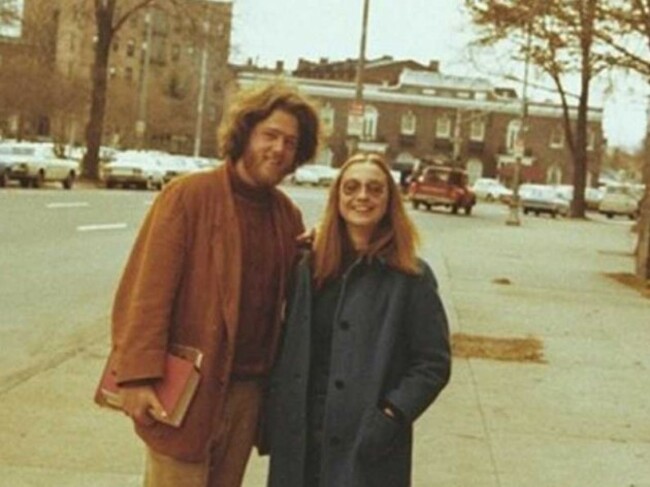
At age 23, Hilary Rodham Clinton began dating fellow Yale Law student Bill Clinton. She ended up staying at school an extra year to be with her boyfriend, and received a JD degree in 1973, just before turning 25. Clinton proposed marriage after graduation, but she declined.
That same year, she began working at the Yale Child Study Center. Her first scholarly article, “Children Under the Law,” was published in the Harvard Educational Review in late 1973, when she was 25.
After moving to Arkansas in 1975, Hilary finally agreed to marry Bill.
She’d go on to become the First Lady of Arkansas, The First Lady of the US, a US Senator, and US Secretary of State.
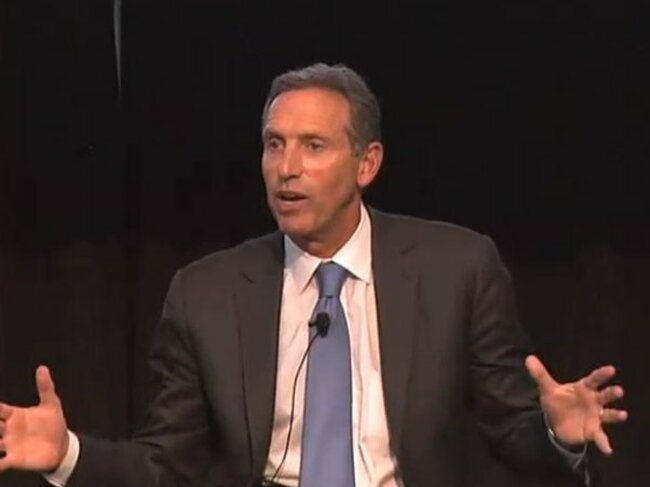
After graduating from Northern Michigan University, Schultz worked as a salesman for Xerox. His success there led a Swedish company named Hammerplast that made coffeemakers to recruit him at age 26.
While working for that company, he encountered the first Starbucks outlets in Seattle, and went on to join the company at age 29.
On his job in Xerox, Schultz writes in “Pour Your Heart Into It”: “I learned more there than in college about the worlds of work and business. They trained me in sales, marketing, and presentation skills, and I walked out with a healthy sense of self-esteem. Xerox was a blue-chip pedigree company, and I got a lot of respect when I told others who my employer was … But I can’t say I ever developed a passion for word processors.”
And there you have it folks. There’s hope for us all.
– Jacquelyn Smith

To embed this post, copy the code below on your site















have your say