Sign in. It’s quick, free and it’s up to you.
An account is an optional way to support the work we do. Find out more.
Sign in. It’s quick, free and it’s up to you.
An account is an optional way to support the work we do. Find out more.
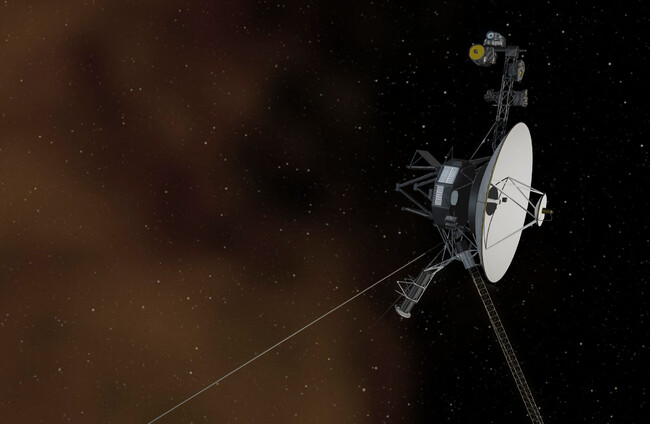
NASA’S VOYAGER 1 probe, which has been travelling through space for nearly 50 years, has hit a milestone distance of one light-day away from Earth.
Already the most distant man-made object in the universe, the spacecraft is now about 26 billion kilometres away, according to the US space agency.
That is the distance a particle of light can travel in 24 hours.
For reference, the Sun is about eight light-minutes and 20 seconds (roughly 500 seconds) away from Earth.
Nov. 18, 2026, 5:16am EST The Voyager 1 spacecraft has reached a distance of one light-day from Earth.
— NASA Solar System (@NASASolarSystem) November 18, 2026
The historic feat is “the best illustration of just how vast space is,” said Tiffany Kataria from Nasa.
“So much of what we dream about is travelling to other stellar systems,” she told AFP.
“And it took Voyager 1 nearly 50 years to get to just the edge of our own solar system, let alone to only a light-day.”
She pointed out that many exoplanetary systems, in comparison, are at least several light-years away.
Launched in 1977, Voyager 1 and its twin Voyager 2 are the only spacecraft to have reached interstellar space – the region beyond our solar system, which they continue to explore.
Messages sent from Earth take about 24 hours to reach Voyager 1 and just as long for teams on the ground to receive a response.
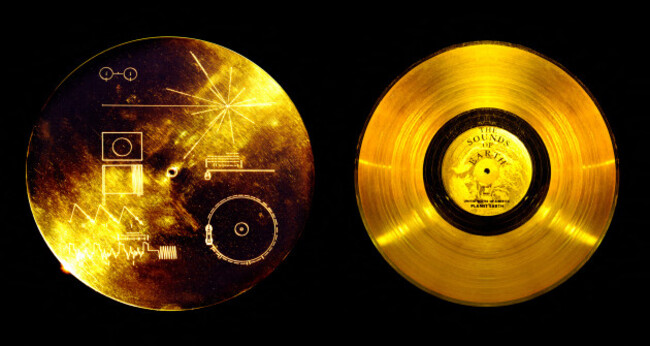
Both Voyager spacecraft carry “Golden Records” – 30-centimetre, gold-plated copper disks intended to convey the story of our world to extraterrestrials.
Some of Voyager 1′s equipment, such as cameras, has been remotely switched off to save power, but the probe continues to study invisible phenomena such as magnetic fields, Kataria said.
The data it collects allows researchers like her to study “the gas, the dust and other material that exists between stars, between our Sun and other stars”.
Voyagers 1 and 2 have previously explored the outer solar system, which contains the giant planets Jupiter, Saturn, Uranus and Neptune.
The @EmpireStateBldg was illuminated in gold to celebrate @NASA's Voyager 1 spacecraft as it is about to pass one light-day away from Earth, a distance reached by no other human-made object, Tuesday, Nov. 17, 2026, in New York City. The color gold is emblematic of the gold-plated copper phonograph record that is flying on Voyager. The record contains sounds and images selected to portray the diversity of life and culture on Earth. More Photos: https://t.co/XoR48bV1g5
— NASA HQ PHOTO (@nasahqphoto) November 18, 2026
Images of Jupiter taken by Voyager 1 first revealed the existence of rings around the gas giant and helped scientists understand the “really extreme vortices and weather that take place in the atmosphere”, Kataria said.
“You could find so many things that both of these spacecraft have really enabled in our understanding.”

To embed this post, copy the code below on your site














have your say