Sign in. It’s quick, free and it’s up to you.
An account is an optional way to support the work we do. Find out more.
Sign in. It’s quick, free and it’s up to you.
An account is an optional way to support the work we do. Find out more.
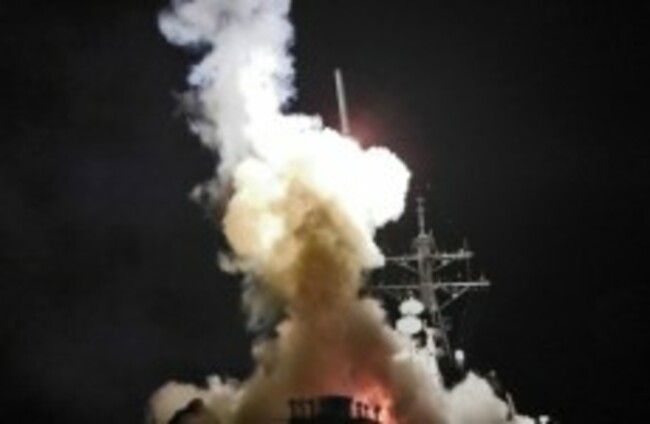
THE US, UK AND FRANCE HAVE begun bombarding Libya from the air and sea in the broadest international military action since the Iraq invasion.
World leaders met yesterday in Paris for an emergency summit on the situation in Libya after the UN Security Council voted on Friday to impose a no-fly zone over Libya.
The US military said 112 Tomahawk cruise missiles were fired from US and British ships and submarines at over 20 coastal targets to clear the way for air patrols to ground Libya’s air force. French and British jets carried out several strikes.
President Obama said military action was not his first choice and reiterated that he will not send ground troops to Libya.
Coalition forces said it was too early to gauge the impact of the strikes, but Libya’s air defences are thought to have been badly damaged.
Mohammed Ali, a spokesman for the exiled opposition group the Libyan Salvation Front, said the Libyan air force headquarters at the Mateiga air base in eastern Tripoli and the Aviation Academy in Misrata had been targeted.
Arms depots
Libyan state TV claimed 48 people died in the attacks and 150 others were wounded. Anti-aircraft guns could be heard firing overnight and thousands of Gaddafi supporters have gathered at the military camp in Tripoli where Gaddafi lives to reinforce the compound.
In a telephone interview with Libyan state TV, Gaddafi said he was opening weapons depots to allow people to arm and defend themselves. He called the international action “simply a colonial crusader aggression that may ignite another large-scale crusader war”.
NATO
NATO is due to decide today if its alliance will join in the strikes on Libya. NATO’s military planners are due to meet today before the organisation decides if it will join the coalition operation or provide logistical support to those taking part.
Several NATO government have indicated they would not participate in aerial attacks, pointing out that the alliance is already heavily engaged in Afghanistan.
- AP

To embed this post, copy the code below on your site












have your say