Sign in. It’s quick, free and it’s up to you.
An account is an optional way to support the work we do. Find out more.
Sign in. It’s quick, free and it’s up to you.
An account is an optional way to support the work we do. Find out more.
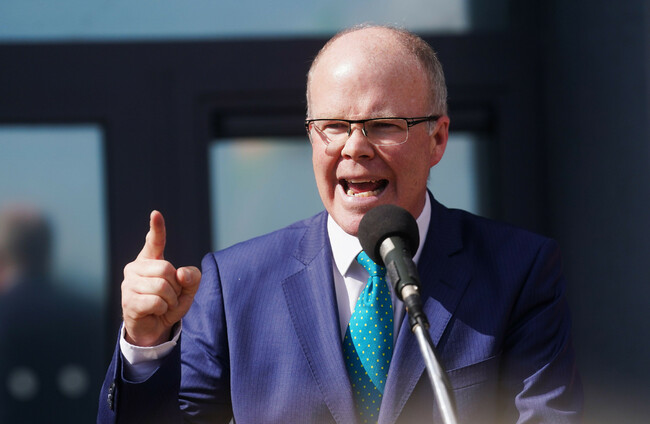
AONTÚ HAS SCRAPPED plans to bring forward a motion of no confidence in the government.
Earlier this week, Aontú leader Peadar Tóibín said he was bringing the motion against Tánaiste Simon Harris due to a “failed promise” on child spinal surgeries and overall “dysfunction” in Children’s Health Ireland.
Harris was health minister in 2017 when he pledged that no child would wait more than four months for scoliosis treatment.
Tóibín told reporters earlier this week that Harris “failed significantly in that promise and we have a situation where hundreds of children in that period of time have been forced to wait for far longer than those four months”.
Harris retained the confidence of the Dáil with 94 votes in favour, 65 against and one abstention in Wednesday’s vote.
Speaking in the Dáil on Wednesday, Tóibín said the government was being “incredibly cynical” in proposing the confidence motion, a sentiment echoed by Sinn Féin, the Labour Party, the Social Democrats and People Before Profit.
Sinn Féin leader Mary Lou McDonald criticised the “unprecedented move by government” to call a confidence motion without the formal receipt of a no-confidence motion.
Aontú had considered a broader no confidence motion in the wider Government, but today confirmed it would no longer proceed with that plan.
In a statement today, Aontú said it announced the original no-confidence motion “in order to bring as much pressure as possible on the government to do the right thing for children with scoliosis”.
“We believe we succeeded in achieving this,” added the Aontú statement.
The Aontú spokesperson noted that had the party brought a motion of no confidence against the government next week, it would not be able to table another such motion for six months.
“This would rob us of a key tool to pressure the government at a key juncture in the future,” said Aontú.
The party added that such motions “should be used sparingly” and be “timed to have maximum effect to achieve objectives”.
“Running two, one week after another would not achieve that objective,” said Aontú.
Aontú will instead use its time in the Dáil next week to put forward a motion seeking voting rights in presidential elections for Irish citizens in the North of Ireland and reform of the presidential nomination process.
The party said it wants to “relax the harsh threshold that currently exists for those who wish to get onto the ballot paper”.

To embed this post, copy the code below on your site














have your say