Sign in. It’s quick, free and it’s up to you.
An account is an optional way to support the work we do. Find out more.
Sign in. It’s quick, free and it’s up to you.
An account is an optional way to support the work we do. Find out more.

LAST UPDATE | 28 Dec 2021
GOOD MORNING.
Here’s all the news that you need to know as you start your day.
1. British officials were “apoplectic” about the granting of a US visa waiver to Gerry Adams in 1994 but subsequently accepted it was “beneficial”, Rónán Duffy writes in today’s lead story.
Newly released state papers from the period demonstrate London’s opposition to the proposed US visa to the Sinn Féin president, with an Irish government document indicating that British officials said there would be “hell to pay” if the visa was granted.
Secret government documents are released annually under the 30-year rule and sent to the National Archives, providing journalists and historians with a fresh glimpse into historical events.
This year, even more recent files up to 1998 are also being released to bring the National Archives up to date with material released by the Public Record Office of Northern Ireland.
2. Children aged five to 11 who are at high risk of severe illness from Covid-19, or live with someone high risk, can be registered for a vaccine from today.
Parents can register their children online – to register, you need a PPS number, an Eircode, a mobile phone number and an email address. Alternatively, parents can call HSELive on 1800 700 700 to register their child over the phone.
All other children will be invited to register in January.
3. New Year’s Eve parties were given the green light in England as ministers announced there will be no new coronavirus restrictions imposed before the end of 2021.
In a move welcomed by hospitality bosses, Health Secretary Sajid Javid announced there will be no curbs on social mixing beyond the current Plan B measures.
But the Cabinet minister, in a move that appeared to be echoed by the Prime Minister Boris Johnson, left the door open for fresh measures to be potentially introduced in January.
4. France has announced new measures in an effort to curb the spread of Covid-19, but stopped short of imposing drastic restrictions before New Year’s Eve.
Starting from next week, big events will be limited to 2,000 people indoors and 5,000 people outdoors. People will be requested to sit down during concerts and customers will not be allowed to stand up in bars, French Prime Minister Jean Castex said.
Eating and drinking will be banned in cinemas, theatres, sport facilities and public transportation, including on long-distance routes. Working from home will be mandatory at least three days per week for employees whose job makes it possible.
5. An “over-simplistic” narrative about the housing market in Ireland has exaggerated the involvement of institutional investors, the Taoiseach has said.
Micheál Martin said there would always be a role for private-sector investment in social housing provision but he insisted the primary driver remained the State.
Opposition parties have accused the Government of not doing enough to discourage wealthy investors from bulk-buying homes and leasing properties to local authorities for social homes.
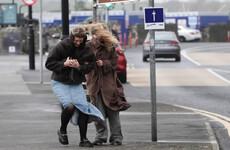
6. Ireland can expect more intense storms and wetter winters as global temperatures rise due to climate change, according to a meteorologist.
Overall, as greenhouse gas emissions push up the temperature of the planet, Ireland is gradually seeing hotter weather on average in all seasons, with winters likely to become warmer and wetter if the climate crisis is not mitigated.
A recent report on the latest climate science from the Intergovernmental Panel on Climate Change (IPCC) said that for Europe, rising global temperatures mean that cold spells and frost days will decrease, the intensity of hot weather extremes will increase, and sea levels (except in the Baltic Sea) will rise.
7. Taoiseach Charles Haughey told British Prime Minister John Major that Colonel Muammar Gaddafi “was mad”, as newly released documents reveal details of arms provided by Libya to the Provisional IRA.
State Papers released to the National Archives show that gardai estimated there were six major arms shipments and financial aid sent by Libya to the PIRA totalling $12 million.
The figure can be estimated at some €40 million in today’s money and was provided in contact Libya had with the PIRA in the 1970s and 1980s.
8. US health officials have cut isolation restrictions for Americans who catch Covid-19 from 10 days to five, and similarly shortened the time that close contacts need to quarantine.
Centers for Disease Control and Prevention (CDC) officials said the guidance is in keeping with growing evidence that people with coronavirus are most infectious in the two days before and three days after symptoms develop.
The decision was also driven by a recent surge in Covid-19 cases, propelled by the Omicron variant.
9. And finally, the weather.
As the last of the rain clears the east it will be a mostly dry day with sunny spells developing and just very isolated patches of light rain or drizzle, according to Met Éireann.
Cloud will increase in the south later this afternoon before rain pushes into the southwest during the evening. Highest temperatures will range from six to 10 degrees.

To embed this post, copy the code below on your site












have your say