Sign in. It’s quick, free and it’s up to you.
An account is an optional way to support the work we do. Find out more.
Sign in. It’s quick, free and it’s up to you.
An account is an optional way to support the work we do. Find out more.
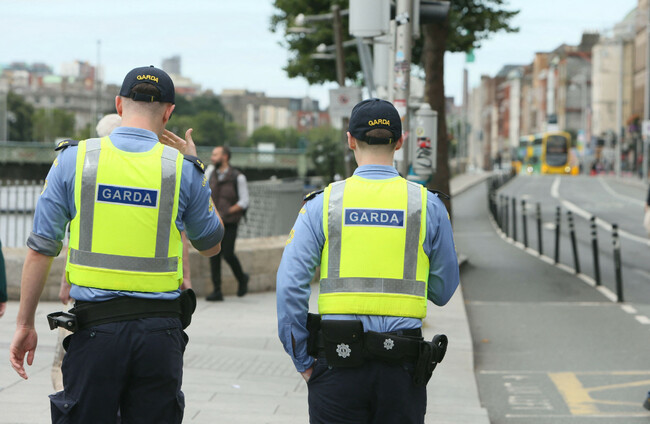
THERE IS No confidence in the power of senior garda management to arbitrarily suspend gardaí indefinitely, the group representing middle management in the force said.
The Association of Garda Sergeants and Inspectors (AGSI) annual conference begins today in Westport, Co Mayo.
Among the topics to be discussed by the delegates is that of suspensions and the need for independent oversight.
Ronan Clogher said that in light of events arising out of the National Bureau of Criminal Investigation (NBCI) probe in Limerick there is now a need for an independent mechanism as a check on long term suspensions for gardaí who are then subsequently cleared of any wrongdoing.
This week AGSI has said it has no confidence in the current suspension policies within An Garda Síochána and is calling for the urgent introduction of independent oversight for members suspended for prolonged periods.
Delegates will hear that Garda members are being left on suspension for extended and undefined periods, with investigations often taking years to conclude.
AGSI General Secretary, Ronan Clogher has called for an independent review mechanism for suspensions exceeding 12 months, warning that the current system is failing both members and the organisation.
“A system that leaves members suspended indefinitely, without clear timelines or independent oversight, is not a system that can command confidence,” said .
Recent high-profile cases relating to Fixed Charge Penalty Notices have again highlighted the issue of prolonged investigations and the absence of clear timelines.
A total of 11 gardaí in Limerick were subject of six year long suspensions awaiting the outcome of the NBCI investigation into the termination of penalty point offences for members of the public.
A total of 130 gardaí were questioned and their phones seized. Two of those gardaí were never charged but continued to be suspended.
Eight serving gardaí and one retired Superintendent were charged with offences of perverting the course of justice because they either made representations on behalf of members of the public to not proceed with traffic offence tickets or they were the gardaí who had stopped the driver and decided not to go ahead with the cases.
The trial of the four serving and one retired superintendent centred around whether gardaí had a power of discretion in the issuing of those tickets. They were acquitted by a jury after an eight-week hearing.
Last week the Director of Public Prosecutions directed that the case against a further three accused, two serving gardaí and one retired member should be withdrawn.
The Garda Representative Association, two solicitors for the gardaí, the Tánaiste Simon Harris and TDs Alan Kelly and Cathal Crowe have all called in the Dáil for a public inquiry. On Friday the Taoiseach Micheál Martin said he would prefer an internal garda probe to review how gardaí handled the garda investigation.
During the conference the AGSI will speak of a dysfunctional industrial relations (IR), the lack of collective bargaining rights for gardaí, policing the EU Presidency and the worsening impact of social media abuse on Gardaí.
Clogher said that the IR framework is “no longer functioning effectively, with long-standing issues remaining unresolved for years”.
He said that but AGSI and the GRA is progressing a joint complaint to European bodies, citing the failure of the State to implement findings of the European Committee of Social Rights dating back to 2013.
The delegates will also discuss the impact of the EU Presidency on garda resources, with AGSI President Declan Higgins declaring that it will cause “unprecedented demands” on the garda ability to police events and maintain a normal service.
“Crime will not stop for the EU Presidency, and our members are already stretched,” said AGSI President Declan Higgins.
The association is seeking assurances from both Government and Garda management that the organisation has the capacity to meet these demands without impacting day-to-day policing.
There will also be discussions on the impact of the housing crisis on its members, particularly those required to relocate for duty.
An increasing number of Gardaí are now reliant on Housing Assistance Payments (HAP). The AGSI said in a statement that the growing difficulty gardaí face in securing suitable accommodation means that it is now causing gardaí to leave.
The association is calling on the Government to examine the reintroduction of housing supports, similar to previous Garda estate practices, to ensure members can live and work in the communities they serve.
Separately social media abuse towards gardaí will also be examined with AGSI stating it is a growing problem.
The group said that this is now personal attacks on individual gardaí.
In some cases, members’ identities, homes, and families are being exposed online simply for carrying out their duties.

To embed this post, copy the code below on your site











have your say