Sign in. It’s quick, free and it’s up to you.
An account is an optional way to support the work we do. Find out more.
Sign in. It’s quick, free and it’s up to you.
An account is an optional way to support the work we do. Find out more.

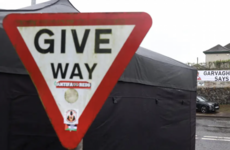
PLANS FOR A march down Garvaghy Road in Portadown, Co Armagh, have led to a third day of protests stopping the Orange Order from holding their planned procession.
Protesting local residents have been joined in support by politicians, including First Minister of Northern Ireland Michelle O’Neill and other members of Sinn Féin.
O’Neill’s presence at the protest has prompted the leader of the DUP to condemn her for allegedly breaking the law — an accusation that could threaten their shaky Stormont power-sharing arrangement.
“It is clear that we have those in elected office who are content to give a two-fingered salute to the Parades Commission — a statutory body — to our court’s system, and to their neighbours”, DUP leader Gavin Robinson said of O’Neill.
“We have lawmakers acting as lawbreakers,” Robinson said.
Controversies over loyalist marches such as the Garvaghy Road in Portadown have a long and harrowing history.
But to understand the legal issues, here’s an incredibly condensed and simplified version.
Parades in Northern Ireland are governed in part by the Parades Commission, which was set up largely in response to violence over marches in Portadown.
The body in effect can prevent parades from being held, and had done so for proposals from the Orange Order to hold marches on the Garvaghy Road since the 1990s.
However, last week the commission granted approval for a small parade on Sunday, 27 September, though this was quickly challenged in the courts.
After some legal wrangling and an attempted injunction, it was decided by the High Court that a small parade would go ahead. However, the timing of this decision is important — it was given at 2.15am on Sunday morning, just hours before the parade was planned to be held.
So, what has this got to do with Michelle O’Neill breaking the law? Which law is she being accused of breaking? And is her culpability clear-cut?
Robinson’s accusation included claims that O’Neill was “prepared to wilfully disregard the ruling of our courts, the determination by the statutory body charged with determining parades in Northern Ireland.”
However, objecting to a legal decision is not itself illegal.
Rather, the issue seems to be that the protest itself should have been governed by the same rules that required the Orange Order to seek permission from the Parades Commission.
In other words, if the Orange Order needed permission to legally hold an event on the street, then are the protests held in that same street not violating that same law?
The Public Processions (Northern Ireland) Act 1998 specifically references “public processions” as well as protests related to them. In short, it says protesters must inform the police 14 days before they plan to protest, or “as soon as it is reasonably practicable to give such notice”.
The legislation goes on to say that “a person who organises or takes part in a protest meeting” that does not fulfil this requirement “shall be guilty of an offence.”
It seems that the protesters did not fulfil this requirement. The Garvaghy Road Residents had earlier made an application to allow 5,000 people to protest the parade on Sunday. But, as it looked as if the Orange Order’s parade would be legally prevented, this application was later withdrawn.
But there may be reasons to think that such a protest would be legal regardless.
Representatives from the Committee on the Administration of Justice (CAJ), a Northern Ireland human rights group, told the Irish News that claims of lawbreaking were premature.
Daniel Holder, the group’s director, referenced the European Convention on Human Rights, which is embedded in the Good Friday Agreement.
Holder said that the European Court of Human Rights, which oversees this convention, has upheld the right of “spontaneous protests” to immediate events when a delay, such as would be caused by legal requirements, was unfeasible.
In other words: the protesters would not have had time to take the legal route from when the High Court gave the Orange Order the go-ahead in the early hours of Sunday to the planned parade later that day.
And, as such, the legal requirement to formally inform the police ahead of holding the protest may have been impossible to fulfil, and therefore infringe on the protesters’ right to demonstrate.
These are untested legal arguments. There is no way to know in advance who the courts would side with. But the accusation of illegality itself may be enough to destabilise Stormont, even if no case ever goes to court.

To embed this post, copy the code below on your site












have your say