Sign in. It’s quick, free and it’s up to you.
An account is an optional way to support the work we do. Find out more.
Sign in. It’s quick, free and it’s up to you.
An account is an optional way to support the work we do. Find out more.
FOR INVITED GUESTS, representatives of social media companies who appeared before an Oireachtas Committee last month got a stern reception.
TikTok, Facebook and Instagram owner Meta, and Google all appeared before the Oireachtas Media Committee on 23 September to discuss the role that their platforms have played in displaying content that in some cases glorifies irresponsible or illegal activity.
The invitation was sparked by the death of five teenagers who were killed in August after driving a car the wrong way down the M9 motorway. Three sisters and their seven-year-old nephew were seriously injured in the incident.
Yet while the social media representatives faced significant criticism on the day, it had not been a straightforward process to get them in the room in the first place.
TikTok initially declined two invitations to appear before the Committee, which its chairperson, Deputy Alan Kelly, described as “a slap in the face to the Irish public”.
It turns out that in other European countries, invitations are also sometimes declined, even as efforts to impose more control on what appears on the platforms continue.
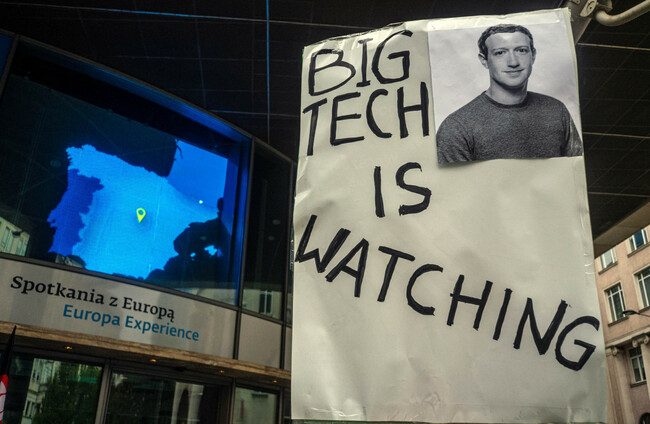
In many European countries, frustration at how certain material is handled – whether it is scams or the posting of dangerous or illegal content – is turning into concerted campaigns aimed at bringing them under greater control.
It is hard to pinpoint exactly how many times these companies have been asked to appear before Oireachtas committees and of those, how many times they have declined to do so. However, there have been some high-profile examples.
In April 2023 TikTok, Instagram and Facebook declined to appear before an Oireachtas Committee, which was to discuss a report by the Future of Media Commission. At the time, Twitter did not formally decline the invitation.
In January of this year, after controversy over the potential for Grok to enable users to generate sexualised images of real people, X refused to send representatives to appear before the media committee. This was described by Minister Patrick O’Donovan as “a mistake”. He added:
To be quite honest, X should send representatives. The company is operating in the jurisdiction.
Meta did appear before an Oireachtas Committee in February this year. At that time it was addressing issues including age verification and safety measures for its users.
In the company’s opening statement, Dualta Ó Broin, director of public policy for Meta in Ireland, said: “While Meta believes in freedom of expression, we also want our platforms to be safe places where people and in particular young people, don’t have to see content meant to intimidate, exclude or silence them.”
Attendance is voluntary. While there have been instances over the years of people being called before a Committee and comprehensively questioned, there are limited powers of compellability, as outlined on the Oireachtas website.
That’s not the case elsewhere.
French parliamentary inquiry commissions carry strong compulsory powers: witnesses are legally required to appear, take an oath and answer questions. Refusal is a criminal offence of the Penal Code.
This framework is stronger than in Ireland, and no French parliamentary inquiry appears to have faced an outright refusal to appear from a major tech company – though the quality of answers given can be contested.
Jurisdictional complexity is, however, a recurring obstacle.
Meta argued before the CNIL (Commission nationale de l’informatique, France’s data protection authority) that GDPR’s “one-stop-shop” mechanism – which assigns regulatory authority to the country of a company’s EU headquarters (in Meta’s case, Ireland) – should apply, which would have eliminated CNIL’s jurisdiction. The CNIL rejected this argument for ePrivacy matters, asserting national authority.
In Lithuania, ordinary committees of the country’s parliament, the Seimas, can invite people and representatives of organisations to their meetings, although there is no general power allowing an ordinary committee simply to compel an executive of a private foreign company to appear.
Temporary parliamentary investigative commissions have stronger powers: Lithuanian Constitutional Court case law confirms that persons covered by the relevant law who are summoned must attend, provide explanations and answer questions. There is, however, no clear Lithuanian precedent showing that these powers could effectively compel an executive located abroad to travel to Lithuania.
There are clear calls for stronger accountability from both government and opposition figures. In May 2026, interior minister Vladislav Kondratovič said, in the context of children’s online safety, that platform responsibility should be “mandatory, not voluntary”.
Italy, where major platforms routinely appear before parliamentary committees, has a similar system. Ordinary parliamentary committees do not have the coercive powers of a court, but its parliamentary commission of inquiry carries out investigations “with the same powers and the same limitations as the judicial authority”, according to the constitution.
This was relevant to Big Tech earlier this year as a parliamentary commission of inquiry was established into the intentional and mass dissemination of false information online and its effects on citizens’ right to information and the formation of public opinion.
In September, the Committee on Digitalisation, Innovation and Modern Technologies in the Sejm, the lower house of the Polish parliament, summoned representatives of Meta, the owner of platforms including Instagram and Facebook, to appear before the committee and answer MPs’ questions.
The committee wanted to ask about misleading adverts using the images of public figures. Meta did not attend, which is not a breach of Polish law as attendance at a regular committee meeting is not compulsory.
This came after Rafał Brzoska, one of the wealthiest Poles and the founder of the courier company InPost, had launched a campaign against Big Tech companies after AI-generated adverts featuring Brzoska began appearing en masse on social media.
Brzoska’s ‘150%’ initiative is driven by one main demand: a change in the law to hold digital platforms accountable, anchored around a principle that if Big Tech companies profit from running false adverts, they should face financial penalties amounting to 150% of the revenue generated from them.
Almost 190,000 people have already signed a petition on the issue.
Brzoska said: “We don’t want yet another campaign that simply tells people: ‘be careful online’. Of course, education is important, but responsibility cannot be placed solely on the user. Since platforms also earn money from adverts, they must have a financial incentive to remove scams quickly and effectively.”
‘150%’ is a simple rule: you must not make money from scams.
The initiative has produced a report arguing that a scam business is flourishing right under the noses of digital platforms, exploiting the images of some of Poland’s most popular figures, including footballer Robert Lewandowski and President Karol Nawrocki. The authors of the analysis examined data from ScamWatch, a tool for reporting suspicious adverts. As of 25 September, around 2.6 million adverts have been analysed, with over 380,000 classified as suspicious.
In 2025, a total of over 46,000 pieces of content containing disinformation was reported by NASK State Research Institute (operating under the Ministry of Digital Affairs) to social media platforms. The platforms removed just 12% of the reported content, 68% was moderated, while there appeared to be no response to 20% of the reports.
Poland will soon implement the Digital Services Act, which imposes liability on companies across the EU for content posted on their platforms, after relevant legislation was passed last month. It is one of the last countries in the EU to do so.
The Digital Services Act (DSA), an EU regulation which came into force in 2022, aims to boost transparency alongside powers of enforcement.
But at EU level, the immediate political question remains whether powerful executives can decline to answer elected representatives without meaningful consequences.
In reality, the European Parliament and national parliamentary committees can invite executives, ask questions in public and expose a refusal. But an invitation to an EU parliamentary hearing does not operate like an enforceable information order under the DSA.
In its first non-compliance decision under the EU’s Digital Services Act, last December, the European Commission fined X €120 million for breaching transparency obligations.
The Commission found three infringements: the deceptive design of X’s blue checkmark, deficiencies in its advertising repository and the failure to provide researchers with adequate access to publicly available data.
According to the Commission, X placed unnecessary barriers in the way of researchers, including processes that delayed access and frustrated their ability to study systemic risks affecting citizens (users) across the EU.
Other methods to address any shortcomings from the tech sector come from the data protection commissioners and related bodies around Europe, of which Ireland’s office is the key player.
The Data Protection Commission (DPC) is the lead supervisory authority across the EU/EEA for the processing of personal data by many of the world’s leading technology companies with European headquarters in Ireland.
Under the GDPR, the one-stop-shop mechanism enables organisations to be overseen by a single lead supervisory authority based on the location of their ‘main or single establishment’, instead of being subject to separate regulation by the data protection authorities of each member state.
In effect, it means the DPC is a regulator for individuals across the EU/EEA. For example: Of the Digital Services Act complaints concerning foreign-established platforms that Lithuania’s Communications Regulatory Authority transferred to another EU country’s digital services coordinator last year, 17 went to Ireland and five to the Netherlands.
According to the DPC, since the introduction of GDPR it has received 2,459 cross-border complaints. The DPC was identified as the lead supervisory authority for 2,181 (89%) of these complaints, of which 1,625 (74.5%) have been concluded.
As for regulating Big Tech and social media companies, the DPC has imposed fines of over €4.4 billion, which is more than half of the total fines issued across the EU/EEA since the introduction of the GDPR in May 2018.
That’s alongside corrective orders imposed on companies following the conclusion of DPC statutory inquiries, with the enforcement of these orders impacting companies such as Facebook, Instagram and TikTok.
Meanwhile, Ireland’s media regulator, Coimisiún na Meán, is enforcing Ireland’s Online Safety Framework, one element of which is the EU Digital Services Act. Coimisiún na Meán said this is “to change the behaviours of online platforms across the EU”.
According to a spokesperson for the regulator: “To date, An Coimisiún has opened six investigations – five under the EU Digital Services Act and one under Ireland’s Online Safety Code.
“Since Coimisiún na Meán was established in 2023, online platforms have brought 19 judicial reviews into decisions made by An Coimisiún.”
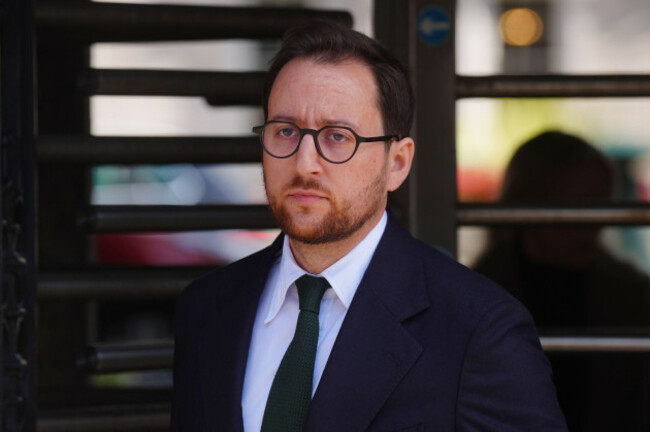
In July last year, Ireland’s DPC announced that it had opened an inquiry into TikTok Technology Limited’s transfers of EEA users’ personal data to servers located in China. That inquiry also included action under Article 31 of the GDPR – an obligation to cooperate with the supervisory authority. It’s understood that process is continuing.
TikTok faced a tough reception at that Oireachtas Committee in Ireland last month. At one point its global head of policy, Zachary Hecht, said the company had spent around $2 billion (€1.75 billion) on online safety. Committee chair Alan Kelly responded:
Can you imagine the profits that are being made if TikTok can spend two billion a year on online safety?
The company was also accused of “failing”, while one committee member claimed of TikTok’s community guidelines, content moderation systems and its “significant investment”, “none of it is working.”
According to TikTok, from the outset the company offered to meet with the Committee and brief them in private session and answer questions.
It also said there was a commitment to appear publicly before the Committee once its discussions with media regulator Coimisiún na Meán and the gardaí had progressed. It was when those discussions had – in the company’s view – progressed sufficiently, that it felt in a position to appear publicly before the Committee.
The company – which is a younger platform than some of its peers, having come to Ireland in 2019 – has maintained that it engaged constructively and in good faith with the Oireachtas and pointed out that it had attended five Oireachtas committees previously, including two this year.
And while TikTok ultimately showed up, X was not present at all.
This article is part of PULSE, a European collaborative journalism project.
By Noel Baker (The Journal Investigates), with reporting from Justė Ancevičiūtė (Delfi, Lithuania), György Folk (EUrologus), Rafał Górski (Gazeta Wyborcza, Poland), Silvia Martelli (Il Sole 24 Ore, Italy) and Gian Paolo (Voxeurop, France)

To embed this post, copy the code below on your site












have your say