Sign in. It’s quick, free and it’s up to you.
An account is an optional way to support the work we do. Find out more.
Sign in. It’s quick, free and it’s up to you.
An account is an optional way to support the work we do. Find out more.

IT’S A DAY of rest, and you may be in the mood for a quiet corner and a comfy chair.
We’ve hand-picked some of the week’s best reads for you to savour.
Kouri Richards published a book about losing her husband in 2023, something she said was to help bring her three young sons comfort. This year, she was convicted of murder.
(Elle, approx. 18 mins reading time)
“Whether by suicide or misadventure, the loss of Eric—a devoted husband and successful business owner—was inexplicable to those who loved him. Even more tragic, Kouri was just 32 and now had three young kids to raise on her own. As she began to move forward, she embraced the image of a perky, industrious widow trying to make it in the world.”

Some members of the scientific community are wrapped up in a debate. The topic? Whether slime moulds are intelligent or simple organisms.
(The Guardian, approx. 24 mins reading time)
“Before the mighty debate about whether slime moulds can think, there was the debate about what slime moulds are. They certainly exude slime, but they’re not moulds – that is, they’re unrelated to the white fuzz that grows on a strawberry left too long in the fridge, or the bilious stains in the corners of water-logged buildings. Those are fungi; slime moulds aren’t. Nor are they plants or animals, which they’ve also been mistaken for. So confounding were they that Carl Linnaeus, who spent his life taxonomising life, lumped them into a genus called ‘chaos’.”

Clinicians in New York have set up a start-up to help people die since medical aid in dying has been legalised.
(The New York Times, approx. 13 mins reading time)
“They played My Way, by Frank Sinatra. Dr Shapiro recalled mixing the powders in a cup with apple juice, bringing out some sherbet to dull the taste, and handing it to her mother-in-law, who gulped the lethal combination down. Then Janice Shapiro told the family that after she died somebody should take the sweatpants she was wearing, which were awfully comfortable. Within 20 minutes, she was dead.”
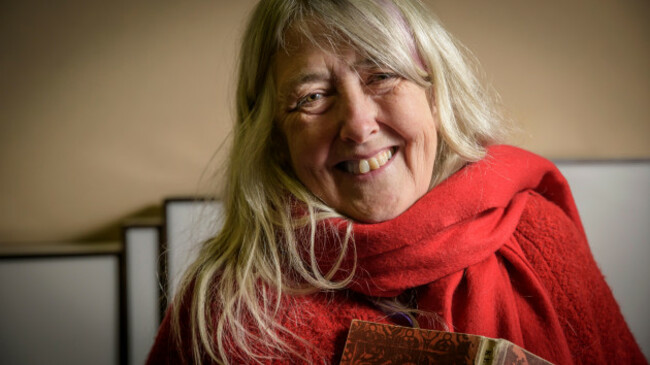
This interesting interview with Mary Beard, a 71-year-old classicist specialising in Ancient Rome, breaks down the classics in modern life, including their appropriation by the far-right.
(El País, approx. six mins reading time)
“There is a deeply far-right appropriation of the classics. But the classics don’t have a politics. They have also been reference points for the left, for democracy, for social change… They inspired the French and American revolutions, and Marx wrote his thesis on Greek philosophy. The classics are at once revolutionary and conservative, which is why they are interesting.”
A network of burner social media accounts is harassing and abusing young women in US colleges.
(Wired, approx. 29 mins reading time)
“The women targeted by the burnerverse were private citizens before their names, rumours, explicit images, or videos went viral. WIRED has identified 10 women who have been doxed by the burnerverse, most of whom were between the ages of 18 and 21. The virality follows a specific pattern: salacious gossip about a college girl’s sex life, or nude photos and videos of her, make their way to YikYak or Snapchat before being disseminated by burner accounts on public social media platforms. Sometimes, the content has even made national news.”

This article by The Guardian claims that the attention economy has taken over kid’s television.
(The Guardian, approx. 11 mins reading time)
“People who worry about children and screens tend to worry about violent content, advertising or whether a phonics app calling itself “educational” truly supports phonics. These are reasonable worries and I share them. But spend five minutes watching what many young children watch, and you will see how fast, loud and bright everything on the screen has become. It does not matter whether the child is watching on a smartphone in the car or on a TV at home. The screen has inherited the adult logic of media design.”

This tragic 2002 article from The New York Times collects the last words of those inside the twin towers as they began to collapse on 11 September 2001.
(The New York Times, approx. 37 mins reading time)
“To place these fragmentary messages in context, The Times interviewed family members, friends and colleagues of those who died, obtained times of calls from cellphone bills and 911 records, analysed 20 videotapes and listened to 15 hours of police and fire radio tapes.”

To embed this post, copy the code below on your site















have your say