Sign in. It’s quick, free and it’s up to you.
An account is an optional way to support the work we do. Find out more.
Sign in. It’s quick, free and it’s up to you.
An account is an optional way to support the work we do. Find out more.

WHEN YOU’RE DIAGNOSED with cancer, the first thing on your mind isn’t often whether it’ll impact your chances of getting mortgage protection to buy a house.
But for many survivors across Ireland, this is a barrier they repeatedly run into, even after being declared medically cancer-free. Under Irish law, insurers can elect not to offer a person mortgage protection if they are less than seven years cancer-free.
Mortgage protection is a form of life insurance that means in the event of a mortgage holder’s death, the insurer will pay the remaining home loan balance directly to the lender.
In August, legislation was agreed upon to change this to five years, when a person is deemed medically free from cancer. It also increases the cover threshold from €500,000 to €650,000. This legislation will take effect from 15 October.
The change in legislation comes after years of campaigning from various groups, particularly the Irish Cancer Society, which argued that the law as it stood was unfair.
However, some individuals have argued that there is room for even further action than we have seen: it was pointed out that a person with stage-four lung cancer is a much bigger risk to insurers than someone recovering from skin cancer.
One survivor who spoke to The Journal suggested the potential option of insurance companies availing of an oncologist to individually assess cases in which a person applying for mortgage protection has either concluded treatment or is being treated for cancer, rather than blanket legislation for all those who have had cancer.
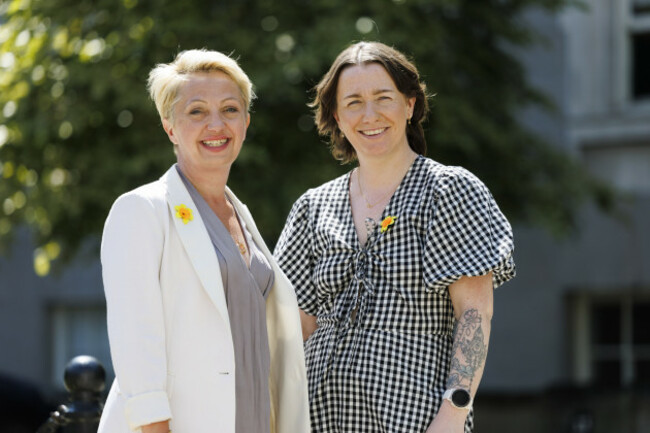
Lydia Whelan is one such cancer survivor who encountered difficulty in securing mortgage protection insurance. Diagnosed in July 2024 at the age of 32, she and her husband had just gone sale agreed on a house when she first noticed a lump on her breast.
“Everything happened quite quickly,” she told The Journal. “We were tipping away, getting everything done that we needed for the mortgage, and I was waiting for my triple assessment.”
However, when she went to get mortgage protection, “everything came to a significant halt”.
Whelan was told that she couldn’t secure mortgage protection until she had her tests and results, but she said that deep down, she knew in her gut that she did have cancer.
When I did get diagnosed with breast cancer, the first thing I said to my surgeon was, ‘Can I have a letter?’
She continued: “I cried so much, obviously that day being told I had cancer, but then it was oh my God, how are we going to secure the home? How are we going to do this?
“I definitely cried more over the potential of losing the house than being told I had cancer.”
Mortgage
Whelan and her partner were lucky in that the sellers of the property gave them some extra time to get things in order – she was not able to have her name on the mortgage or secure mortgage protection due to her diagnosis and her partner had to draw down on his own.
They scrambled to make up the shortfall through family help and a small loan Whelan secured. The property in Newbridge, where they live together now, was their ideal home and they were emotional at the thought of losing it over her diagnosis.
The combined stresses of purchasing the house and going through cancer treatment were difficult for Whelan. She was told from the beginning that her cancer was aggressive but curable, and they “threw the kitchen sink” at her for treatment: she went through six rounds of chemotherapy, a mastectomy with reconstruction, and 15 rounds of radiation.
Now, she’ll be two years finished treatment in December. It’ll be another three before she will be able to have her name on her home’s mortgage – but it would be five under the current legislation.
Whelan became involved in the Irish Cancer Society post-diagnosis and the charity told her about their campaign, started in 2022, to implement the right to be forgotten legislation that would change the seven-year wait to five. She became one of the faces of the campaign, even appearing on Fianna Fáil’s podcast on the matter.
When she reaches five years post-treatment, she will both be deemed medically cancer-free and able to attach her name to her home, making it a “significant day”.
‘I had to do what I had to do’
Maeve*, who spoke on the condition of anonymity, was diagnosed with cancer when she was 39 as she was beginning to apply for a mortgage.
She had breast cancer that was caught early, although she still needed chemotherapy, radiation and surgery, as well as a hormone suppressant, as her cancer was hormone-related.
Her treatment delayed her application for a mortgage. Around a year later, she returned to work full-time and had money saved for a deposit when she was informed by a financial adviser she would not be able to secure mortgage protection due to her diagnosis.
She decided not to disclose this to her insurer and secured mortgage protection drawing down her mortgage and purchasing her home – but cancelled the mortgage protection policy several months later.
“No one’s ever asked for it again,” she told The Journal.
She’s been living in her house in Leinster for almost two years now, and finished treatment in December 2023. She will not be considered medically cancer-free until the end of 2028.
Maeve’s situation was different to others’ as she purchased her home by herself. She is not concerned over her withholding her diagnosis from her insurer and spoke in practical terms about how even if she were to die, her savings and life insurance would more than cover what is left on her mortgage.
She classifies herself as low-risk to insurers given there is no money to be lost even in the worst case scenario.
While she appreciates the reduction in the wait for cancer survivors, she said: “They’re making it out that it’s going to be amazing – like you’re waiting five years as opposed to seven years.
“We’re being diagnosed with cancer younger and younger and younger, so the knock-on impact that this is going to have on people is going to be very significant.”
She said the upcoming legislation means that people will be left renting for up to five years post-treatment, even if they have the means to buy a home and are at the lowest risk of the cancer reoccurring.
All cancers are different, Maeve said, and floated the idea that each case in which a person who has finished treatment for cancer is assessed on an individual basis as to the risk of offering them mortgage protection.
“I’m very fortunate to have my home,” she said. “I absolutely know how fortunate I am to have it. But I also know that I didn’t disclose it technically – but I had to do what I had to do.”
‘My consultant said to me, ‘you’re going to struggle getting a mortgage”
Jayne Jute was on the final few days of her Leaving Cert exams in 2015 when she began to get sick, with her vision blurred.
“One teacher was like, ‘oh you’re fine, you’re just nervous’,” Jute said. It wasn’t nerves: she was brought to hospital and scans revealed she had a blood clot in her brain.
She was treated for this and went on to repeat her Leaving Cert. A few months later, on a check-up, scans showed that she had a brain tumour.
“I remember my consultant had said to me, ‘you know you’re going to struggle with getting a mortgage’, but I mean me at 18 listening to that, I just wanted to come on my sixth year holiday.”
This tumour was removed in 2015, but in 2018 it came back. Jute went through treatment and has been cancer-free since. She had moved on with her life and she and her husband went looking to buy a house in 2025.
“We got rejected from all the major bodies,” she said, as she was only six years cancer-free. “I think they were just afraid of me. It was, ‘we don’t want to insure you because we don’t think you’re going to be around in the next couple of years’.”
When she did manage to secure a policy, she was paying €220 a month. Her husband was paying between €30 and €40.
“It’s nearly a second punishment for getting better and beating it,” she feels.
The change in legislation would have made a massive difference for her when applying for a mortgage, and she welcomed the upcoming change.
If it had come in place earlier, she said “it would have been so much easier”.
When she did meet the seven-year threshold her mortgage protection fell to €30 a month.
Jute is now 28 and living with her husband at their home in Fairview, Co Dublin. They recently welcomed a baby, another thing she was told she would not be able to do due to her cancer.
“They were just the two things I wanted, and they were the two things that I was told I couldn’t have. But I’m very happy now.”

To embed this post, copy the code below on your site












have your say