Sign in. It’s quick, free and it’s up to you.
An account is an optional way to support the work we do. Find out more.
Sign in. It’s quick, free and it’s up to you.
An account is an optional way to support the work we do. Find out more.
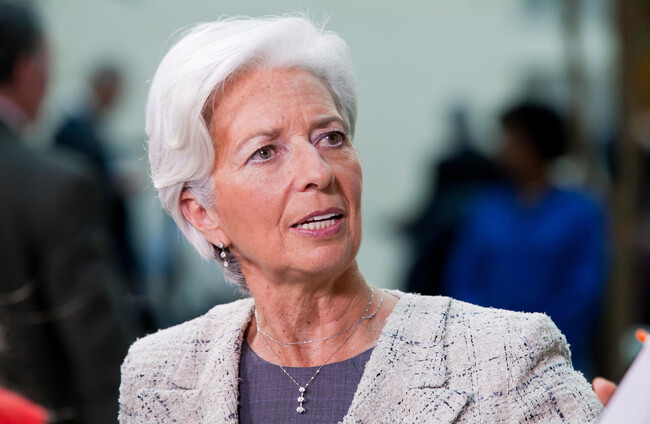
CHRISTINE LAGARDE IS to step down as president of the European Central Bank.
She’ll leave the role in February 2027, months before her term expires in October next year.
António Costa, president of the EU Council, said in a statement today that Lagarde led the ECB “with a strong sense of duty and responsibility”.
Lagarde took the top job at the ECB in November 2019, having previously led the International Monetary Fund and served as French finance minister.
Her tenure took in the Covid-19 pandemic and an inflationary wave that followed Russia’s invasion of Ukraine in 2022, which prompted a spike in energy prices.
Costa said: “Europe has been well served by her leadership in uncertain times and her unwavering commitment to the European project.
“Through a global pandemic, a war in Europe, energy crises and inflation shocks, she has provided a steady and determined stewardship, helping to safeguard stability and the resilience of the euro area.”
I have just informed my colleagues that I will step down as @ECB President on 7 February 2027. It has been a source of great pride to serve this institution. I thank all of those who have supported me on this journey over the past seven years. https://t.co/eSLLTaDAej
— Christine Lagarde (@Lagarde) October 29, 2026
Lagarde’s departure before the end of her term opens the way for European leaders to choose a new ECB chief before French presidential elections scheduled for April, in a race where Eurosceptic far-right and far-left candidates are leading in opinion polls.
Lagarde herself has ruled out standing for the presidency, telling French newspaper La Croix last month that it would “not be a good idea”.
Months of speculation have preceded her departure, and Lagarde has been tipped to take the helm of the World Economic Forum, which organises the annual summit of politicians and business leaders in Davos, Switzerland.
With reporting by AFP

To embed this post, copy the code below on your site









have your say