Sign in. It’s quick, free and it’s up to you.
An account is an optional way to support the work we do. Find out more.
Sign in. It’s quick, free and it’s up to you.
An account is an optional way to support the work we do. Find out more.
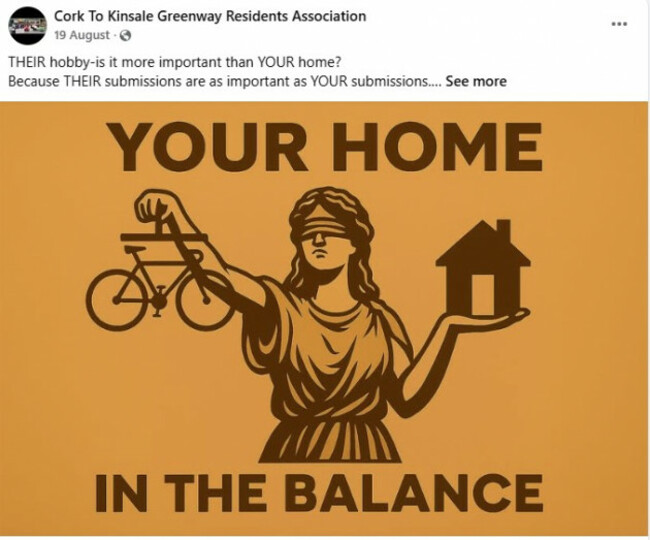
“NO GREENWAY THROUGH our land and homes.”
“THEIR hobby – is it more important than YOUR home?”
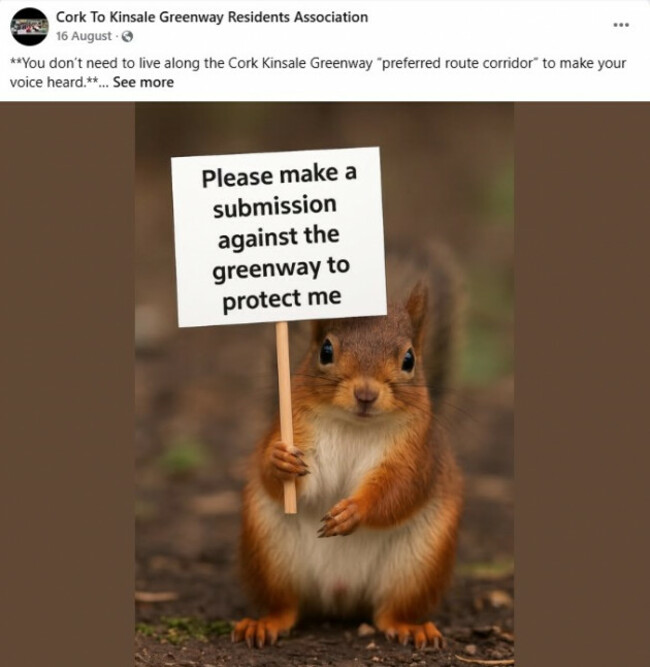
These are some of the phrases posted in a Facebook group called “Cork to Kinsale Greenway Residents Association” in recent months.
The greenway project in question aims to provide an off-road walking and cycling route linking Cork city with Kinsale, about 30km to the south.
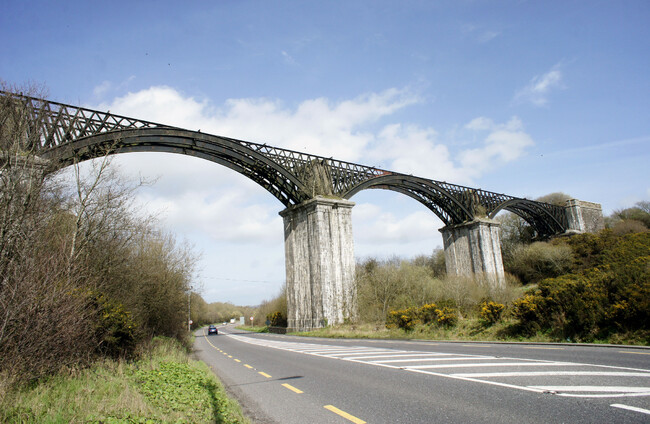
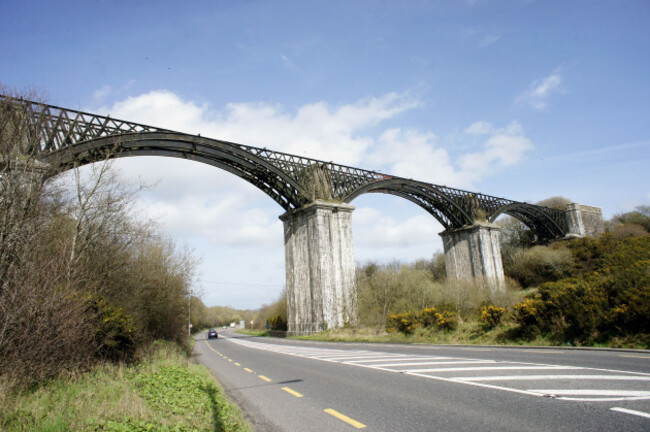
Like other routes, such as the Waterford Greenway, the new path would take in some railway heritage – in this case the disused Chetwynd viaduct and the abandoned Goggins Hill tunnel.
However, it also needs to traverse a lot of privately owned land – and this is where the problem starts.
The project is at an early stage – “non-statutory consultation”, to use the technical term. Basically, Cork County Council is seeking locals’ input as it figures out the best route, but it’s still some way off a formal planning application.
Nevertheless, the project is already the subject of some vociferous local opposition. As detailed above, very emotive claims are also circulating.
Meanwhile, officials are trying to move the project forward. The latest consultation round – the third to date – saw the local authority and its consultants, Arup, write to 1,700 registered owners of land and property on a 400m-wide “corridor” within which the eventual route is likely to be established. Their views were sought, along with those of the wider public.
So what’s going on – and can the project still get off the ground?
Let’s get straight to the most extreme claim that has been made: the idea that people’s homes are at risk. This claim has been made on Facebook and in local media.
A Southern Star editorial (an article expressing the newspaper’s view) in July stated: “Residents in Ballinhassig and beyond who are unfortunate enough to be living along the preferred path for the greenway face losing their homes – and they’ve been told they have no leave to appeal.”
“The compulsory purchase order mechanism means their homes and their land, which may have been in the family for generations, is fair game for the powers that be who are not obliged to pay market rates for it either,” the newspaper claimed.
Compulsory purchase is the legal function the state uses to take land without owners’ consent to allow infrastructure projects to proceed for the public good – Dublin’s Luas, for example.
Compensation based on market value and taking into account any reduction in the value of any land retained is paid. The compensation is also supposed to leave the owner in more or less the same position financially.
The Journal asked Cork County Council whether it’s true that the route – albeit it hasn’t been finalised yet – will run through anyone’s home.
“Cork County Council has no intention of compulsorily acquiring any residential buildings as part of this scheme,” it said.
“Compulsory purchase orders are only used as a mechanism of last resort to ensure the delivery of a continuous route. Every effort will be made to avoid the use of CPOs.”
We put this to Noreen Ring, one of the organisers of the campaign against the greenway.
Ring said: “Well, I suppose ‘homes’ is not just the physical homes that we live in. It’s future homes, it’s homes where planning permission is already approved.”
Ring lives with her parents, who are landowners on the draft route, and hopes to build a house on the family’s land in the future.
“These are the things people are worried about, their livelihood no longer being viable. We appreciate that they [the council] will do everything possible not to knock down homes, however the reality is that they can – and that’s a scary thing, for a greenway,” Ring said.
Asked whether she thought using an expression such as “your home in the balance” constituted misinformation, Ring said: “I don’t because the reality is that CPO is a mechanism that can be used.”
Ring said she would not support CPO being used “for even one landowner” because the emotional, mental and financial impact is “too much”.
“That’s my honest view on it. If it was a motorway, I understand that. We’re not trying to stand in the way of any kind of development,” Ring said.
Asked whether there would not be the same emotional impact if someone’s land was compulsorily purchased for a motorway, Ring said: “Of course, but there’s an understanding out there that that’s a key infrastructure project.”
“I’ve managed to get to 42 years of age without a greenway, but I don’t know how I’d manage to get into Ballincollig these days without that motorway,” she said.
Independent councillor Alan Coleman agreed that there was a widespread view in the area that CPO to build a road would be “accepted for the greater good”, but it would not be considered “justified” for “a leisure facility”.
Speaking in the Dáil last month, Independent Ireland TD Michael Collins told the Taoiseach: “Government policy is to mainly use state-owned land for greenway walks, but in the Cork-Kinsale case, 90% has been put on private-owned farmers and landowners.”
Collins said this meant “destroying many farms, splitting them in two and making them unworkable”. The splitting of farms is also a fear voiced by local opponents of the project.
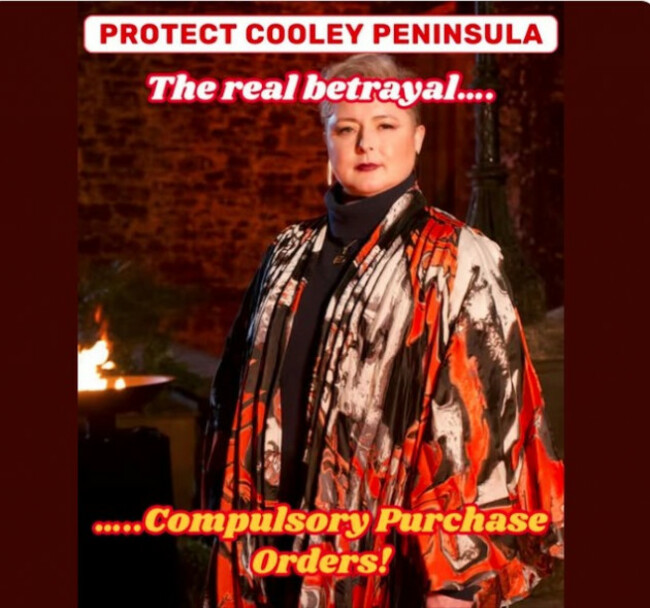
Collins asked the Taoiseach to take CPO off the table for this or any greenway.
Cork County Council emphasised that it plans to find a route that follows the boundaries of fields and properties “where possible”. This will “minimise disruption” and “reduce severance”.
The next stage of consultation – “detailed one-to-one engagement with directly impacted landowners” – will help to identify this final preferred route, the council said.
Damien Ó Tuama, national cycling coordinator with the Irish Cycling Campaign, said it’s important to bear in mind that the draft “corridor” that was put out to consultation is only the rough area in which the eventual route is likely to be established. Not everyone within the corridor will be affected by the eventual project.
“The alignment will be chosen as carefully as possible,” Ó Tuama said.
The Taoiseach, meanwhile, said community support is essential.
“Once you get to CPO you’re in trouble, for any greenway,” he told the Dáil.
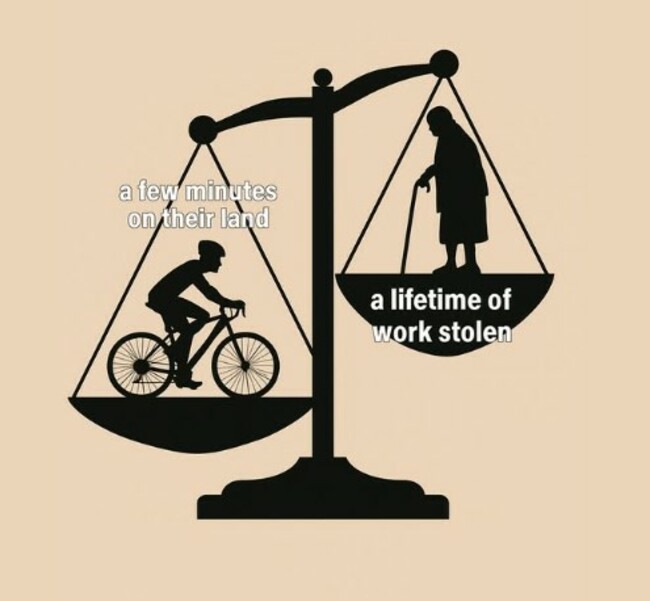
The outcome of the most recent consultation remains to be seen – but many people locally feel the consultation process has had an alienating effect.
CPOs are currently underway in other parts of Cork for road projects, which may have contributed to local disquiet.
Independent councillor Alan Coleman said the consultation has been “poor”: both too broad – writing to everyone in a 400m-wide corridor including homeowners who are unlikely to find a greenway on their doorstep – and too shallow, because the people who will genuinely be affected have not been spoken to yet in enough detail.
He added that it became clear at a public meeting in August that many landowners written to over the summer were disturbed by the fact that they had not been brought into the conversation in the first or second round of consultation, which happened last year.
Coleman believes some of the claims that have made against the project on Facebook are unreasonable.
He reckons the best way forward now may be to develop some more easily completed sections of the route, such as a leg from Kinsale to Belgooly.
Fianna Fáil councillor Gillian Coughlan said last month that “good will has been lost” and the overall project does not have “a chance of getting over the line” in its current form.
Coughlan’s suggestion, as reported in the Southern Star, that the council should have gone door to door to talk to landowners earlier in the process is echoed by local campaigner Noreen Ring. Ring said sending people letters out of the blue rather than speaking to them directly was “insensitive” and had damaged trust.
“Landowners here should have been the main stakeholders in this. We’re more an afterthought. We’re ‘in the way’,” Ring said.
Ring’s campaign group will meet with council officials next week, and she said this was welcome.
Ultimately, Ring believes any greenway should be developed on public land. She suggested that it could be built along the side of the N71.
Hannah Daly, a Professor of Sustainable Energy in UCC, has argued that it’s commonplace in other countries to see separate walking and cycling routes traversing the landscape in a way that it isn’t in Ireland, where very little land is publically owned, by European standards.
“Individual property rights tend to be prioritised over the public good. This makes such infrastructure painfully difficult to build,” Daly said in a post on Linkedin about the Cork to Kinsale greenway, which she strongly supports.
Ó Tuama, of the Irish Cycling Campaign, said that with any greenway or other infrastructure project, the voices in opposition are often the loudest and people who are positively disposed less “active” during the drafting process. Both the Irish Cycling Campaign and Cork Cycling Campaign strongly support the Cork to Kinsale project.
Many politicians in Cork have now expressed concern about the project, including Fine Gael junior minister Jerry Buttimer.
Colette Finn, chairperson of the Cork Cycling Campaign, said it was disappointing to see politicians, whose parties have signed up to action on climate change, try to “pull the rug” out from under transport authorities when they attempt to develop sustainable infrastructure.
“It’s sad politicians aren’t consistent. They say they want to do something and when you show them a plan they say, ‘well so-and-so is against it’. Politicians are elected to make sensible choices, not to say ‘everyone is going this way, let’s go this way too’,” Finn said.
The greenway is being developed by Cork County Council but it’s funded by Transport Infrastructure Ireland and part of a wider vision for active travel infrastructure in rhe region.
If developed, it would form an important link in a planned network of greenways across the south of the country, stretching from West Cork to Waterford.
Advocates of the project say it would also be an important local amenity, benefitting both locals and tourists.
According to the council, the greenway would be of value to people in Waterfall, Ballinora, Ballinhassig, Riverstick and Belgooly, providing them with an alternative to the car for commuting to work, school and sports clubs.
In August, Hannah Daly of UCC wrote on Linkedin that the greenway would be “absolutely transformative” for the area, as she urged people with a stake in the project to make a submisison to the public consultation.
“I saw a child cycle to GAA training this summer and I feared for his life,” Daly wrote.
“I want for me and my kids to be able to navigate this landscape in something other than a car.”
Colette Finn of the Cork Cycling Campaign said: “People complain about congestion but if you don’t offer people alternatives, everyone will be in their car.”
Cork to Kinsale is not the only greenway project currently facing local opposition. In fact, Michael Collins of Independent Ireland recently hosted a meeting of landowners on other greenway routes across the country.
Ring, who attended the meeting in Laois on 2 October, said it was also attended by people from Sligo, Longford Laois, Mayo, Kerry, Clare.
Ó Tuama said cycling campaigners are “broadly aware” of a wider backlash against greenways.
“As campaigners, all we can do is ratoinally point out all the benefits: tourism, public health, safe routes for kids to school,” he said.

To embed this post, copy the code below on your site















have your say