Sign in. It’s quick, free and it’s up to you.
An account is an optional way to support the work we do. Find out more.
Sign in. It’s quick, free and it’s up to you.
An account is an optional way to support the work we do. Find out more.
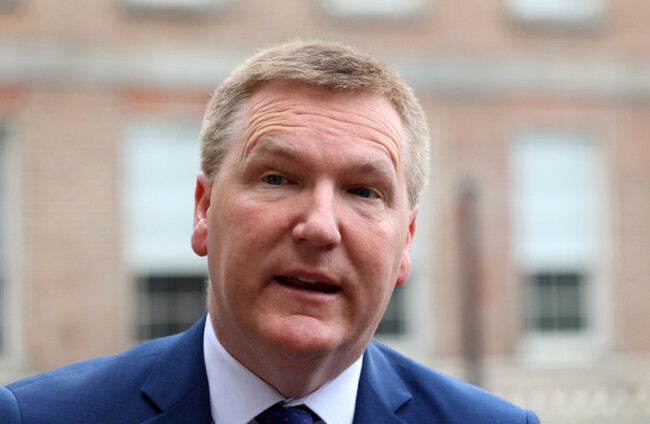
MINISTER FOR PUBLIC Expenditure and Reform Michael McGrath has urged people to contact the Department of Social Protection if they are struggling to pay bills.
However, he has said that it’s not possible for the government to “offset every increase that people are experiencing at this time”.
Speaking on RTÉ Radio, he said it was important to be honest with people about what the government can do to tackle the spiralling cost of living.
“We are deeply conscious of the impact on people’s living standards, of rising inflation levels. We have a degree of uncertainty in relation to Brexit. We recognise that Covid numbers are rising again. And unfortunately, the war in Ukraine looks like it’s not going to end anytime soon.
“So we have to take all of these factors into account [and] ensure that we have sufficient capacity to make an intervention in the autumn that is meaningful and impactful.”
McGrath pointed to the decision made last year to increase the fuel allowance on budget night, as opposed to in January as usual, but he stopped short of committing to a similar decision for the upcoming budget.
“These are the very issues that will have to be carefully considered in the weeks ahead. And the more resources that we have available to us come the autumn, then the greater the set of options and the greater the level of flexibility we will have.
The summer economic statement will outline how much the government has left to spend from the last budget.
“I know it is a difficult message but I think it’s important that we are straight with people … there is a limited amount of resources available.
As pay talks are set to resume between the government and representatives of public sector workers, McGrath similarly stressed that “pay alone cannot be expected to fully offset the impact of inflation.
Talks continued until 3am last Thursday but no deal was reached, with the Irish Congress of Trade Unions saying it was unhappy with the government’s offer.
McGrath said: “We think that it was a very good offer, and that it was a fair offer. And also that it would have brought some extra benefits for lower paid public sector workers with a level of benefit higher than the figures that we have spoken about.
He said the government has spoken informally with trade unions since negotiations at the Workplace Relations Commission collapsed.
“I think a collective agreement is in everyone’s interests. It has to provide industrial peace to us as a government and for our economy.
“But we can’t go the full way, and I have to be clear about that.”

To embed this post, copy the code below on your site













have your say