Sign in. It’s quick, free and it’s up to you.
An account is an optional way to support the work we do. Find out more.
Sign in. It’s quick, free and it’s up to you.
An account is an optional way to support the work we do. Find out more.
LAST UPDATE | 19 Oct 2024
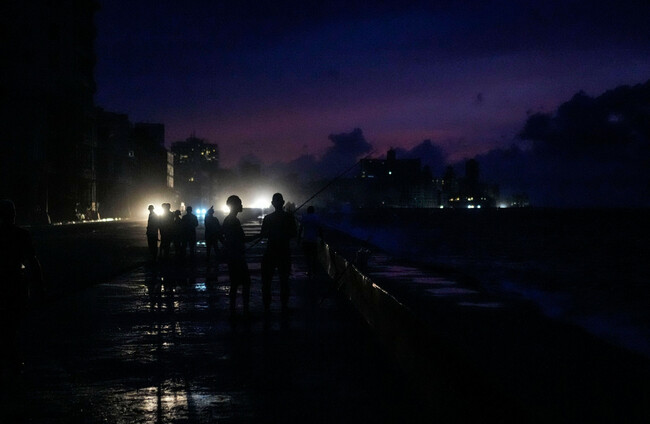
CUBA’S GOVERNMENT SAID that some electricity was restored on the island today after one of the country’s major power plants failed and left millions without electricity in an outage that started two days earlier.
Energy minister Vicente de la O Levy said the country had 500 megawatts of energy in its electrical grid early on Saturday. He posted on X that “several substations in the west now have electricity”.
Mr O Levy also said two thermoelectric power plants had resumed operations and two more will follow “in the next few hours”.
In addition to the Antonio Guiteras plant, whose failure on Friday affected the entire national system, Cuba has several others and it was not immediately clear whether or not they remained functional.
There is no official estimate for when the blackout will be ended. Even in a country that is used to outages amid a deepening economic crisis, Friday’s supply collapse was unprecedented in modern times, aside from incidents involving intense hurricanes, like one in 2022.
The Cuban government has announced emergency measures to slash electricity demand, including suspending classes, shutting down some state-owned workplaces and cancelling nonessential services. Officials said that 1.64 gigawatts went offline during peak hours, about half the total demand at the time.
Local authorities said the outage, which started in a smaller scale on Thursday, stemmed from increased demand from small and medium-sized companies and residences’ air conditioners.
Later, the blackout got worse due to breakdowns in old thermoelectric plants that hadn’t been properly maintained and the lack of fuel to operate some facilities.
Changes to electricity rates for small and medium-sized companies, which have proliferated since they were first authorised by the communist government in 2021, are also being considered.
Cuba is in the throes of its worst economic crisis since the collapse of the Soviet Union, a key ally in the early 1990s — marked by sky-high inflation and shortages of food, medicine, fuel and even water.
With no relief in sight, many Cubans have emigrated.
More than 700,000 entered the United States between January 2022 and August 2024, according to US officials.
While the authorities chiefly blame the US embargo, the island is also feeling the aftershocks of the Covid-19 pandemic battering its critical tourism sector, and of poor economic mismanagement.
To bolster its grid, Cuba has leased seven floating power plants from Turkish companies and also added many small diesel-powered generators.
In July 2021, blackouts were the spark for an unprecedented outpouring of public anger.
Thousands of Cubans took to the streets shouting “We are hungry” and “Freedom!” in a rare challenge to the government.
One person was killed and dozens were injured in the protests. According to the Mexico-based human rights organization Justicia 11J, 600 people detained during the unrest remain in prison.
In 2022, the island also suffered months of daily hours-long power outages, capped by a nationwide blackout on September 27 caused by Hurricane Ian.
Includes reporting by AFP.

To embed this post, copy the code below on your site












have your say