Sign in. It’s quick, free and it’s up to you.
An account is an optional way to support the work we do. Find out more.
Sign in. It’s quick, free and it’s up to you.
An account is an optional way to support the work we do. Find out more.
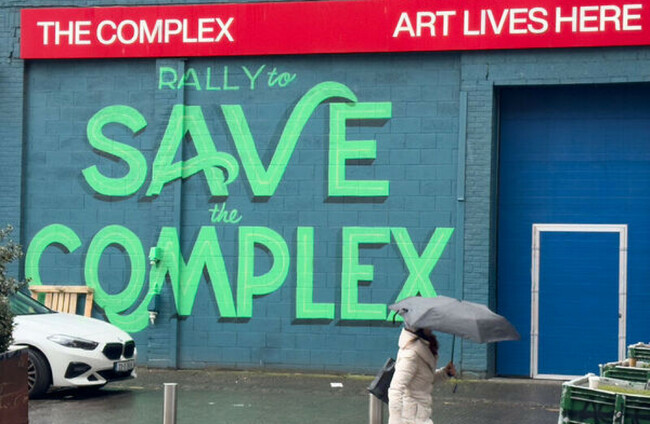
DUBLIN IS FACING a severe shortage of arts and performance spaces, with an estimated 40% of artists in the city in need of somewhere to do their work, Dublin City Council’s arts officer has said.
The shortage of space has forced theatre performers to rehearse and perform in hospitals, pubs and pop-up venues, as multiple cultural spaces have closed in recent years.
City Arts Officer Ray Yates told The Journal that Dublin’s existing arts infrastructure was insufficient, while the Arts Council said research had identified a “considerable need” for workspaces across a range of art forms.
As venues close and costs rise, artists fear the city cannot support its creative community.
Artists and industry representatives warned that the scarcity of affordable rehearsal and performance venues – coupled with the high cost of living and working in Dublin – is placing particular pressure on emerging performers and smaller companies, despite growing audiences and the strong international reputation of Irish theatre.
The closure of The Complex in Smithfield in January, after it lost the lease on its premises following 18 years in operation, was the latest in a series of losses that has included Jigsaw, Hangar, the Tivoli Theatre and Block T.
Many of these sites have since been transformed into either commercial properties or hotels.
Katherine Murphy, programme manager of the Dublin Fringe Festival, said the disappearance of established venues had a “ripple effect” across the wider creative community, leaving festivals and artists increasingly reliant on spaces that were never designed for performance.
Caoimhe O’Farrell, theatre maker and company director, believed that the lack of infrastructure in Dublin is one of the biggest challenges for emerging artists.
Her company, LEGROOM Collective, must often resort to using non-traditional performance spaces such as pubs and multipurpose spaces.
O’Farrell said that this can make the work more interesting but “sometimes you just want an accessible venue that has a lighting rig”.
Maud Hendricks, director of established participatory platform Outlandish Theatre, added that this impacts theatre collectives but also emerging artists across all art forms.
Outlandish Theatre primarily utilises the Coombe hospital as a space, which Hendricks noted they are lucky to have but “it comes with limitations as it’s not built as an arts space”.
In Dublin, much of the public funding available for the arts is managed through bodies like the Arts Council and the Dublin City Council Arts Office.
The Arts Council supports artistic programming and activity while the Arts Office provides grants and funding programmes for creative work.
The Arts Council gets the majority of its funding through the Department of Tourism, Culture, Arts, Gaeltacht, Sport and Media, while the Arts Office is funded through the City Council.
When asked if Dublin has sufficient arts infrastructure, City Arts Officer Ray Yates responded that the city did not.
“It is established that 40% of artists in the city require workspace”, he told The Journal.
The Arts Council also confirmed that the city is lacking adequate infrastructure, stating to The Journal that “research shows a considerable need for workspaces across multiple art forms with differing specialist facility requirements”.
This issue is prevalent not only in Dublin but across the country.
Both organisations also identified the need to upgrade their existing spaces to improve accessibility for audiences, artists and arts workers.
“Accessibility in older buildings is a challenge for disabled participants,” Yates added.
Alongside performance spaces, Irma McLoughlin, director of the Performing Arts Forum, an organisation representing more than 350 members, from individual artists to companies and festivals, stressed that the lack of affordable rehearsal space in Dublin is an equally pressing concern.
“The shortage of affordable, high-quality, appropriately sized rehearsal space is one of the most consistent issues raised by our members. Rehearsal space isn’t a nice-to-have, it’s essential infrastructure”, she told The Journal.
In recent days, Caoimhe O’Farrell was involved in a multidisciplinary performance night to protest the lack of space for young artists in the city.
Entitled The Meeting Room, the event was held as part of the Liberties Arts Festival.
The objective was as O’Farrell stated, to allow artists to “reach audiences their own age and not worry about funding or admin”.
She was also involved in a meeting of artists at Tailors Hall in the Liberties where a map of Dublin was created, highlighting the venues available.
“It was disheartening to see all the venue closures. In the Liberties especially, there are so many unoccupied buildings that could be utilised as rehearsal spaces or artists’ studios”, she said.
Murphy remarked how there is an appetite among artists to turn vacant or derelict buildings into arts spaces, but this is not always easy.
“There can be a feasibility gap there where there is all the ambition in the world, but less of the money you would need to really make that happen”, she said.
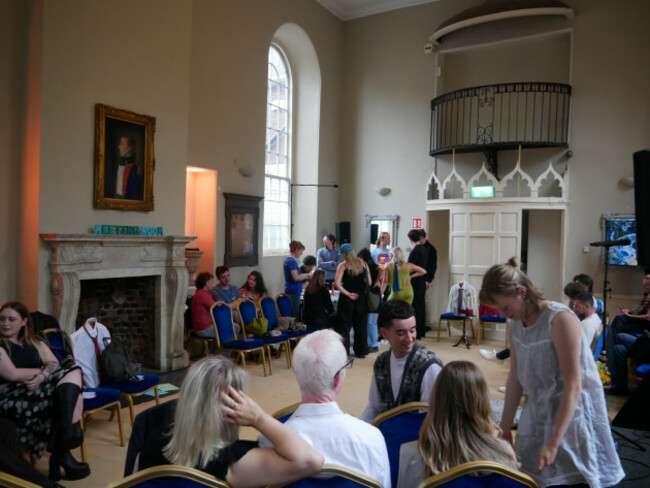
According to the Dublin City Council’s Derelict Sites Register published in June, there are currently 136 properties listed as derelict across the city.
Activists and councillors have suggested the high rate of dereliction is part of the bigger picture within the housing crisis.
This has prompted Dublin City Council to take action, such as implementing the Vacant Property Refurbishment Grant, aimed at those turning a vacant property into a new home.
Due to supply demands, transforming derelict and vacant properties into housing has been the policy focus over arts infrastructure.
However, Dublin City Council has approved plans for the reinstatement and refurbishment of the abandoned St. Anthony’s Theatre on Merchant Key.
The refurbishment will provide the city with a small-scale (80-seat) performance venue and studio spaces, at the site of the former theatre.
In February a permanent Basic Income for the Arts (BIA) scheme was approved by cabinet. This scheme provides for 2000 artists to receive €325 per week for three years to address the financial instability faced by those working in the sector.
Eligible participants are entered into a random selection system to ensure a fair mix of career stages, demographics and art forms.
Those chosen can only receive the payment for 3 years out of a 6-year cycle to give others a chance to participate.
Although Murphy welcomes the introduction of the scheme, she believes that most artists are still struggling.
“Almost every artist I know is still living in a way that is hand-to-mouth. Even the ones that you think are doing really well right now, they are hand-to-mouth”.
“In a country where there is so much wealth nowadays, artists still need more money. Organisations need more money. The sector needs more money to be able to properly flourish and support artists”, she said.
Hendricks added that although the income scheme has worked well for those who have got it, “the potential of it being taken away is threatening them, and then there is the fact that it’s only reaching a small number of people”.
“I hope that will grow. I don’t know if it will. I am sceptical”, she shared.
Murphy said that interest in theatre remains strong as festival applications surge from one year to the next.
Internationally, the reputation of Irish artists is “thriving, and they have so much profile now”, Murphy said.
Despite this, escalating accommodation costs are driving artists out of Dublin just as Irish work wins global acclaim.
“Every artist I speak to says housing is their number one concern. And even if they’re in stable accommodation, the fear exists about the phone call from the landlord”, Murphy maintained.
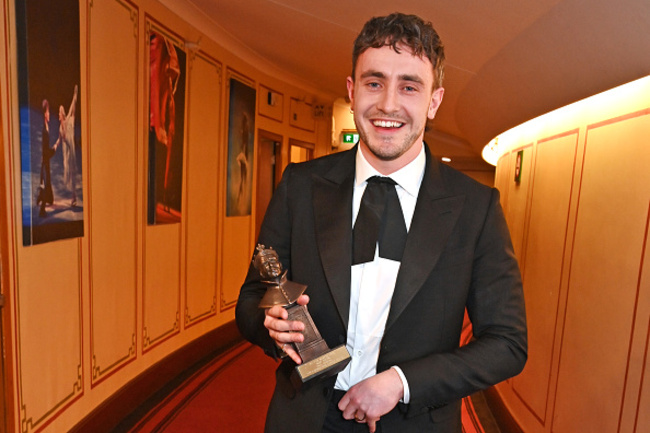
Labour TD and spokesperson for arts, media, culture and sport Robert O’Donoghue believed that the lack of performance spaces and the housing crisis are interlinked.
“The price of everything is only going one way and if you don’t have somewhere to ply one’s trade it makes it more difficult for anyone trying to actually live”, he told The Journal.
Asked whether it is difficult to balance the need for housing supply with the development of arts infrastructure, he maintained that “we can do more than one thing at the same time”.
“Dublin City Council do as much as they can to aid groups, but finding spaces is a problem, and then insurance is a problem”.
Yates stated that large public facing venues such as auditoriums depend on government funding, but that cultural facilities are planned in new developments.
He gave the example of the regeneration of Parnell Sqaure which he said “aims to “restore venues and create a new cultural quarter”.
O’Farrell revealed that many of her theatre peers are still forced to use university infrastructure and resources years after graduating as they cannot afford to use anywhere else.
“Supports like the Dublin Fringe offer free space to create if you’re unfunded. These initiatives are great, but they are inundated”.
To embed this post, copy the code below on your site










have your say