Sign in. It’s quick, free and it’s up to you.
An account is an optional way to support the work we do. Find out more.
Sign in. It’s quick, free and it’s up to you.
An account is an optional way to support the work we do. Find out more.
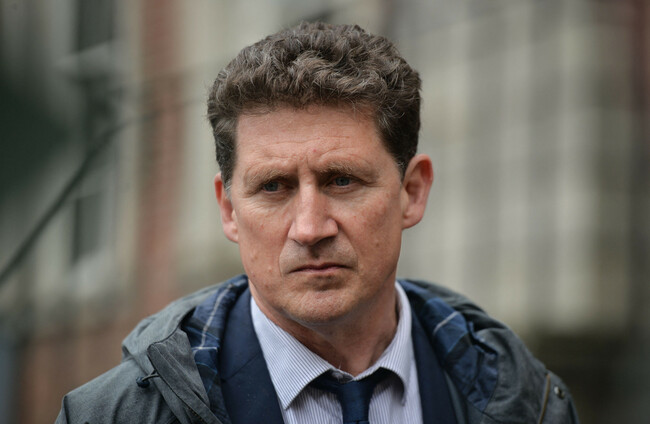
FORMER TRANSPORT MINISTER and Green Party leader Eamon Ryan has hit out at the upcoming increase in bus and train fares for adults and accused the government of not properly investing in public transport.
The change, which will come into effect in January, will see adult fares hiked by an average of 15%.
The ’90-minute’ fare that applies for Leap cardholders travelling in the Greater Dublin area, a measure introduced by the Greens in the last government, is to be increased from €2 to €2.30.
National Transport Authority chief executive Anne Shaw said the fare increases are intended to standardise fares as well as provide additional revenue for investment in the transport network.
Asked by reporters about the increases today, Taoiseach Micheál Martin said: “Government is not in the position to fund everything forever”.
Speaking on RTÉ’s Drivetime programme, Ryan said the Greens had also cut fares by 20% and halved them for younger people when the party was in government.
This is the Department of Public Expenditure and Reform taking back control, getting rid of all of that green nonsense and getting back to the consumer paying.
The former Green leader said the country has a government and a public administrative system that is “happy to maintain a car-dependent country” and “does not invest in public transport sufficiently”.
He also took a swipe at the fuel supports announced by Fianna Fáil and Fine Gael following a week of protests earlier this year, saying: “If you block the ports, if you block O’Connell Street, you get a billion.”
Asked about the Taoiseach’s comments that the increases are necessary in order to expand public transport services, Ryan said: “That would be credible if you had a capital budget to back it up.
“So you have two elements: the current costs. You’ve got to pay the wages, the maintenance, and so on, and then you have to pay for the new bus lanes and new infrastructure.
There’s no money for the infrastructure, so all this is is a balancing exercise for the Department of Public Expenditure.
“If they were serious about expanding public transport services, a lot of which are ready to go, then there would be a capital budget to meet it. There isn’t.”
He acknowledged that minister Jack Chambers had brought in legislation to fast-track three transport projects - MetroLink in Dublin, the Cork Area Commuter Rail Programme and the Galway City Ring Road – but said there was no money for other projects.
Taking Bus Connects in Dublin as an example, Ryan said eight new routes are now through planning while four were currently under judicial review.
“We were planning, and we had the agreement that we would be building them four at a time. What’s this government doing? Building them two at a time.
“It’ll take us another 10–15 years to deliver a bus service that was started 20 years ago. It’s the same in Cork, and it’s the same in Galway.”
He said his Green Party was met with “huge opposition” when it went into government “because we were saying ‘no, we’re not going to build roads as much as we used to, we’re going in favour public transport’.”
That is what has changed. It’s a political choice against public transport in favour of a car-dominated system that does never work because it only gets caught in gridlock.
“It’s bad for our emissions. It’s bad for good quality development of life, so that you can get from A to B without being stuck in traffic the whole time.”
Ryan was also asked about reports that the government could delay the annual increase in carbon tax expected in Budget 2027 to beyond 2030.
He said Ireland was one of the most fossil fuel dependent countries in the world and that the tax is “the most progressive measure we have to protect our people” against fossil fuel increases.
“By stop-starting or deferring – or as it seems that Tánaiste of Simon Harris wants to do now, kind of putting it off because it’s not popular – that is the worst thing for the Irish public because it sends a message to the whole business community: we’re not really serious about climate.”
He accepted that the tax was unpopular, but said the ringfenced income from the tax income “helps to go to small farmers, social welfare increases and particularly those in poorest homes that are badly served”.
Asked whether the public gave his former party its answer in the last election when they lost all but one Dáil seat, Ryan said: “That may well be the case, but sometimes you stand up for what’s right, even if it’s not politically popular.”
He said former finance minister and Fine Gael TD Paschal Donohue understood that the tax was “the best way to protect people” and stuck with it despite it being unpopular.
He concluded by saying that he could see the government actually deferring it.
“Even though all the political pundits are saying it’s gone, it’s done, I think that would be an impossible decision for a Fine Gael minister. I think they would not have an answer to the question ‘are you abandoning any responsibility when it comes to reducing our independence in fossil fuels?’”.

To embed this post, copy the code below on your site














have your say