Sign in. It’s quick, free and it’s up to you.
An account is an optional way to support the work we do. Find out more.
Sign in. It’s quick, free and it’s up to you.
An account is an optional way to support the work we do. Find out more.
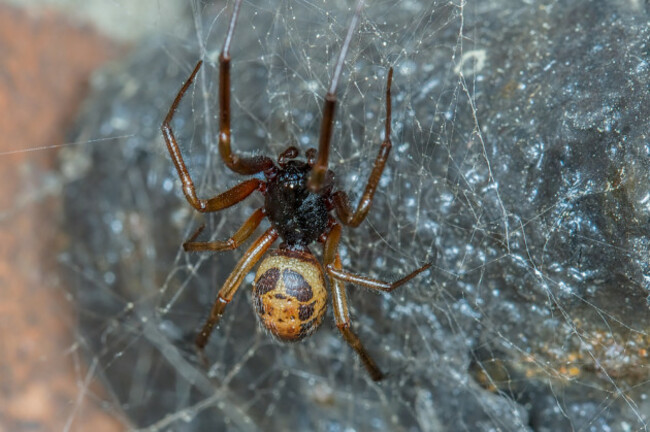
NUI GALWAY RESEARCHERS have developed the world’s first verified guide and symptoms checklist on how to recognise and treat bites from the false widow spider.
Although the household spider is common here, it is in fact a foreign species that has steadily invaded Ireland over the past 20 years through human transport of goods.
The first true case of a false widow spider bite was identified in the UK in the 1990s – the second was in Chile last year.
There has since been five additional reported cases, three in Ireland and two in the UK, leading to the NUI Galway study being the most intensive research carried out on this species to date.
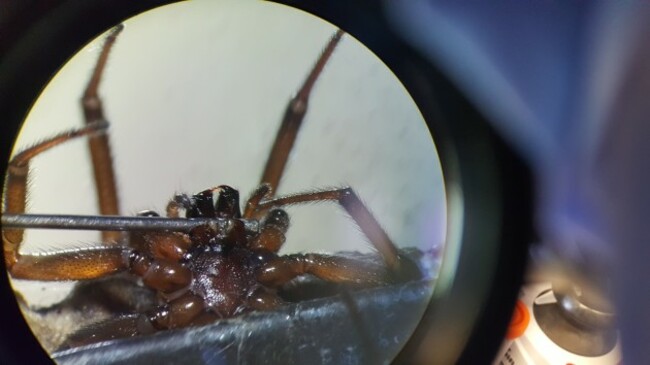
A false widow’s bite is not fatal, but it can result in a large swelling within three minutes of being bitten, sometimes followed by the formation of a dry necrotic wound when the swelling subsides, and inflammation for a few days afterwards.
These are the symptoms they listed, ranked from common to uncommon:
Very common (almost all victims present these symptoms):
Common (present in a majority of victims in addition to the above)
Rare (some victims may present this symptoms in addition to the ones above)
Very rare (very few victims may present these symptoms in addition to all or some of the above)
The venom from a false widow spider is a lot more powerful than the researchers expected, producing about one tenth of a millionth of a litre of venom.
The lead author of the study, Dr Michel Dugon from the Ryan Institute at NUI Galway, said:
While it is extremely unlikely that a bite will ever be fatal, we do need to consider bites from False Widows as a potential health risk given the increase of this species not just in the UK and Ireland but also mainland Europe and the US.
The team compiled the list and guide while investigating whether the venom from a false widow spider could also be a source of novel therapeutics to develop medication to treat illnesses ranging from bacterial infection to cancer.
The Venom Systems and Proteomics lab in NUI Galway is the only one in the world working on extracting venom from the false widow spider for potential therapies.
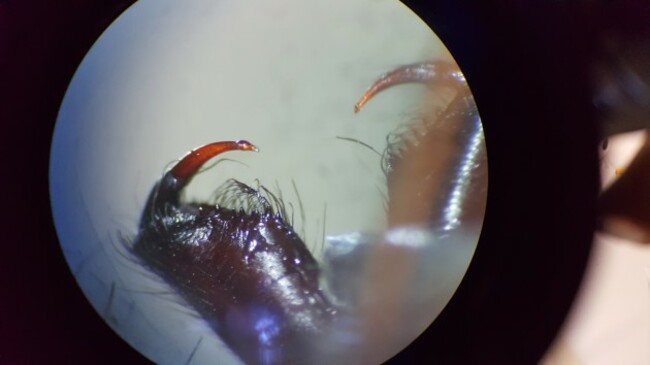
This particular species of spider is having a detrimental effect on other local species and spiders in Ireland due to their competitiveness and quick breeding ability.
The false widow lives for five to seven years whereas most other spider and bug species in Ireland only lives for up to one year.
In Ireland, false widow spiders live close to buildings and houses inhabited by people, and can only survive in cities and not in rural areas.
Based on the latest research, Dublin, Cork and Wexford have the highest number of false widow spiders.

To embed this post, copy the code below on your site














have your say