Sign in. It’s quick, free and it’s up to you.
An account is an optional way to support the work we do. Find out more.
Sign in. It’s quick, free and it’s up to you.
An account is an optional way to support the work we do. Find out more.
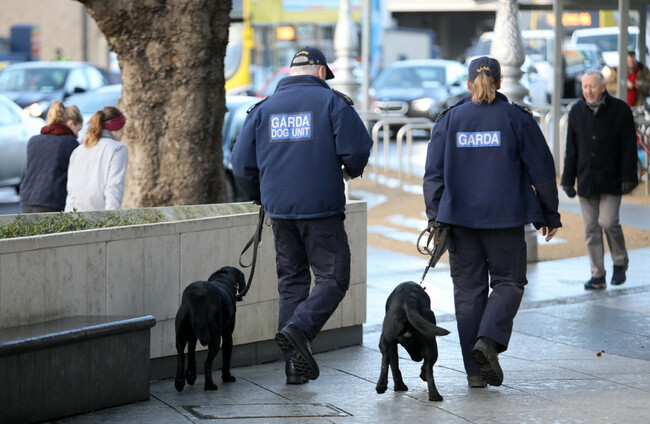
WHILE THEY’RE BETTER known for sniffing out crime, the shelter used for the Garda Dog Unit in Dublin has been described as in need of “urgent” works to improve the conditions for the canines and their human partners.
The Garda Representative Association (GRA) has described the unit at Kilmainham Garda Station as having “poor hygiene conditions” and “inadequate facilities” for human and animal alike.
GRA vice president Niall Hodgins, who visited the site ahead of this week’s conference, told The Journal that the conditions are “appalling” and badly in need of works.
The union had its annual conference this week where a motion expressed concern about dilapidated conditions for the unit.
While the dogs usually live with their Garda handlers, they are left at the kennels temporarily if their handler needs to attend a job elsewhere.
Hodgins said the more than 20 dogs in the unit serve gardaí, but protect the communities when they are tasked to work.
“Despite their unwavering commitment they’ve been left waiting for years for the support and development of facilities that the dog unit uses,” the GRA vice president added.
“There is a mediocre exercise pen for the animals. It pains me to see they’re being neglected by senior management over a number of years.”
Garda Alan Cummins, a member of the Dublin Dog Unit who brought the motion to this week’s gathering in Killarney, told The Journal that the site’s kennels need to be modernised so that gardaí are able to properly disinfect and light the shelter.
All maintenance and husbandry work is carried out by the gardaí at the site.
“The kennels are best described as in need of immediate modernisation,” Cummins said.
He added that the “priority hasn’t been the same” because the kennels are only used temporarily in between jobs.
“But nonetheless that’s where my partner has to be put if I’m going to court or if I’m on a course, or if I don’t need that dog and need to use a different dog for an extended job.”
Cummins continued: “It’s a two-way thing with the dog, what you give you get back ten-fold. They give their working lives in service to us and the state, so it’s only right that we give something back to them.”
The unit in Kilmainham has nine gardaí and around 22 dogs, with other units in the south of the country.
“We are the smallest dog unit police force in western Europe but the work that we do is not commensurate to our size,” Cummins said, “We stand up and attend when there are riots, if there’s missing persons calls, if there are serious public order incidents or recovery of drugs.
“It requires thousands of hours to get these dogs trained up to go out on the street and when you have to go to work to have these difficulties and the basic things can’t be looked after on that site, it makes a hard job even harder.”
Cummins added that the conditions of the site extend to the changing rooms which cause further hassle.
“The building we’re in dates back to the late 19th century. We’re limited in what we can do on the site given it’s a protected building,” Cummins explained.
He added that gardaí have to get changed in a 20-year-old portacabin with black mould. “The male shower room is located in a former shed, and the female toilets and shower rooms are not much better as they immediately adjoin the kennels,” Cummins said.
The Garda Press Office has been contacted for comment.

To embed this post, copy the code below on your site











have your say