Sign in. It’s quick, free and it’s up to you.
An account is an optional way to support the work we do. Find out more.
Sign in. It’s quick, free and it’s up to you.
An account is an optional way to support the work we do. Find out more.


IN LESS THAN a month, voters in the United States will select the women and men they want to represent them on Capitol Hill and in state houses across the country. President Donald Trump is deeply unpopular, stemming in large part from his failure to reduce the cost of living, in concert with an extremely foolish decision to attack Iran. Additionally, the historical precedent is that a second time president’s party typically takes a beating in the midterms. 3 November, therefore, should not be a good day for Republicans on the ballot.
Indeed, the polling shows Democrats in an enviable position. They have a very solid chance of gaining control of both the US House of Representatives and Senate. GOP strategists counter that the polls are skewed leftward, that their adherents are reluctant to respond to surveys from distrusted sources, and that last minute deciders, on reflection and in the wake of an avalanche of spending on hard-hitting ads, will opt for their standard-bearers. Plus, Democrats are heavily reliant upon “low propensity voters” – especially the young and citizens of colour.

There are innumerable variables in hotly contested races. To paraphrase Donald Rumsfeld, known unknowns and unknown unknowns abound. At this late juncture, in declining order of probability, it is rather odd that these disparate scenarios appear plausible: 1) a seismic Democratic triumph resulting in their running the legislative branch and making President Trump’s next two years in office a living hell, 2) a relative stalemate in which Democrats win, but not in dramatic fashion and 3) a strong(ish) outcome for conservatives in which they fare better than expected and hang on to their Senate majority, prevailing in the likes of Maine, Michigan and Texas.
Leaving aside conjecture as to what may happen, what can the two parties do to maximise their vote totals? It’s a trickier task than ever in a climate in which tens of millions are turned off by and disdainful of Democrats and Republicans near equally. Here are a few pieces of unsolicited, wholly agnostic advice on messaging for the two rivals in the final stretch.
Starting with Democrats, a core element of their closing argument ought to centre on posing a simple question to the electorate: “Are you better off today than you were two years ago?” A vast swathe absolutely are not. Notwithstanding Trump’s pledge to bring the prices of gas and groceries way down, they continue to spiral out of control.
And his moves on tariffs and in the Middle East have only exacerbated the crisis. He has not lived up to the promises he made in 2024, which led a sizeable cadre of struggling Americans to give him a second chance. Some of his rhetorical flourishes, in which he exudes cold indifference to their plight, can be deployed to great effect. The narrative, in sum, is that Donald Trump said he was for you, but he has made your lives worse – and he doesn’t care.
The condemnations must be premised on the point that President Trump is a failure and not on the claim that President Trump is a fascist. Beleaguered Americans, whose faith in the institutions has been eroded and who are generally cynical, won’t be persuaded by such high-minded stuff from politicians who will only be garnering support in many instances on the basis that they are the least bad option, not a saviour. Moreover, telling people who went for Trump and the Republicans in the past that they facilitated the rise of a putative dictator, tacitly assigning blame to them in the process, can backfire for obvious reasons.

Crucially, the party seeking power must have more to offer than negativity about the incumbent commander-in-chief and his colleagues they are trying to defeat. Each and every Democrat, depending on where they are and the nature of their constituencies, should have a handful of proposals they vow to fight for and can convey in easily digestible sound bites. The individuals and families who candidates hope to serve want solutions to the problems they face daily.
Democrats, by contrast to their foes, believe government can be a force for good in Americans’ lives. Now more than ever, the party that has consistently advocated for policies and programmes benefitting the less well-off has to communicate exactly what they are going to do and how they are going to do it.
The job in the weeks ahead for the GOP is much tougher. Yes, they continue to make the case that the fault for inflation lies with an inept Joe Biden and that President Trump’s bombing of Iran was necessary – that the immediate pain will translate to a safer world in future. Not many are buying it.
Consequently and simultaneously, astute Republicans in battlegrounds will subtly distance themselves from the misadventure. They will walk a careful tightrope, cognisant that criticism of a man who still inspires unwavering fidelity from MAGA denizens could be politically damaging. It’s not a great spot to be in. They will do something similar on the immigration issue, where their big advantage has been squandered by often horrific overreach.
The rest of the gameplan is not nice. Politics is not a nice business. Republicans have little choice but to resort to the old playbook on the culture wars, because it will help to distract from unpleasant economic realities and because Democrats are perceived to be out of step with the residents of the massive and geographically amorphous entity called Middle America. The political messaging here operates on multiple fronts and speaks to their particular sensibilities and to their fears.
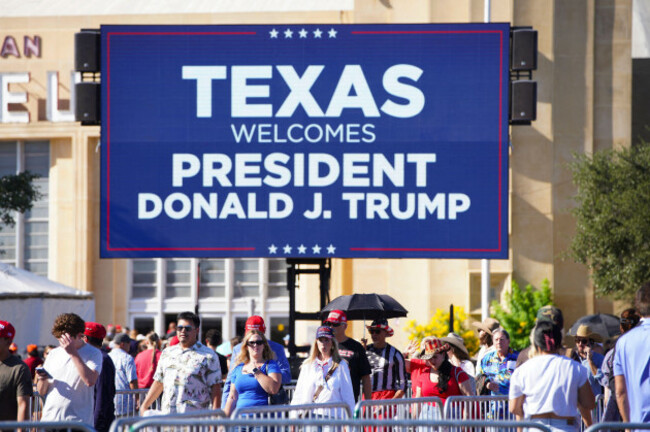
The common thread has to be that Republicans are “more American” than their opponents. This includes a tacit admission that the US is not where rock-ribbed conservatives wish it were in 2026 and that work needs to be done to get it there.
Ticking the box for Democrats who don’t share “our values” is not the answer, though. Voting Republican at this testing moment may be hard, yet it is the patriotic, morally upright thing to do. And that transcends just about everything else. Again, this tack is not pretty, to put it euphemistically.
A further bit of advice I’d give to anyone in either grouping who is locked in a tight midterm campaign is as follows. The Trump administration has correctly been upbraided for waging war on colleges and universities.
I’d encourage any politician to announce a different sort of war on US higher education with a simple slogan: “Cut your extortionate tuition fees or I am coming after you.” Even if these ultimately prove to be empty words, I am convinced that there are loads of votes from across the ideological spectrum in them.
Larry Donnelly is a Boston lawyer, a Law Lecturer at the University of Galway and a political columnist with TheJournal.ie.
To embed this post, copy the code below on your site













have your say