Sign in. It’s quick, free and it’s up to you.
An account is an optional way to support the work we do. Find out more.
Sign in. It’s quick, free and it’s up to you.
An account is an optional way to support the work we do. Find out more.
 Live Blog
RELATIVES of the 11 men who died aboard the Deepwater Horizon oil rig are flying over the Gulf of Mexico today to mark the first anniversary of the worst offshore oil spill in the nation’s history.
Meanwhile, on land, vigils were scheduled in Louisiana, Mississippi, Alabama and Florida to mark the disaster.
On the night of 20 April, 2010, the Deepwater Horizon, a rig owned by Transocean Ltd, burst into flames after drilling a well for BP PLC, killing 11 workers on or near the drilling floor. The rest of the crew evacuated, but two days later the rig toppled into the Gulf and sank to the sea floor. The bodies were never recovered.
Over the next 85 days, 206 million gallons of oil — 19 times more than the Exxon Valdez spilled — spewed from the well.
In a statement, President Barack Obama paid tribute to the 11 men killed in the blast and thanked the thousands of responders who “worked tirelessly to mitigate the worst impacts” of the oil spill.
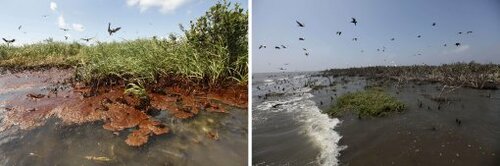
Biologists are concerned about the spill’s long-term effect on marine life. Accumulated oil is believed to lie on the bottom of the Gulf, and it still shows up as a thick, gooey black crust along miles of Louisiana’s marshy shoreline. Scientists have begun to notice that the land in many places is eroding.
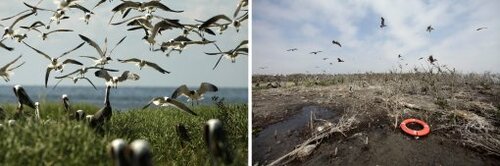
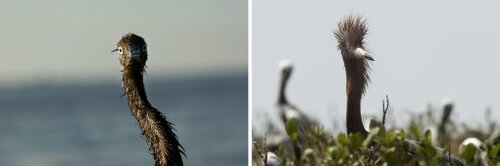
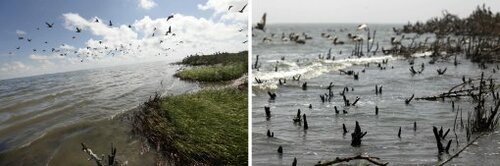
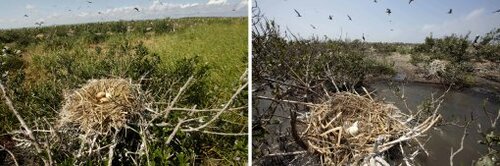
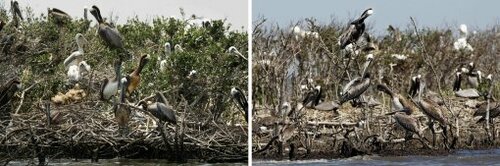
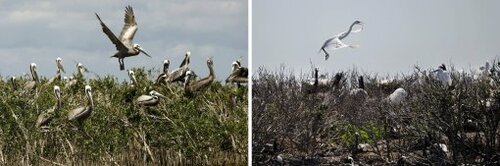
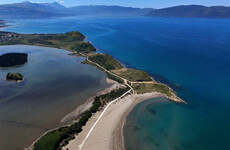
For example, on Cat Island, a patch of land where pelicans and reddish egrets nest among the black mangroves, AP photographs taken a year ago compared with those taken recently show visible loss of land and a lack of vegetation:


To embed this post, copy the code below on your site










have your say