Sign in. It’s quick, free and it’s up to you.
An account is an optional way to support the work we do. Find out more.
Sign in. It’s quick, free and it’s up to you.
An account is an optional way to support the work we do. Find out more.
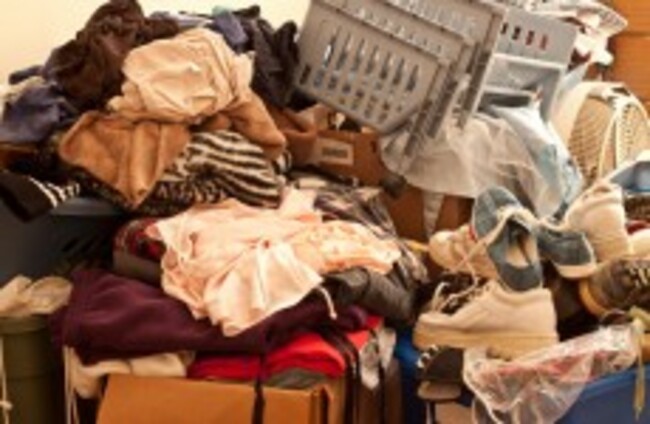
HOARDING IS FAR more common than previously thought and can affect people’s relationships as well as being a health and safety issue.
However, as Senior Clinical Psychologist Dr Olivia Gordon points out, “acquiring and saving possessions is a widespread human behaviour and is largely considered an acceptable aspect of life”.
In fact, a recent study has found that almost two in five Irish adults (38%) consider themselves to be a hoarder.
The survey also found that that more than one third of Irish adults (36%) say that the hoarding habits they, or their partner, display are negatively impacting their relationship.
The research, which was conducted by Empathy Research and commissioned by self-storage company NESTA showed that well over half of respondents (58%) found it difficult to get rid of possessions.
This was especially challenging for Irish mothers, with one fifth of Irish adults (22%) considering their mum to be a hoarder.
NESTA has even established four different kinds of hoarder personalities:
When does it become a problem?
Dr Gordon says the attachments hoarders form to their things interfere with their ability to live.
She also pointed out that they attach value to a much wider range of possessions.
“People who hoard have such difficulty throwing away possessions, regardless of their value, that their living spaces become cluttered, eventually to the extent that their ability to use their living or work space is disrupted.
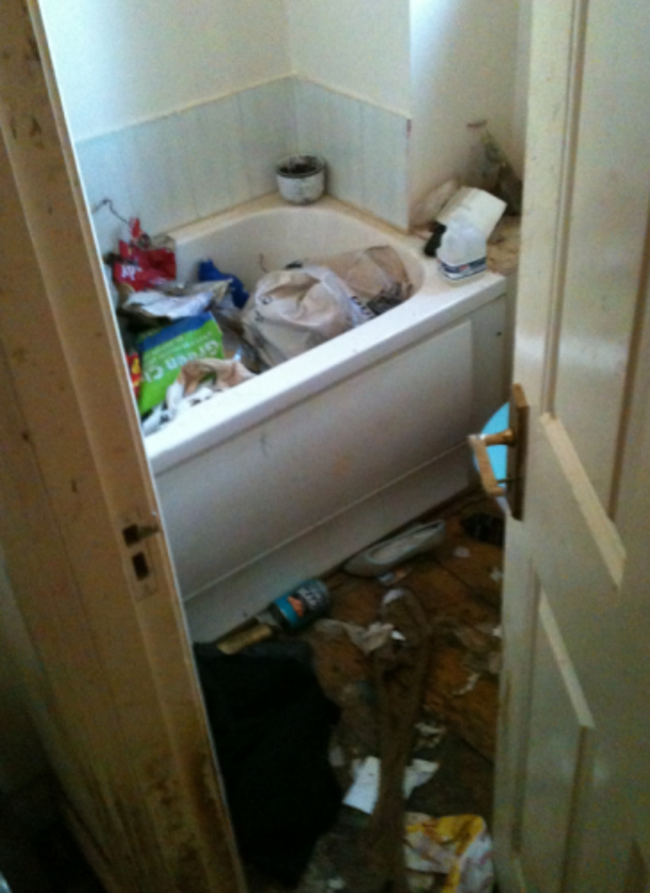
They can’t have a bath because, even if they can get to it over the boxes, the bath is full of shoes. They can’t eat at the kitchen table because it is piled high with books and clothes.
Professor of Psychology at Smith College in Northampton, Massachusetts, Randy Frost says emotional and sentimental attachment is a central motive for hoarding.
Frost told Psychiatry Advisor, “The person anthropomorphizes the possession, believing that he or she will “hurt the feelings” of the possession by discarding it.
Other motives concern the use of possessions (“you never know when it can come in handy”) or worry about information or memory loss (“if I discard this, I will forget its content or the event it represents”).
According to Frost, individuals with hoarding disorder have an “excessive attachment to objects, almost as if these items are extensions of themselves.”
Leading expert Professor Paul Salkovskis from the University of Bath, says:
Any attempt to help people with hoarding problems must begin with understanding and care rather than diagnosis and pressure.
“People with hoarding problems are stuck or trapped in terms of how they live; we should first try to see the person who has been overwhelmed by their possessions rather than the possessions themselves, and to help that person find a way out of a situation when they are overwhelmed and engulfed by what they own.”

To embed this post, copy the code below on your site















have your say