Sign in. It’s quick, free and it’s up to you.
An account is an optional way to support the work we do. Find out more.
Sign in. It’s quick, free and it’s up to you.
An account is an optional way to support the work we do. Find out more.
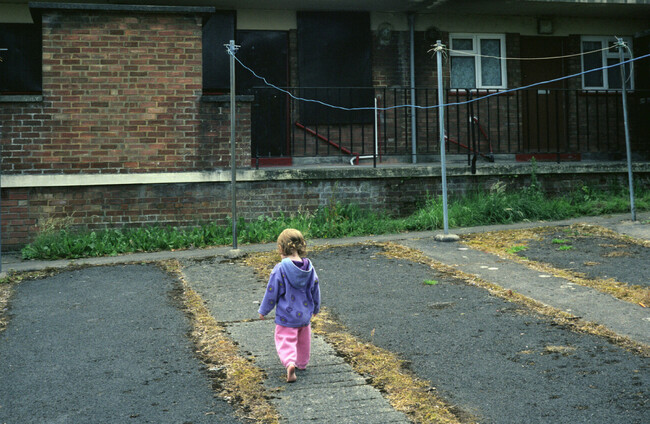
ACCOUNTING FOR HOUSING costs when calculating the number of children living in poverty and otherwise deprived doubles the number of children technically classed as being “consistently poor”, new research from the ESRI has found.
Housing costs are not currently factored in when assessing the situation, which is done so using equivalised income – a measure of household income that takes account of the differences in a household’s size and composition, and is therefore equalised for all household sizes and compositions.
It is used for the calculation of poverty and social exclusion indicators.
Today’s report, named ‘Deprived children in Ireland: Characterising those who are deprived but not income-poor’, stated that close to one in five (17%) children were deprived but not at risk of poverty in 2023. This marked an increase of 5% from the year previous.
At risk of poverty is defined as a household that has an equalised disposable income below 60% of the national median equalised disposable income.
In 2023, there was a decline in the number of children in consistent poverty, from 7% to 5%.
In 2023, the median equalised disposable income of individuals was €27,597, according to the Central Statistics Office. The at risk of poverty threshold was €16,588.
Over half of children that are deprived but not at risk of poverty live in households with incomes just above the poverty line (between 60 and 80% of the median income).
The research from ESRI said that an “additional explanation” for children being materially deprived but not at risk of poverty is due to the households in question being faced with additional housing costs or needs that are not captured in the equivalised income measure.
“Adjusting the measure of income poverty for housing costs almost doubles the number of children categorised as consistently poor, while decreasing the number defined as deprived not [at risk of poverty], from 14% to 8.6%,” the report stated.
The report said that this shows that a “significant number” of the cohort are facing high housing costs – preventing them from “translating their relatively higher income into an adequate standard of living”.
Among children who are deprived but not at risk of poverty, 39% live in households where at least one person over the age of 16 has a disability, and 41% live in lone parent households, the report found.
“Due to the extra costs associated with disability, households that include a disabled person do not have the same standard of living as households with the same income but without a disabled member.”
Other risk factors outlined in the report include migrant status, low education levels and unemployment of adults in the household. It stated that the households of children who are deprived but not at risk of poverty experience “significant financial strain, with debt problems and heavy burdens from loan repayments comparable to those in consistent poverty”.
The ESRI said that its findings suggest that adjusting income measures for housing costs would allow research to better capture the impact of the current housing crisis on the standard of living of Irish households.
It also said efforts to address child poverty need to address the substantial risks faced by lone parents and people with disability.

To embed this post, copy the code below on your site













have your say