Sign in. It’s quick, free and it’s up to you.
An account is an optional way to support the work we do. Find out more.
Sign in. It’s quick, free and it’s up to you.
An account is an optional way to support the work we do. Find out more.
LAST UPDATE | 19 Jun 2025
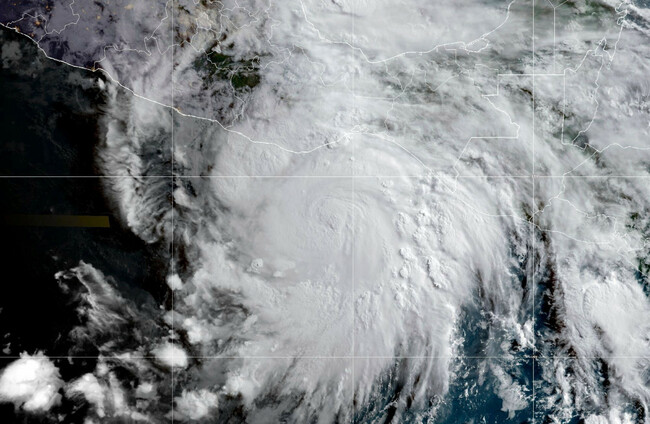
HURRICANE ERICK HAS made landfall in western Mexico as the category 4 storm is expected to cause mudslides and death.
It comes as the US National Hurricane Center (NHC) upgraded its severity to a category 4 storm.
In the US, the Saffir-Simpson hurricane wind scale is used to determine the severity of storms, ranging from Category 1 to Category 5, with the latter being the most severe.
The NHC describes the storm as “extremely dangerous” as it now descends upon Mexico’s Pacific coast.
Erick is expected to bring “life-threatening flooding and mudslides, especially in areas of steep terrain”, according to the NHC’s latest bulletin.
“Major Hurricane #Erick makes landfall in extreme western Oaxaca, Mexico just east of Punta Maldonado,” the NHC said in a post on social media, declaring the hurricane’s estimated maximum winds to be around 205km/h.
By 6am this morning Irish time, Erick was moving northwest at a speed of nearly 15km/h with maximum sustained winds increasing to 230km/h and higher gusts.
The slow-rolling hurricane is expected to weaken significantly as it moves over land, but authorities are warning it could still cause significant damage.
Heavy rainfall could cause “life-threatening flooding and mudslides, especially in areas of steep terrain” the UHC said.
Mexican authorities said they were also expecting heavy rain in Chiapas state.
President Claudia Sheinbaum urged people to avoid going out, and advised those living in low-lying areas or near rivers to move to shelters.
“Contact is being maintained with the defense forces and the Navy, which are in the area” she said. “We will be able to report in a few hours what the effects on these populations are.”
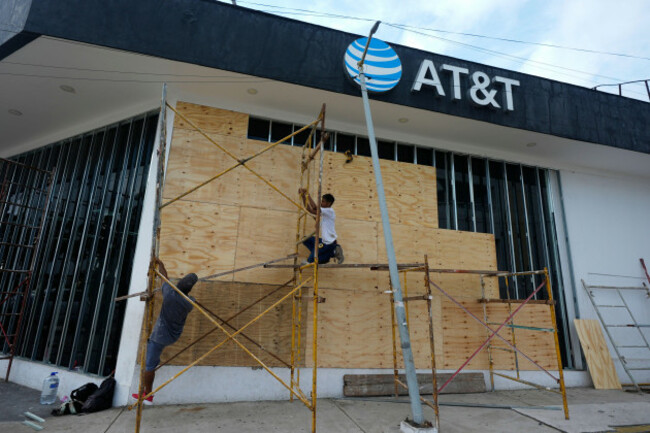
In Acapulco, a major port and resort city famous for its nightlife, police with bullhorns walked the beach and drove around town warning residents and holidaymakers of the storm’s arrival.
Some shops boarded up their windows and operators of tourist boats brought their vessels ashore.
Rainfall began in the late afternoon after a sunny day.
About 400km south of Acapulco, the city of Puerto Escondido and its 30,000 inhabitants braced for the hurricane’s effects.
Restaurants were already closed despite tourists unwilling to give up their vacations, an AFP journalist noted from the scene.
“They say it’s going to hit this side of the coast, so we’re taking precautions to avoid having any regrets later,” Adalberto Ruiz, a 55-year-old fisherman sheltering his boat said.
Laura Velazquez, national coordinator of civil protection, said the government was using patrols and social media to warn people.
Some 2,000 temporary shelters have been set up in Chiapas, Guerrero and Oaxaca, and hundreds of troops and electricity workers have been deployed to help with any clean-up efforts.
Local authorities have suspended classes and closed ports along the coast, including the port of Acapulco, to shipping.
Mexico sees major storms every year, usually between May and November, on both its Pacific and Atlantic coasts.
In October 2023, Acapulco was pummeled by Hurricane Otis, a powerful Category 5 storm that killed at least 50 people.
Hurricane John, another Category 3 storm that hit Acapulco in September last year, caused about 15 deaths.
With reporting from AFP.
To embed this post, copy the code below on your site














have your say