Sign in. It’s quick, free and it’s up to you.
An account is an optional way to support the work we do. Find out more.
Sign in. It’s quick, free and it’s up to you.
An account is an optional way to support the work we do. Find out more.
INFLATION ROSE BY 4.1% in the 12 months leading up to September of this year, with the largest increase being in household costs like electricity and fuel, according to new data from the Central Statistics Office (CSO).
This was up month-on-month and the highest rate of inflation since January 2024.
There were particular increases in home heating oil, electricity, rents and mortgage interest repayments, the CSO indicated.
Home heating oil alone rose by 58% in the last 12 months.
Transport costs went up by 7.5%.
Between August and September, consumer prices rose by 0.2%, the CSO said.
The category that recorded the largest rises in the space of a month was clothing and footwear, up 2.5%.
Dermot Daly of Ernst & Young said that today’s figures “show that inflationary pressures continue to build”.
“The fact that all spending categories have now recorded annual price increases for three consecutive months highlights the breadth of the cost pressures facing Irish households and businesses.”
Not all prices have risen over the course of the last 12 months though.
Anthony Dawson of the CSO said there were price decreases in the prices of some typical food products the 12 months to September 2026. They included butter, cheese, bread and milk.
Other food, like sirloin steak and potatoes increased in price.
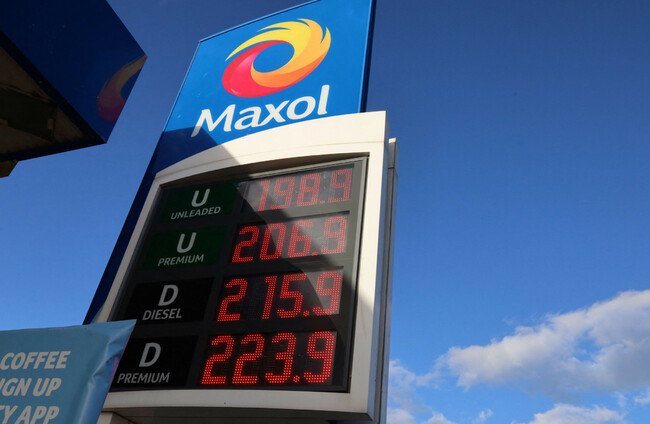
The national average price for a litre of diesel in September 2026 was €2.06, an increase of 37c on the same month last year. Petrol prices increased by 24c to €1.96 a litre.
Wars in Ukraine and the Middle East have had drastic effects on the prices of fuels and led to inflation worldwide, which is something the government noted when announcing its budget for 2027 earlier this week.
Daly said that some of the measures in the latest budget would help to alleviate some of the pressures on households and that people have still been spending despite the circumstances.
“Consumers have shown resilience,” Daly said, noting that “household spending is likely to grow 2.5% after inflation this year”.
However, he also said that “many will have to prioritise essential purchases while taking a more considered approach to discretionary spending”.
“As we move closer to the important Christmas trading period, retailers will be hoping that consumer spending remains resilient despite ongoing cost pressures.”
Responding to the inflation figures today, Labour’s finance spokesperson, Ged Nash, accused the government of “abandoning workers and families in Budget 2027 “.
He was particularly critical of the government’s decision not to include energy credits.
“The epic fail on energy credits will in time be the story of this Budget, up there with the failure to adjust tax for PAYE workers in October 2025,” Nash said.
The Louth TD said November’s Finance Bill “needs to see a windfall tax on power firms to pay for help for households”.
He also said the budget “failed to come close to the real measures needed to even pretend to protect people from rising prices” when it comes to energy prices.
“Ireland already has the highest electricity prices in Europe, yet no measures are being taken to support and protect the people who can barely afford to turn the radiators on this weekend as the cold hits.”

To embed this post, copy the code below on your site












have your say