Sign in. It’s quick, free and it’s up to you.
An account is an optional way to support the work we do. Find out more.
Sign in. It’s quick, free and it’s up to you.
An account is an optional way to support the work we do. Find out more.
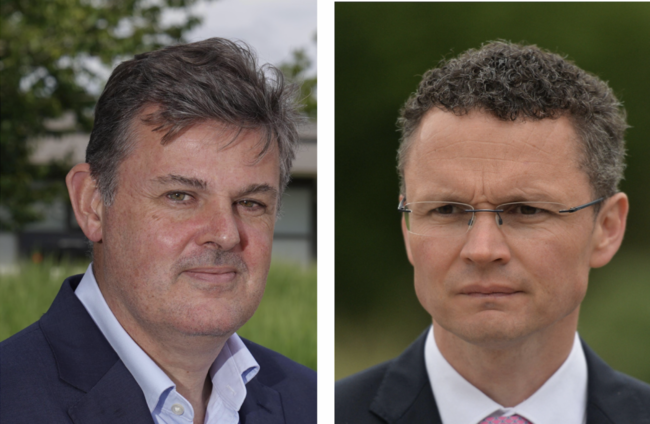
RTÉ IS MEETING with Patrick O’Donovan, the media minister, this afternoon after O’Donovan cut the broadcaster’s budget for next year to €20 million less than previously promised.
Talks will focus on promised reforms at RTÉ, including a voluntary exit programme.
O’Donovan said yesterday that he was not satisfied that there had been “sufficient progress in delivering the smaller, more agile processes that we sought to be delivered under the strategy”.
RTÉ director general Kevin Bakhurst has said he “completely rejects” this assertion.
The meeting will involve O’Donovan, Bakhurst and RTÉ board chair Terence O’Rourke.
The government had committed to providing public funding of €725 million over the course of three years to RTÉ from licence fee receipts and a direct top-up from the Exchequer.
Of this, €260 million was allocated for 2027. However, it was announced on Wednesday that the broadcaster would instead receive €240 million – comprised of €66 million in direct Exchequer support, and €174 million in projected licence fee collections.
During leaders’ questions in the Dáil this afternoon, Social Democrats TD Sinead Gibney said Bakhurst was blindsided by news that the media minister had written to Jack Chambers last week, warning that the government’s deal with RTÉ would be reneged on if his department didn’t get more cash.
She accused O’Donovan of “once again throwing his toys out of the pram”.
“He didn’t get what he wanted from the budget allocation and is now deflecting by lashing out at RTÉ.”
Responding on behalf of the government, Enterprise Minister Peter Burke said he wanted to reaffirm the government’s commitment to RTÉ, saying it is very important in a free democracy to have public sector broadcasting.
The national broadcaster must be on a sustainable footing, he added, stating that the government has concerns about the pace of reforms.
“In relation to some of its headcount, we have seen it struggle in relation to the commitments it made for 380 voluntary redundancies, as well as 60 retirements over a five-year period,” said the minister.
He said O’Donovan is meeting with the chief executive and the chairperson of the board today to “work this out”.
“What we need is to ensure that reforms in the national broadcaster take a pace,” he said, adding that the government does not expect compulsory redundancies at RTÉ.
The European Broadcasting Union (EBU) said today that it was “deeply concerned” about the decision to cut RTÉ’s funding.
The international alliance of public service media organisations said that RTÉ has “entered into agreements with independent producers and other partners, invested in Irish drama, live sport and digital services, and continued to deliver trusted, independent news and analysis.
“Withdrawing €20 million in the final year, with those commitments already in place, breaks the agreement and leaves RTÉ to fund commitments it made in good faith,” it said.
Noel Curran, the current director general of the EBU, was previously RTÉ’s director general between 2011 and 2016.
Coimisiún na Meán, Ireland’s media regulator, has also said “adequate, sustainable and predictable” funding is needed for both RTÉ and Irish broadcaster TG4. It has expressed disappointment that RTÉ did not get the level funding previously promised.
Coimisiún na Meán said it will engage with RTÉ to “understand the impact of this decision for the delivery of its services and performance commitments for Irish audiences”.
Meanwhile, RTÉ and the Department of Culture, Communications and Sport have been called before the Oireachtas Public Accounts Committee to clarify the funding issues.
The committee hearing is due to take place later in October.
With reporting by Christina Finn
To embed this post, copy the code below on your site












have your say