Sign in. It’s quick, free and it’s up to you.
An account is an optional way to support the work we do. Find out more.
Sign in. It’s quick, free and it’s up to you.
An account is an optional way to support the work we do. Find out more.
LAST UPDATE | 27 Feb
IRAN HAS AGREED never to stockpile enriched uranium, mediator Oman’s top diplomat says, in what he called a breakthrough that he hoped would prevent war.
The last-ditch talks between Iran and the United States had initially sparked optimism, but it was tempered by Tehran warning Washington to drop “excessive demands” if it wanted a deal.
US President Donald Trump earlier said he did not want Iran to have any uranium enrichment at all, even for civilian purposes.
“Not 20%, 30%, they always want 20%, 30%, they want it for civilian, you know, for civil. I think it’s uncivil,” he said.
However, in a significant development, Iran has agreed to the condition.
“This is something completely new. It really makes the enrichment argument less relevant, because now we are talking about zero stockpiling,” Omani Foreign Minister Badr Albusaidi, who is mediating the talks, told CBS News.
The Trump administration accuses Tehran of intending to build a nuclear weapon. But “if you cannot stockpile material that is enriched then there is no way you can actually create a bomb,” Albusaidi said.
Trump has voiced frustration with Iran’s stance in nuclear negotiations.
He has ordered the biggest military build-up in decades in the Middle East, with the world’s largest aircraft carrier, the USS Gerald R. Ford, approaching the coast of Israel, as he demands Iran agree to sweeping concessions on concerns starting with its nuclear program.
Trump said today that the cleric-run state was “not willing to give us what we have to have.”
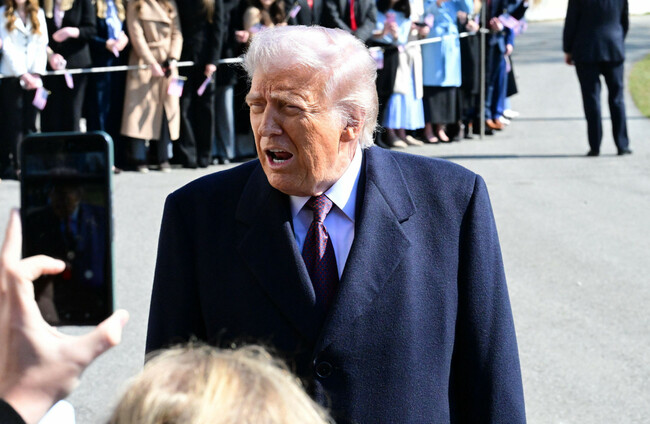
“We’re not exactly happy with the way they negotiated. They cannot have nuclear weapons, and we’re not thrilled with the way they’re negotiating,” Trump told reporters.
Trump said in his State of the Union address this week that Iran had “already developed missiles that can threaten Europe and our bases overseas, and they’re working to build missiles that will soon reach the United States of America”.
He also accused Iran of “pursuing sinister nuclear ambitions”, despite Tehran’s insistance they’re for civilian purposes.
The Iranian foreign ministry called these claims “big lies”.
Germany “urgently” advised nationals not to go to Israel as it sharpened its travel advice over the increasing tensions in the Middle East.
The advice had previously applied only to certain parts of Israel but now takes in the whole country.
Meanwhile, the United States authorised the departure of non-emergency embassy staff from Israel as it threatened strikes on Iran.
Washington already had more than a dozen warships in the Middle East, including another aircraft carrier, before deploying the Gerald R. Ford.
A previous attempt at negotiations collapsed when Israel launched strikes on Iran last June, beginning a 12-day war that the US briefly joined to bomb Iranian nuclear sites.
The UN rights chief Volker Turk said he was “extremely alarmed” at the risk of a regional escalation around Iran, adding: “I hope the voice of reason prevails.”
Turk also highlighted Iran’s domestic pressures, after Tehran launched a mass crackdown on nationwide protests last month, killing thousands of people according to rights groups.
“The situation in Iran remains volatile,” Turk told the Human Rights Council in Geneva, noting that protests have since resumed around Iranian universities, “making it clear that the underlying grievances remain”.

To embed this post, copy the code below on your site















have your say