Sign in. It’s quick, free and it’s up to you.
An account is an optional way to support the work we do. Find out more.
Sign in. It’s quick, free and it’s up to you.
An account is an optional way to support the work we do. Find out more.
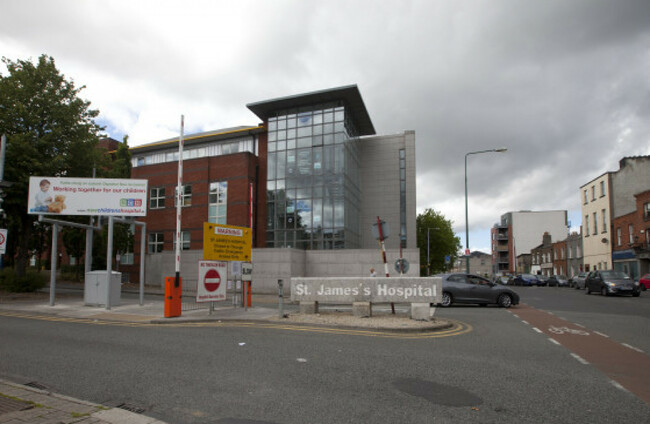
A PATIENT AT St. James’s Hospital in Dublin has become the first person to receive a cell therapy treatment for lymphoma in Ireland, in a major development for blood cancer patients.
Previously, a patient who required this potentially life-saving personalised treatment, called Chimeric Antigen Receptor –T cell (CAR-T) therapy, would have had to travel to the UK.
The process involves collecting a patient’s own T-cells — a type of immune response cell — and preparing them for export in the hospital’s on-site stem cell laboratory. The cells are then sent to a specialised overseas facility where they’re re-engineered to target cancer cells.
They are then reintroduced into the patient’s bloodstream.
This new therapy is currently licensed to treat specific blood cancers, including Acute Lymphoblastic Leukaemia (ALL) and Diffuse Large B-Cell Lymphoma (DLBCL), a subtype of non-Hodgkin lymphoma (NHL).
However, it is expected that the use of CAR-T cell therapies will include other diseases in the coming years.
“This therapy had previously only been available overseas and it will make a huge difference to people to be able to access it in Ireland,” said Minister for Health Stephen Donnelly today.
“CAR-T therapy is a lifeline for suitable blood cancer patients whose other treatment options have been exhausted,” said Dr. Larry Bacon, clinical lead for the National Adult CAR-T Centre at St James’s Hospital.
“It is the most advanced immunotherapy currently available for patients with lymphoma,” he added.
The treatment has around a 40% success rate, though without it most of the patients who could benefit would instead be facing terminal illness. The HSE spent €8.18m on Irish patients receiving this therapy in the UK in 2019 and 2020, via the Treatment Abroad scheme.
The patient who received the treatment, and wished to remain anonymous, said: “I’m thrilled to be able to access this treatment in Ireland. I feel like I was on the edge of a cliff about to fall off and I’ve been thrown a rope and I’m going to grab it with both hands.”
To embed this post, copy the code below on your site













have your say