Sign in. It’s quick, free and it’s up to you.
An account is an optional way to support the work we do. Find out more.
Sign in. It’s quick, free and it’s up to you.
An account is an optional way to support the work we do. Find out more.
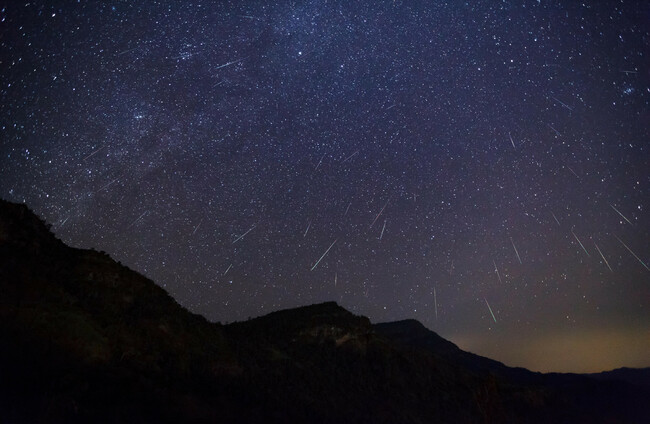
SKYGAZERS WILL BE treated to a celestial display of shooting stars on Monday, as the Geminid meteor shower illuminates the night skies.
The display, which returns every December, is expected to peak some time during the night of December 13 and will be visible into the early morning of December 14.
Meteors are pieces of debris that enter Earth’s atmosphere at speeds of up to 70km per second, vaporising and causing the streaks of light we call meteors.
Geminids are very bright, moderately fast, and are unusual in being multi-coloured.
Looking for a shooting star to wish on?
Your best chance to see this year’s Geminid meteor shower will likely be after the Moon sets in the early morning hours of Tuesday, Dec. 14. Get the details on @NASA_Marshall‘s Watch The Skies blog! https://t.co/oaXX9urlSn pic.twitter.com/PeeCgvuMMW— NASA (@NASA)
They are mainly white, some yellow and a few green, red and blue, partly caused by the presence of traces of metals like sodium and calcium – the same elements that are used to make fireworks colourful.
The shower is known to produce more than 100 meteors an hour at its peak, although light pollution and other factors mean that in reality the actual number visible is far fewer.
The source of the shooting stars is a stream of debris left behind by the asteroid 3200 Phaethon, making this one of the only major showers not to originate from a comet.
Skygazers will be able to see the display with the naked eye so there is no need for binoculars or a telescope.

To embed this post, copy the code below on your site















have your say