Sign in. It’s quick, free and it’s up to you.
An account is an optional way to support the work we do. Find out more.
Sign in. It’s quick, free and it’s up to you.
An account is an optional way to support the work we do. Find out more.
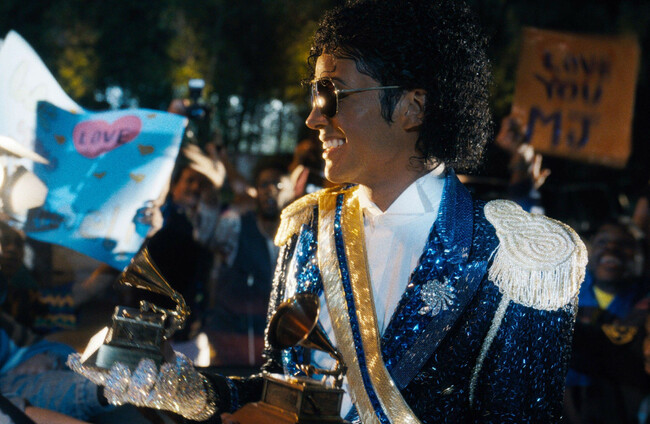
IT’S HALF NINE in the morning, and I’m at the first commercial screening of Michael in Ireland at a cinema in Liffey Valley. There are seven other people in the room.
One is wearing a ‘Bad’-era Jackson-style leather jacket. Another is clutching a bejewelled themed cup which costs more than €15 (drink not included).
It’s a slightly surreal setting to watch a film about one of the most electrifying and divisive performers in history. Then again, what’s on screen feels weirdly subdued.
I used to work in a record shop in Liffey Valley. No matter the headlines, the controversies, the documentaries, Michael Jackson albums still flew off the shelves more than a decade after his death. He’s one of those artists who seems to still exist on a different level entirely.
Which makes what this film does with that legacy all the more baffling.
Directed by Antoine Fuqua (who previously directed Training Day) and heavily backed by the Michael Jackson estate, Michael follows a now painfully familiar biopic template, the one perfected, or rather exhausted, by Bohemian Rhapsody.
Call it Bohemian Jackson-dy (we can work on that).
All the boxes have been ticked. The wide-eyed producer hearing genius for the first time. The chart-topping montage. The ‘stick it to the man’ showdown with a controlling manager (here, his father). The cameos, including one from Mike Myers as a music mogul (who essentially did the same thing in Bohemian Rhapsody).
Tick, tick, tick.
From its opening, Jackson’s feet stepping onto a stage to the sound of Wanna Be Startin’ Somethin’, the film moves briskly through his rise, from Gary, Indiana to global superstardom.
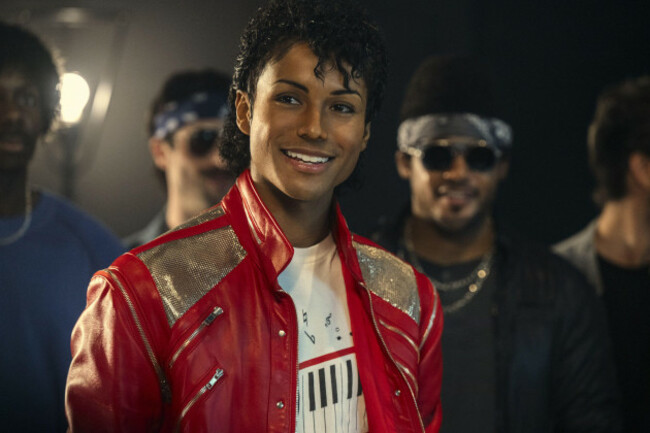
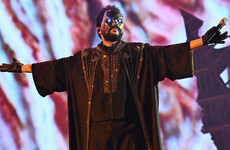
Jaafar Jackson, the singer’s nephew, does an uncanny impersonation. He looks like him, dances like him, moves like him. He never quite feels like him though.
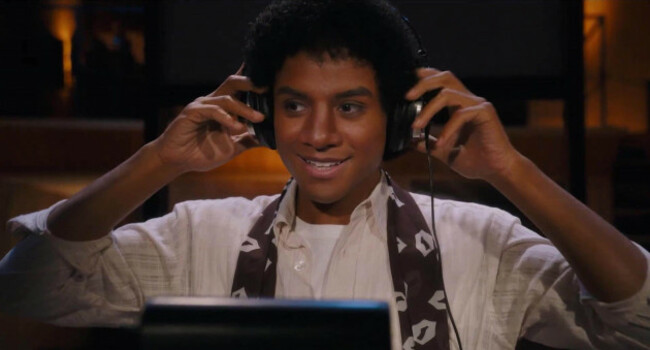
That’s the central problem. The film is obsessed with imitation, but it’s not interested in insight.
It recreates iconic moments, such as the Jackson 5 on stage in their early years, the making of the Thriller video and the iconic first moonwalk performed by Jackson at Motown’s 25th anniversary.
These moments are reimagined with technical competence, but no real sense of who Jackson was beyond a collection of traits: shy, gifted, childlike, wounded.
Or, more bluntly: marketable.
Across more than two hours, the film hits every expected note while somehow draining them of energy. Musical sequences feel oddly flat. Dramatic beats land with a thud.
By the time Thriller rolled around, it felt less like the peak of the film, and more like a checkpoint. I caught myself checking my watch several times during the back half of the film.
And then there’s the absence hanging over everything.
The film ends in 1988, five years before the first allegations of child sexual abuse emerged. It never mentions them. Not once.
Instead, it fills that space with scenes that feel, at best, tone-deaf in hindsight: repeated visits to sick children in hospitals, a fixation on Peter Pan and Neverland, and extended interactions with a CGI version of his pet chimpanzee named Bubbles.
There are also pet llamas, rats, and giraffes. As The Guardian cleverly noted, everything, really, except the elephant in the room.
The decision to exclude that part of Jackson’s life has been widely reported as linked to legal and production constraints, as well as the Jackson family’s direct involvement.
The result is a film that feels incomplete. Not only that, it feels fundamentally dishonest.
It doesn’t grapple with contradiction, it avoids discomfort. I had questioned the 12A age rating for the film before I entered the cinema, but it’s about right for this glossy, estate-approved myth.
Even the film’s priorities feel off.
His brothers barely register, and his sister Janet Jackson, a major star in her own right, is absent altogether. Bizarrely, Michael’s driver and security guard Bill Bray emerges as one of the central characters, an odd choice in a film already struggling to say anything meaningful about its subject.
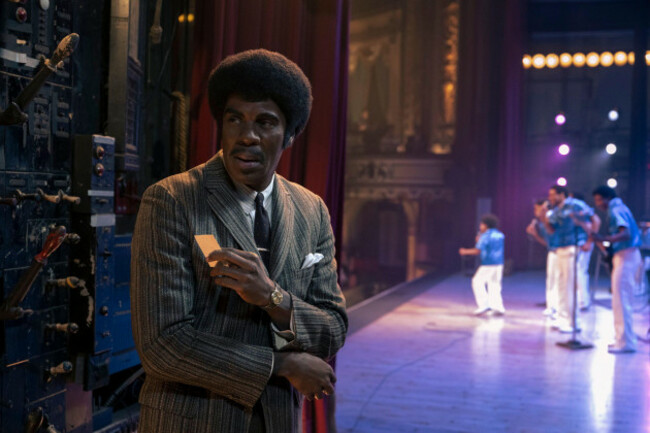
There are flashes of something more interesting. Colman Domingo brings a degree of menace to Joe Jackson, particularly at the start of the film during Michael’s early years, though even that relationship is reduced to a simple villain-versus-genius dynamic.
A brief sequence around the making of Beat It and the well-known music video for it hints at Jackson’s creative instincts.
These bright moments are fleeting though.
Instead, Michael plays like a glossy tribute act you’d see in your local pub. All the moves are there, under certain lights they might even look like the singer they’re impersonating, but there’s none of the life behind them.
The film ends after a glitzy performance of Bad (which is good, to be fair to Jaamar) at a concert in London in 1988. The screen fades to black, and a title card emerges: “His story continues.”
Conveniently, this version of his story stops before it has to.

To embed this post, copy the code below on your site











have your say