Sign in. It’s quick, free and it’s up to you.
An account is an optional way to support the work we do. Find out more.
Sign in. It’s quick, free and it’s up to you.
An account is an optional way to support the work we do. Find out more.
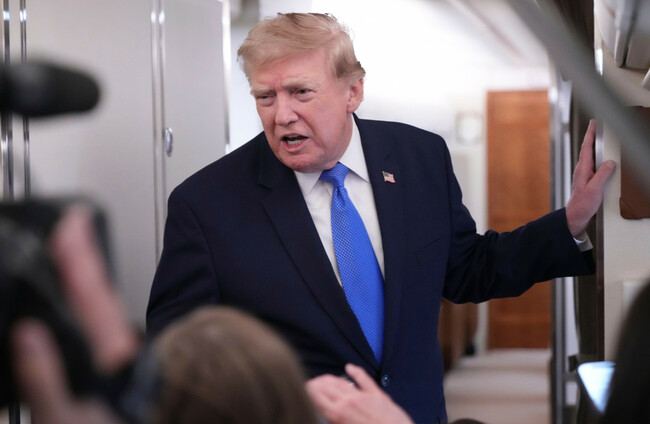
US PRESIDENT DONALD Trump has said that new negotiations with Iran will begin today after he decided to hold off on new “disastrous” strikes in favour of pursuing a deal.
On Saturday, Trump pulled back from threats for a massive attack against Iran, saying the “perimeter” of a deal was taking shape.
Oil prices have fallen nearly 5% in the hours after Trump announced the fresh talks.
On board Air Force One yesterday, Trump told reporters that Iran “don’t want to be attacked” and “knew the extent of the attack because they saw it forming”.
“Now what we’re doing is we’re talking to them in the form of a negotiation. It begins tomorrow afternoon,” he said.
He did not provide further details about the venue of the talks or the participants.
In his comments yesterday, where he explained his decision-making, Trump said that he had been asked by Iran as well as US partners Saudi Arabia, the United Arab Emirates and Qatar to hold off on the strikes.
“When the allies asked to call it off, you’ve got to sort say ‘Well, let’s see.’ And the reason they ask is they think there’s a deal,” Trump said.
“There’s a deal on (the Strait of) Hormuz, and then there will be a deal on the nuclear, or you might call it the denuclearization of Iran.”
He reiterated that the scale of the planned strikes would have been “the biggest attack since World War Two.”
“It would take many, many years to ever build it back if it could — I don’t think it would even be buildable,” Trump asserted.
He said Saudi Arabia’s Crown Prince Mohammed Bin Salman had also urged against the strikes, warning of possible unintended consequences.
“I mean, will they be flooded with people pouring into their country and disaster? A lot of bad things can happen,” Trump said.
The war began on 28 February when the US and Israel launched surprise strikes against Iran.
A previous ceasefire deal, including the reopening of the Strait of Hormuz — a vital conduit for global energy supplies — fell through, and Iran has since tightened its control over the vital waterway as the two countries resumed attacks against each other in recent weeks.

To embed this post, copy the code below on your site













have your say