Sign in. It’s quick, free and it’s up to you.
An account is an optional way to support the work we do. Find out more.
Sign in. It’s quick, free and it’s up to you.
An account is an optional way to support the work we do. Find out more.
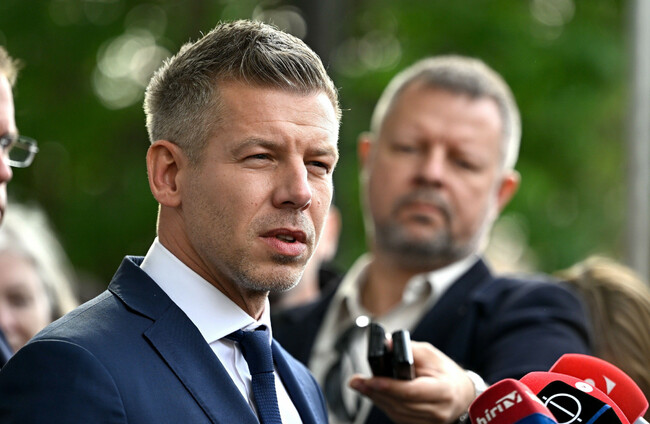
HUNGARY’S PRIME MINISTER Péter Magyar begins a two-day visit to Poland today, hoping to restore ties hit by his predecessor’s closeness to Moscow during Russia’s full-scale invasion of Ukraine.
By choosing Poland as his first official visit as prime minister, Magyar is both looking to turn the page on the Viktor Orbán era and also create a bloc of central European countries that carries weight within the European Union, analysts say.
Poland has in recent years shifted its focus towards “Nordic and Baltic cooperation”, Piotr Buras, of the European Council on Foreign Relations think tank, told AFP.
But Magyar, who ended nationalist Orbán’s 16-year rule at elections last month, is hoping that Poland will again look towards central Europe.
Earlier this month, he proposed merging the Visegrad Group – an informal alliance of Hungary, Poland, the Czech Republic and Slovakia – with the Austerlitz format, comprising the Czech Republic, Slovakia and Austria.
“I think that will be in the interest of every country,” he said, suggesting such an alliance could wield greater influence over the EU’s cohesion fund distribution policy.
“The peoples of central Europe are stronger together than apart,” he added last week.
In Poland, his visit is being presented as the possible start of a “new era”, while the host’s deputy foreign minister Ignacy Niemczycki voiced hope for more “loyal” cooperation.
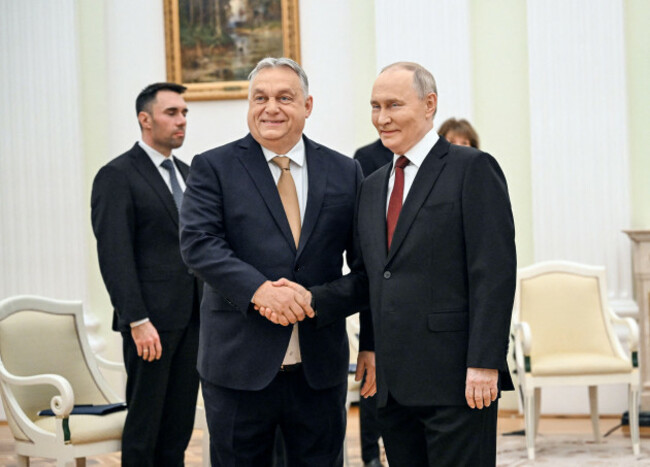
Magyar, who will be accompanied by six ministers, including Foreign Minister Anita Orban, will meet President Karol Nawrocki and his Polish counterpart, Donald Tusk.
He intends to take inspiration from Tusk for the way in which he “reconnected with the European Union and secured the gradual unfreezing of funds”, political scientist Peter Dobrowiecki, of the MCC Institute, told the ATV channel.
A European Commission delegation is expected in Budapest this week and Magyar is hoping to conclude a deal to recover billions of euros frozen due to rule-of-law violations by Orban’s government during a trip to Brussels next week.
On the economic front, the head of the Polish-Hungarian Chamber of Commerce, Anna Wisniewski, said she expected “momentum” on bilateral ties, with trade currently amounting to €15 billion.
“I sense that companies as well as individuals have long been waiting for this moment to work together,” she told AFP.
En route for Warsaw, Magyar plans to stop in Kraków and meet the new archbishop, Grzegorz Rys, then hold a meeting in Gdansk with Poland’s former president Lech Walesa, a Nobel peace laureate and figure in the country’s struggle against the USSR.
He is then expected in Austria on Wednesday evening.
“I would like to strengthen the relationship between Hungary and Austria for historical but also cultural and economic reasons,” he said.
The two countries have long shared close ties dating back to the Austro-Hungarian Empire.
Austria is the second-largest investor in Hungary after Germany, with more €11 billion.
Vienna, which has long sought to deepen its ties with Hungary and other countries in the region, could finally see its strategic ambitions align more closely with its neighbour.
Magyar and his team will travel part of the way by train to highlight EU-funded projects, including the high-speed line between Kraków and Warsaw, which would also underscore one of his priorities – modernising Hungary’s rail network.
Meanwhile, Russian President Vladimir Putin arrives in Beijing today for talks with his Chinese counterpart and his “long-time good friend” Xi Jinping, intending to show their ties are unshakeable days after a visit by Donald Trump.
The confirmation of Putin’s trip came just hours after Trump wrapped up his visit on Friday, the first by a US president to China in nearly a decade and one aimed at stabilising their turbulent relations.
Putin and Xi are set to discuss how to “further strengthen” Russia and China’s strategic partnership and “exchange views on key international and regional issues”, according to a Kremlin statement.
Their ties have deepened since Russia’s invasion of Ukraine in 2022, with Putin visiting Beijing every year since.
Moscow is diplomatically isolated on the global stage and is heavily dependent economically on Beijing, with China now the main buyer of sanctioned Russian oil.
Setting warm tones for the visit, the two leaders exchanged “congratulatory letters” on Sunday to mark 30 years of their countries’ strategic partnership.
Xi said cooperation between Russia and China had “continuously deepened and solidified”, according to Chinese state media.
And in a video message to the Chinese people released Tuesday, Putin said relations have reached “a truly unprecedented level” and that “trade between Russia and China continues to grow”.
“The close strategic relationship between Russia and China plays a major, stabilising role globally. Without allying against anyone, we seek peace and universal prosperity,” Putin added, without mentioning any third country.
The two leaders are also expected to sign a joint declaration after the talks.

To embed this post, copy the code below on your site












have your say