Sign in. It’s quick, free and it’s up to you.
An account is an optional way to support the work we do. Find out more.
Sign in. It’s quick, free and it’s up to you.
An account is an optional way to support the work we do. Find out more.
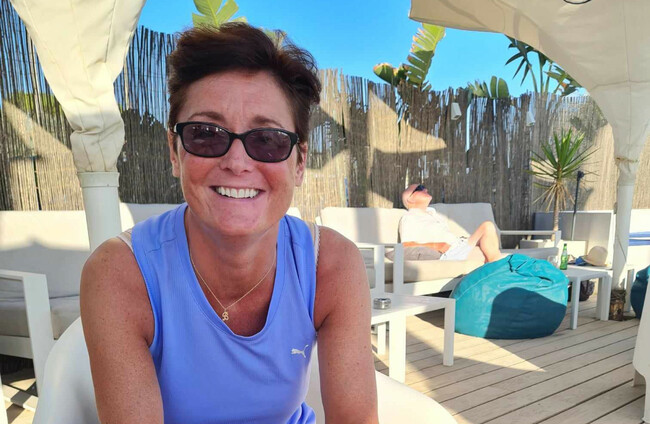

I REMEMBER IT was January 2014. I had developed a cough that, despite several courses of antibiotics, steroids and inhalers, I just couldn’t get rid of.
My energy levels seemed to get lower by the day, and I had begun to find it difficult to get up, get showered, and get dressed, without needing a rest. At the time I also worked on the second floor of a building with no lift and I began to find it more and more difficult to walk up the stairs.
On one particularly bad day, I coughed so much that I cracked two of my ribs. It was an X-ray which showed anomalies in my lungs that led to a CT scan, a bronchoscopy and pulmonary function tests. It would lead to a diagnosis of COPD or Chronic Obstructive Pulmonary Disease (COPD).
COPD is an umbrella name given to a collection of lung conditions that cause breathing difficulties. They can include emphysema and chronic bronchitis. It is a common condition that mainly affects middle-aged or older adults who smoke or used to smoke. Most people with COPD do not have any obvious symptoms until they reach their late 40s or 50s.
Common symptoms of COPD include shortness of breath and a persistent chesty cough with phlegm that never seems to go away, as well as frequent chest infections and persistent wheezing.
As a non-smoker, and with no family history of COPD on either side, this really was a bolt out of the blue. It is estimated that a small percentage of COPD is idiopathic, meaning that there is no immediately identifiable cause for the condition.
Initially, I was relieved. It wasn’t lung cancer. I now had a name for my symptoms and, with a diagnosis, could come treatment. However, it took a little while for the word “incurable” to filter into my brain and the realisation that COPD wasn’t going to go away.
My health and, consequently, my life, were never going to be the same again.
Over time, with targeted treatment, and a prolonged period off work to rest, my physical health improved a little. My mental health, however, was a bigger challenge. I didn’t understand how or why this had happened. I was an active, healthy person, who had never smoked and rarely had alcohol.
I was frustrated at the limitations of my life. I didn’t have the energy to do even minimal things. Neither did I have the stamina to engage in activities that would improve my mental health, like going for a walk, or going to the gym. None of this was possible for me for a very long time.
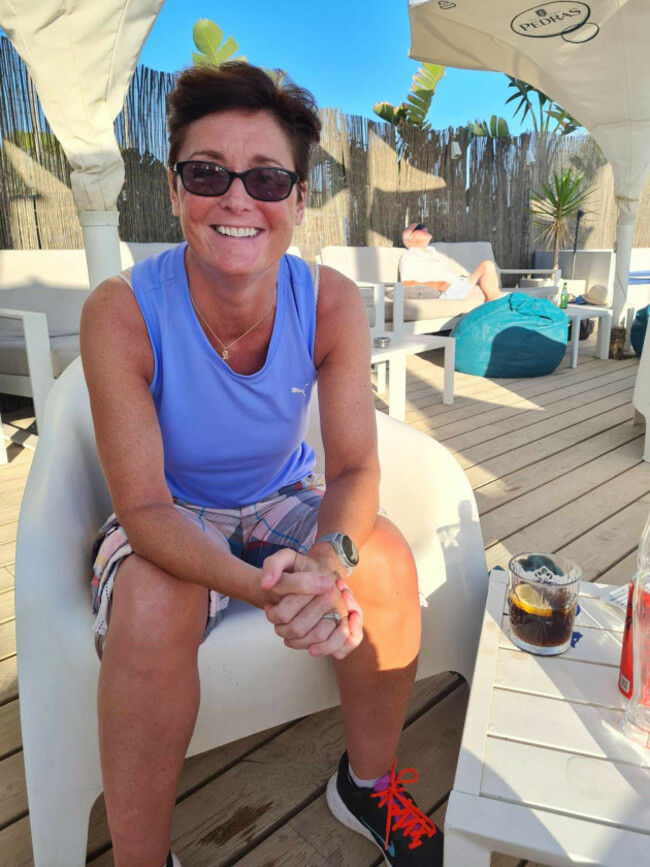
Soon I was dealing with not just COPD, but also depression. I isolated myself for a long period. It was easier for me to do that than experience the feelings, however irrational, of selfishness, even a sense of “attention-seeking”, that would kick in when I had to cancel plans because I was too fatigued or not well enough. This was especially so since, to all intents and purposes, I didn’t look “sick”.
There was no way that I could find to explain why, at a relatively young age, I was experiencing a level of fatigue so intense that it made the most basic daily things seem impossible.
I felt like my life was limited to the daily tasks of airway clearance, taking tablets and inhalers, managing their side effects, and wanting to be left alone to sleep.
When a friend recommended a HSE programme called “Living Well” to me, things started to look up. Alongside other people who had a chronic illness, over a period of six weeks, I learned strategies for managing my fatigue and for reframing my mindset to “the next best thing”.
In that way, if I couldn’t manage what I wanted to, I asked myself what was the next best thing that I could achieve. I had to learn to stop being angry with my body for letting me down, and instead learn to accept the new me. I felt like I was taking back part of myself, and even though I was living with some limitations, I was still me.
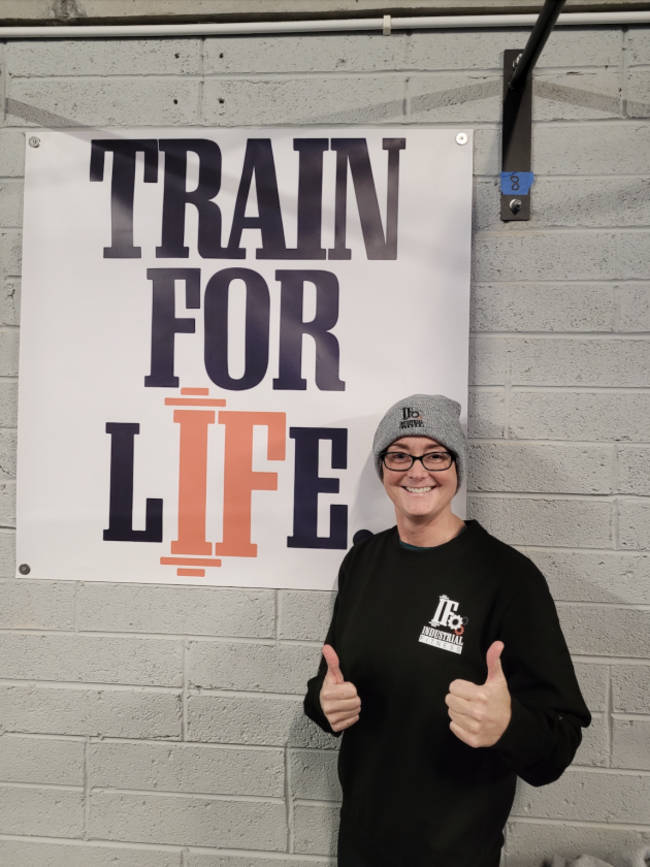
I followed Living Well with a pulmonary rehabilitation programme of education and exercise. This allowed me to gain confidence in my physical self again. I learned, in a safe environment, how to manage breathlessness when it occurred.
After this experience I was lucky that I was well enough to be able to join a gym, and began, very slowly, to build up my exercise levels again. Of course, a gym isn’t an option for everyone with COPD, which is why it’s important to check out local COPD exercise groups which may be more suitable.
There are few things more fundamental than breathing. Not being able to rely on that, or taking it for granted in the way that you might once have, creates a permanent anxiety and vigilance for symptoms that might signal an impending infection.
I also worry about the future and how long I will be able to maintain my illness at a level where I can work and have a reasonable quality of life.
However, I try to remind myself on bad days that there are people who would give anything to be able to do what I am resenting being “only” able to do. People who do not have the supportive workplace, family, wife and friends that I have. People who are isolated and lonely, and managing all of the challenges of COPD without support networks in place.
Life with COPD is very much a life lived between infections and flare-ups. To a certain degree, it is a manageable illness, and I know that, at this point in time, I remain fortunate that my COPD is contained as much as it is.
I know I need to monitor my health a bit more closely than other people, that I need to be more careful with myself, and that I have to keep good habits when it comes to my airway clearance. However, I’ve now learned to accommodate these things for the rest of my life. So, I play tennis, I walk my dogs, I lift weights and I work full-time.
I have COPD, but I am not COPD.
Marking World COPD Day on Wednesday, November 20, Denise Croke is supporting COPD Support Ireland’s “COPD & Me” campaign. The campaign is undertaking a nationwide roadshow visiting towns and cities around the country to spread the word about COPD. For details of the roadshow dates and locations, or to download “COPD & Me”, a new booklet on living with COPD, check out www.copd.ie.
To embed this post, copy the code below on your site











have your say