Sign in. It’s quick, free and it’s up to you.
An account is an optional way to support the work we do. Find out more.
Sign in. It’s quick, free and it’s up to you.
An account is an optional way to support the work we do. Find out more.


LAST UPDATE | 23 Jul
Politics by Numbers is a new series for The Journal where broadcaster, author and spreadsheet stan Gavan Reilly takes a data deep dive into a political point of the week.
LET’S START WITH the upside. By the time this column is published, barring any unexpected drama, 36 bills will have been signed into law so far in 2026.
That’s a sign of a government finding its groove. Last year only 21 Bills completed their journey through the Houses of the Oireachtas, which is the lowest number for a full year in the history of the State. Only in 1922 were fewer bills passed, but the State only existed for three weeks before Christmas of that year.
There were some mitigating circumstances to this: the never-ending dispute over the allocation of Dáil speaking time meant a delay in forming ‘technical groups’, which in turn meant a delay in forming Oireachtas committees, which had a knock-on consequence on how prospective new laws can be scrutinised.
On the other hand, while the government was only formed in January, the excuse of needing to find its feet wears a little thin: though almost every minister had a new portfolio, the government appointed in January 2025 was effectively re-elected to continue the work of the previous one.
In any event, the pipeline is beginning to get busier now. 2026 compares favourably with the second years of previous administrations: in 2021 the comparable number was 32, back in the era of the Dáil sitting at the Convention Centre; in 2017, in the first springtime of confidence and supply, the number was 26.
The Dáil’s summer recess inevitably coincides with an urgent push to clear the decks. Among the Bills finishing their passage this month were ‘Jennie’s Law’, to create a public register of domestic violence offenders; ‘Valerie’s Law’ which strips parents of guardianship rights for a child if they are found to have killed the other parent; the controversial rewrite of the Occupied Territories Bill; the ‘right to be forgotten’ for cancer survivors seeking insurance products; and the official dissolution of NAMA.
Any undergrad student (and any current affairs columnist) will testify: nothing focuses the mind like a deadline. But this end-of-term legislative frenzy isn’t entirely positive: rather, it’s a relapse into a bad habit of old.
Five years ago, Michael D. Higgins made an unusual and striking intervention into the lawmaking process. While convention is that the President does not comment or meddle in the debates around prospective laws, Higgins offered a meaningful critique of how legislation was being presented to them.
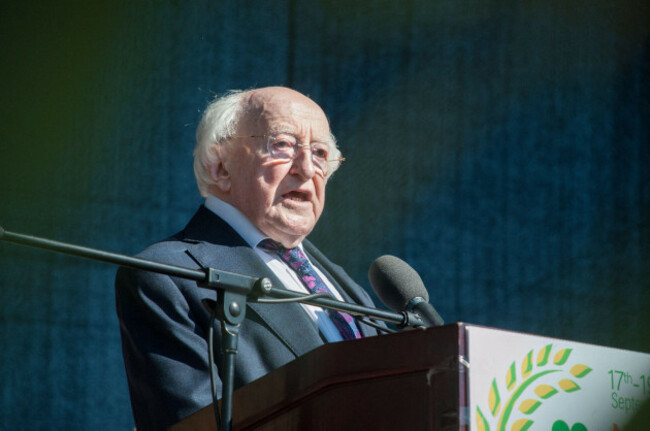
If the President’s main job is to be some sort of constitutional guardian – a fact we were all reminded of last autumn as we elected a new one – then the way business is done in Leinster House puts the first citizen on the back foot. Higgins’ critique was that little or no legislation was being put on the Áras desk in the first six months, before a figurative mountain of paperwork would show up in just a few days. It was either a feast or a famine.
This is not just a cosmetic argument. The Constitution gives the President a binding time limit to do their job: as soon as a bill arrives in the Áras, the president has between five and seven days either to sign it into law, or to convene the Council of State and discuss whether it’s in keeping with the Constitution itself.
Higgins’ critique – which only came after he’d seen the same splurt of legislation every summer, and every Christmas, for a decade – was that giving each Bill the appropriate scrutiny was much harder if multiple large drafts were being sent at the same time. His concerns came to a head when, in July 2021, he received nine individual Bills for consideration on the same day.
As he even ventured at the time, this even risked ruining Christmas: were the President to have any concerns about a bill sent to him just before the winter recess, the strict constitutional timetable might force him to convene the Council of State on Christmas Day. No doubt the Áras does an amazing turkey and ham, but most people would rather not swap the soaps for soapboxes.
Politicians took the critique on the chin, and resolved to space out the process in future. By and large, they did: the summertime spike in Bills being sent to him mellowed out, with some Bills simply being debated and passed a week or two earlier. Until this year, when again there’s been a late surge to clear the pipes before the end of the term.
There are some rational explanations as to why this clustering happens. The point of committee scrutiny is for opposition TDs to comb through a document and identify possible flaws, which then get amended by ministers at later stages. Officials naturally want flagship reforms completed before the Oireachtas shuts down: the stuff passed in one go in the summer might well have been enacted at a slower pace in summer, were the houses not on recess. Every parliamentary democracy experiences some degree of deadline-induced acceleration.
But “some degree” is doing a lot of heavy lifting. Higgins’ 2021 critique about the limited scope he could give to laws is one thing. The bottlenecks experienced every summer, and most Christmases, also impact how TDs can do their jobs too. The ‘guillotine’, where debate is artificially curtailed to meet the government’s own timetable, was used 12 times in the Dáil’s last fortnight so as to get everything through.
Not every Bill needs to consume the full time allotted to it, but many major bills are pushed through without a debate or vote on all prospective amendments. Debate on the redraft of the Occupied Territories Bill, for example, ended with just 16 of the 32 proposed amendments considered.
Higgins’ cri de coeur in 2021 was perceived in some circles as an unwarranted meddling in the day-to-day work of lawmakers; a crossing of a Rubicon. The lens of hindsight casts it in a better light: a simple reminder that the pillars of the Constitution can’t do their best work when they’re placed under unnecessary pressure.
This year’s legislative record demonstrates that the government is capable of delivering on ambitious programmes of reform. But it also shows that old habits die hard, and the lessons Higgins was trying to teach are easily forgotten.
Gavan Reilly is the Political Correspondent for Virgin Media News and the host of Monday with Gavan Reilly, which airs every Monday at 10pm on Virgin Media Play and Virgin Media One.
To embed this post, copy the code below on your site














have your say