Sign in. It’s quick, free and it’s up to you.
An account is an optional way to support the work we do. Find out more.
Sign in. It’s quick, free and it’s up to you.
An account is an optional way to support the work we do. Find out more.
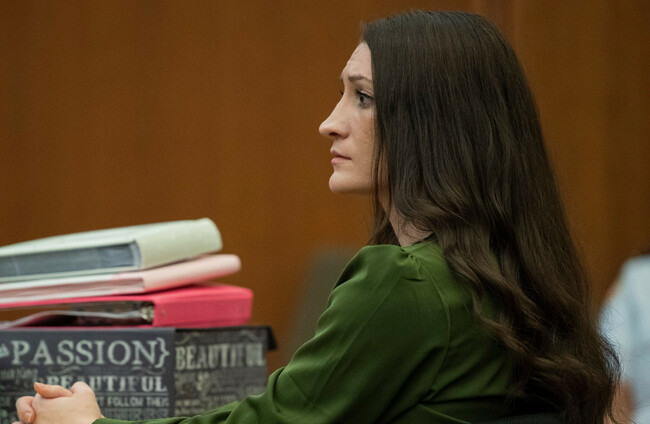

THE LINDSAY CLANCY trial, which is ongoing in the United States, has not only blown up group chats everywhere, but over the last couple of weeks it has been like a bat signal, summoning every amateur armchair sleuth to the internet with a host of conspiracy theories about what happened.
While it’s tempting to get sucked into the noise, much of the viral narrative surrounding the case risks undoing efforts to break long-held stigmas around postnatal depression and perinatal mental health.
The trial centres on Lindsay Clancy, a 36-year-old Massachusetts woman who is accused of strangling her three children, Cora, five, Dawson, three and eight-month-old Callan to death, before jumping out of a second-floor window on 24 January 2023.
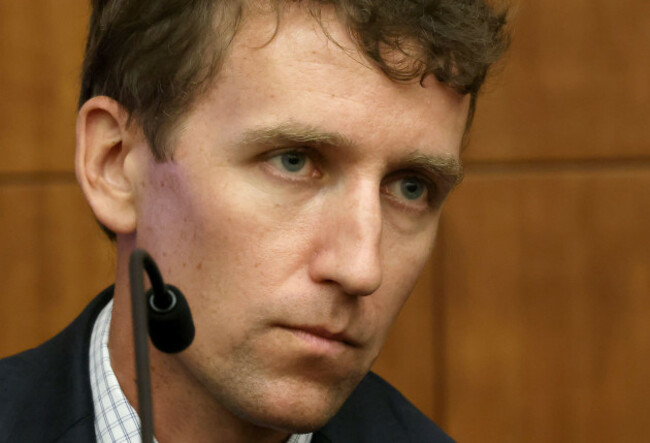
Clancy, who is now paralysed after the incident and confined to a wheelchair, has pleaded not guilty. Her defence team are not disputing the circumstances of the killings but say she is not criminally responsible as she was experiencing postpartum psychosis at the time. The prosecution alleges that Lindsay intentionally killed the children and sent her husband Patrick Clancy out on an errand on the night in question to commit the acts.
The trial is being televised and streamed daily, turning it from a disturbing real-life tragedy into a whodunit true-crime documentary in real time. One poster in the United States even asked if it was being shown in any local bars.
For many of those raised on reruns of Murder, She Wrote and set on a path of amateur ‘detective-hood’ with the likes of Netflix’s groundbreaking Making a Murderer series or the Serial Podcast, weighing in on the Clancy Trial seems hard to resist.

Even if you’ve not watched any of the livestreamed trial, it’s almost impossible to ignore the online algorithm. I’ve seen multiple posts and videos light-heartedly bemoaning that they are tired from their new full-time job of being a juror in the Clancy trial. Despite my best efforts, I have somehow found myself on the #Lindsay-Clancy-is-innocent-it-was-her-husband side of TikTok (all unproven theories), where multiple videos analyse and offer alternative theories about the case.
Think Excel sheets and colour-coded charts illustrating evidence that doesn’t seem to add up. Freeze-framing CCTV footage and body language from Patrick Clancy’s testimony on the stand. The timing of the night’s events being brought into question. Claims about her Apple Watch, the emails, the texts. Was she talking or not talking when found? Allegedly crucial evidence not collected, and potential leads not followed up. Before long, via all the baseless posts, I’d almost convinced myself that it was the husband after all. The theories spiralling online were elaborate, compelling and, if you spent enough time watching them, just so damn easy to believe. Like all conspiracies. Of course, none of this is proven; it’s the product of theories being put together on The Internet.
In many ways, believing the conspiracy theories about this case is easier because we don’t really want to confront the documented reality of Lindsay Clancy’s situation. She was not just having a ‘tough time’; she was in fact “begging for help.”
The court heard from multiple family members, such as Lindsay’s mother, her now ex-mother-in-law and sister, who all testified that the mum-of-three was clearly struggling with her mental health, feeling suicidal and having intrusive thoughts. She literally texted the words we’re all encouraged to say when we don’t feel like ourselves — “I’m not okay, I’m terrified of taking meds tonight,” to her then mother-in-law Paula Musgrove two months before the killings. Lindsay repeatedly tried to get help.
She saw several psychiatrists, was on multiple medications, called a suicide helpline and checked into a psychiatric hospital with a postpartum and perinatal program, but was turned away and discharged.

This was a woman who was really struggling and did not get the help and support she needed, even when she asked for it. This is what the viral videos should be about.
And look, as a paid-up member of the Jessica Fletcher amateur sleuthing brigade, I absolutely believe some things don’t add up, and there are huge questions to be answered in this case.
However, if we don’t allow the fact that this woman was going through a perinatal mental health crisis to breathe and be discussed, if we erase it and replace it with unsubstantiated theories about what really happened, then we are in danger of undoing the strides we’ve made in openly discussing postpartum mental health.
It becomes ‘well, she wasn’t really struggling at all; it was her husband framing her to look like that way.’ When we need to be talking about those ‘uncomfortable truths’ that tell us that not all women are filled with constant joy and happiness in motherhood and that many struggle with their mental health.
The Clancy case is horrific beyond measure, but sadly, it’s eerily similar to a case of infanticide by a mother struggling with mental health that occurred in Ireland in 2020. Deirdre Morley was found not guilty of the murder of her three children, Conor, nine, Darragh, seven and Carla McGinley, three, by reason of insanity. Like Lindsay Clancy, she too was a nurse, and like Lindsay Clancy, she too asked for help.
In Ireland, as many as one in five women suffer from mental health difficulties during the perinatal period, which includes pregnancy up to one year postpartum. Research from Trinity College’s MAMMI study found that maternal mental health symptoms escalate continuously after birth and peak at six months postpartum. Currently, care stops at six weeks postpartum in Ireland, cutting many women adrift.

According to Aolish Gormley, who founded a campaign called The Year of Care, which is calling for a full year of meaningful postnatal care rather than the current emphasis on the six-week point, Irish women are still falling through the cracks even when they do ask for help.
“I have been hearing from women who are asking for help and still struggling to access it,” she says. “I recently heard from a woman who had experienced postnatal depression after her second child and is now pregnant again. Knowing her history, she proactively asked to be referred to the perinatal mental-health team. She received a letter back saying the service was not currently accepting applications. We constantly tell women to ask for help. But what happens when they do?”
“We need to intervene earlier, listen to women when they tell us something isn’t right and make sure that the services we tell women to access are actually available when they need them,” adds Gormley. “We need to start asking the question that matters: are women actually getting the care they need? A woman doesn’t stop being postnatal at six weeks. Neither should our responsibility to her.”
A recent Mental Health Reform report concluded that the timeframe for checking in on new mums for postpartum mental health difficulties is nowhere near adequate, with GPs often unprepared for addressing perinatal mental health concerns.
The report stated, “Longitudinal research on maternal healthcare in Ireland found that at a three-month postpartum health visit, 49% of people were not asked about low mood or depression by their doctor, and almost 36% were not asked by their public health nurse.”
Even more concerningly, the report found there has been a surge in the rate of new mothers dying by suicide, with eight of the 24 deaths of new mothers between 2019 and 2021 at their own hands (33%), compared to 12.3% of maternal deaths over the period from 2009 to 2021.
Cases like the Clancy trial might be hard to confront, but if we bury ourselves in conspiracy theories to find comfort, instead of confronting the truth about postpartum mental health, we continue to fail the women who are falling through the cracks.
Niamh O’Reilly is a freelance writer and journalist.
If you have been affected by any of the issues mentioned in this article, you can reach out for support through the following helplines. These organisations also put people in touch with long-term supports:
To embed this post, copy the code below on your site















have your say