Sign in. It’s quick, free and it’s up to you.
An account is an optional way to support the work we do. Find out more.
Sign in. It’s quick, free and it’s up to you.
An account is an optional way to support the work we do. Find out more.
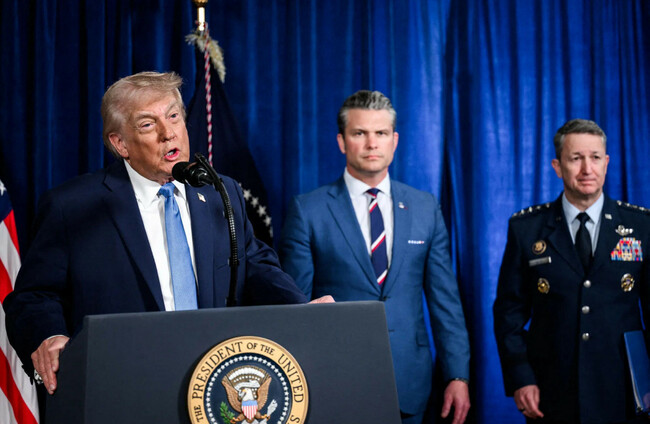

2025 WAS THE most violent year of conflict since the end of the Second World War. We witnessed at least 240,000 fatalities, over 117 million people displaced by war, violence and persecution, rampant war crimes not merely committed but celebrated, a livestreamed genocide, the breakdown of peace agreements and the dismantling of international human rights norms.
But thankfully, it’s now 2026, and we can all take a collective sigh of relief. Or perhaps not. On 3 January, the US kidnapped Venezuela’s sitting president and his wife while declaring full-throttled plans to seize the country’s oil.
On 5 January, Trump extended threats against Cuba, Colombia and Mexico, and the following day, the US president proclaimed that he was “very serious” about taking Greenland.

Only five minutes later, on 7 January, the US — with assistance from the UK — seized a Russian-flagged oil tanker in the Atlantic Ocean, and the next day, Trump removed the United States from 66 international organisations, half of which are UN bodies.
That was only in week one, and the acts of just one nation. A masterclass in the ‘flood the zone’ approach to politics.
There are currently 59 active state-based conflicts, 78 countries are engaged in a conflict beyond their borders and Europe is rearming at its fastest pace since the Cold War. 2025 was a tipping point; the normalisation of war and conflict. Could 2026 be the year of the land grab?
The United States’ actions in Venezuela echo Iraq and Afghanistan. When they invaded Afghanistan in 2001, the US government launched a series of military attacks to overthrow the Taliban government. This was followed by an invasion of Iraq in 2003, during which the US employed military force to oust, and later, assassinate Saddam Husein. Both interventions — contested as breaches of international law — plummeted each country into decades of turmoil, resulting in civilian casualties and the large-scale displacement of people.
The US has a long history of engaging in military action against sovereign countries; Panama, Vietnam, several countries in Latin America — and yet the action in Venezuela is unprecedented. Maduro was kidnapped alongside his wife, transported to the US and placed in custody. Within hours, Trump announced that the US would be “running” Venezuela and seizing the country’s oil. On the Venezuela attack, Vice-President JD Vance remarked, “It’s going to make our country richer. It’s going to make our country more powerful.”
There is no question that Maduro is a dictator, but this isn’t about democracy, nor human rights or drugs; the actions of the Trump administration are a flagrant land-grab aimed at seizing the natural resources of a less-powerful country for profit.
The US assault on Venezuela set a dangerous precedent that could see 2026 tailspin international norms into oblivion. What tidings might this joyous new year bring? Russia has positioned Europe on a defensive footing since it began its attack on Ukraine in 2022 and remains the most significant threat to European security. This threat could be escalated by President Trump’s assertions that the US will take Greenland “the easy way or the hard way”.
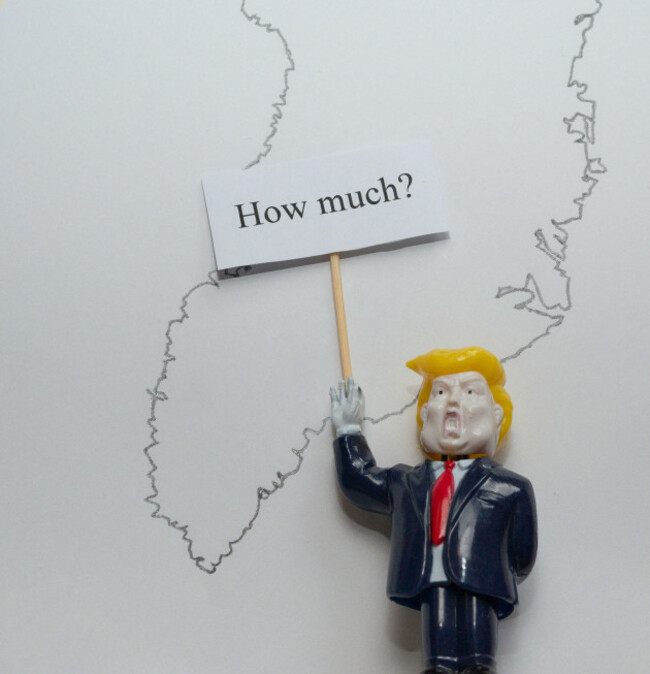
As an autonomous territory within the Kingdom of Denmark, Greenland’s security is guaranteed by Denmark, and, therefore, NATO. EU defence commissioner Andrius Kubilius said last week that an invasion of Greenland by the US would be the end of NATO. This warning was echoed by US Democratic Senator Chris Murphy, who cautioned, “we would be at war with Europe, with England, with France.” The leaders of France, the United Kingdom, Germany, Italy, Poland and Spain issued a joint statement reaffirming the sovereignty of Greenland last week.
Any effort from the US to interfere with the sovereignty and security of Greenland could trigger Article 5 of the NATO alliance, a collective defence agreement that establishes the principle that an attack against one member shall be considered an attack against all.
The Washington visit by Danish and Greenlandic ministers did go some small way towards calming things down for Greenland, but if Trump proceeds — and the rhetoric certainly suggests he still could — NATO members will be forced to act against one of their own. This chaos would be delectable to an opportunist like Putin, who has long harboured territorial ambitions to seize neighbouring countries.
Latvia, Lithuania, Estonia and Moldova would all be under threat, while Ukraine could lose vital support from NATO and European allies, placing the country at greater risk of losing territory to Russia.
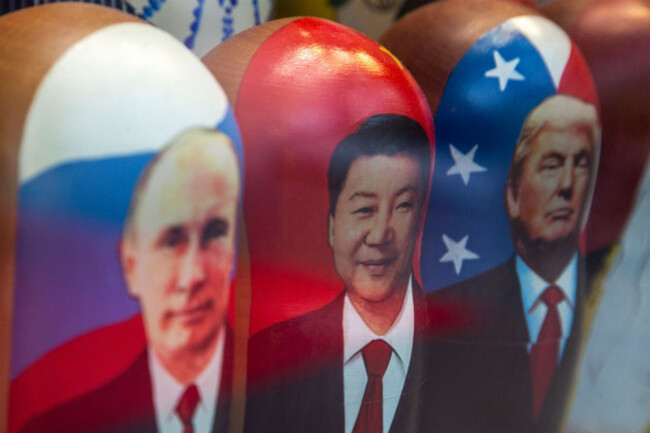
China waits in the wings, observing any political fallout the US might face — of which, to date, there has been none. The failure of European leaders to condemn Trump’s actions renders Europe impotent should China accelerate its own military action against Taiwan.
Analysis from the Council on Foreign Relations suggests that a crisis in the Taiwan Strait and clashes between Russia and NATO have an even chance of occurring in 2026. However, China’s ambitions do not end in Taiwan; efforts to secure dominance over the South China Sea could result in increased military aggression toward the Philippines, while tension has been simmering between China and Japan over the sovereignty of the Diaoyu Islands.
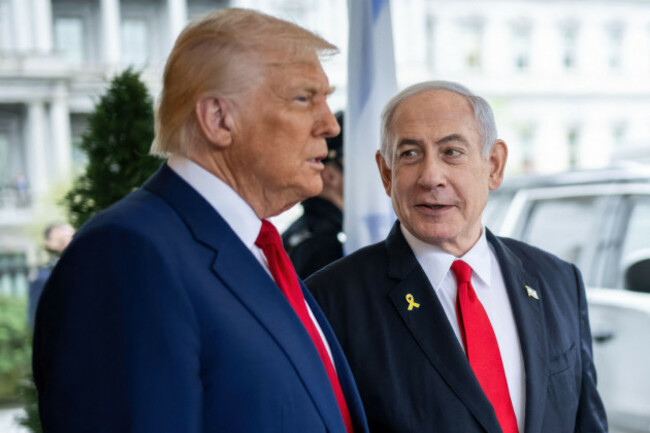
In the Middle East, Israel will undoubtedly continue to attack its neighbours; attacks in Syria, Lebanon, Qatar, Yemen and Iran were all perpetrated by Israel in 2025 while the country carpet-bombed Gaza in its continued genocide of the Palestinian people.
Expect this year an expansion of illegal settlements into the West Bank and Syria, a return of larger-scale military action in Gaza, and efforts to overthrow the Iranian regime with the support of the US.
It doesn’t stop there. Ethiopia is poised to seize sovereign access to Red Sea ports currently controlled by Eritrea, Rwanda continues to occupy mineral-rich territory in the Democratic Republic of Congo, and Azerbaijan eyes taking the Zangezur land corridor through sovereign Armenian territory.
There is a common thread linking many of these threats: resources. Whether it’s oil, minerals or access to economic corridors, we are on the cusp of a resource-driven power war and a return to spheres of influence à la 19th century imperialism. “This is our hemisphere”, reads a US government post on X. Putin notably uses the same spheres of influence language. As for Venezuela, the Maduro regime remains, just kowtowing to obey the Trump administration and hand over its oil, for now.
There’s no playbook to follow, no AI platform capable of modelling the trajectory we are on, and critically, no guardrails as the guidelines drawn in the ashes of World War II are carelessly swept away. 2025 was a year of violence and war, but it may have just been the prologue for what happens next.
Emma DeSouza is a writer and campaigner.
To embed this post, copy the code below on your site











have your say