Sign in. It’s quick, free and it’s up to you.
An account is an optional way to support the work we do. Find out more.
Sign in. It’s quick, free and it’s up to you.
An account is an optional way to support the work we do. Find out more.
IT’S A DAY of rest, and you may be in the mood for a quiet corner and a comfy chair.
We’ve hand-picked the week’s best reads for you to savour.

This lovely – and fascinating – article looks at the importance of boxes of cake mix for people living in remote villages in Alaska. It’s a lovely read about community, togetherness, and, well, cake.
(New York Times, approx 9 mins reading time)
In the far north, bakers make cake with fondant photo prints of Inupiat whaling crews and serve it with mikigaq, fermented whale meat. On the western coast, mixes may be prepared with sea gull eggs. In the interior, pineapple upside-down cake is eaten with a salad made of lard, sugar, berries and whitefish. Fund-raisers known as cake walks — a variation on musical chairs — pay for coffins, support people through chemotherapy and send whole basketball teams to the Lower 48.
2. Have you ever, ever felt like this?
We all remember the great show Round the Twist from the 90s – here’s the oral history of the show that you’ve been waiting for.
(Buzzfeed, approx 39 mins reading time)
A lot of it was based on my own experience in life. I was a single parent, and I lived in this old house which I’d moved onto the edge of the cliff down in Warrnambool. I bought it in Penshurst, which was 50km away, and it was delivered in three parts and put on the edge of this cliff down there … In one of my early drafts, I thought, “I’ll set it in that house, and the opening scene can be the kids all round the kitchen table having a meal, and a signpost goes past, and then a tree goes past, and then you realise your house is being moved.” Esben said, “No, you can’t do that…it’s too expensive.” I was coming up against that all the time … So then I thought of a lighthouse. Any kid would love to live in a lighthouse.
3. The battle for Blade Runner
With Ridley Scott’s sequel to Blade Runner due out soon, Vanity Fair speaks to those behind the movies about the original film’s “contentious journey to the screen”.
(Vanity Fair, approx 25 mins reading time)
Like 2001: A Space Odyssey, Blade Runner used science fiction to contemplative, sometimes confounding ends. But its legacy is as much visual as philosophical, giving rise to the stylized cyberpunk chic of The Matrix, the nocturnal manga of Ghost in the Shell, and the apocalyptic noir of countless video games. Filmmakers from Guillermo del Toro to Christopher Nolan cite it as an influence, and its aesthetic DNA has permeated everything from George Michael’s “Freeek!” video to Jean Paul Gaultier’s 2009 fall couture show and Raf Simons’s recent collection of futuristic rainwear.
Here, Bloomberg looks at Facebook – Mark Zuckerberg’s ‘political awakening’, the site’s battle against fake news, and the company’s future.
(Bloomberg, approx 20 mins reading time)
Even as the company enjoys record profitability—its market value has more than doubled since 2015, to $500 billion, making Zuckerberg the world’s fifth-richest person—Facebook faces criticism for its role in distributing pro-Trump propaganda during the 2016 election (one viral story falsely claimed that the pope had endorsed Trump) and for contributing to a climate of extreme polarization.

Police have been searching for the bodies of four missing senior citizens in the town of Muskoka for twenty years. But despite all their searching, they still can’t find them.
(The Walrus, approx 23 mins reading time)
After Lawrence was reported missing, police spoke with David Laan twice in two days. David provided numerous conflicting explanations about his tenant’s whereabouts. He said that Lawrence had gone into hiding and was wearing “a scarf over her head and dark sunglasses.” He said that she was living with a “woman named Hazel” or a “Scottish man named George.” David would eventually produce more stories, telling people that Lawrence was in New York, Vancouver, Hawaii.
Irish writer Sinead Gleeson writes movingly about her ‘second mother’, her aunt Terry who suffered from Alzheimer’s disease.
(Granta, approx 20 mins reading time)
The blackouts weren’t the start of it. We know that. There’s a different kind of blackness in her brain, one that started with circular conversations, asking the barest amount of sociable questions. Enough to be polite. As she sat at our kitchen table for dinner over the weeks, I saw her moving away from us. A grainy facsimile of who she used to be. My children are always patient when she asks, ‘Were you in school today?’ Sometimes it’s the sixth time in half an hour. Sometimes it is Saturday.
…AND A CLASSIC FROM THE ARCHIVES…
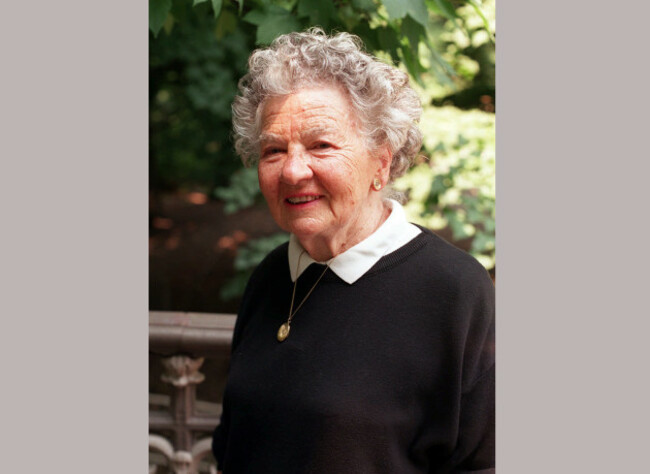
The New Yorker writer Lillian Ross died this week, aged 99. Here’s one of her most famous essays, about Ernest Hemingway, from 1950.
(New Yorker, approx 58 mins reading time)
Hemingway was wearing a red plaid wool shirt, a figured wool necktie, a tan wool sweater-vest, a brown tweed jacket tight across the back and with sleeves too short for his arms, gray flannel slacks, Argyle socks, and loafers, and he looked bearish, cordial, and constricted. His hair, which was very long in back, was gray, except at the temples, where it was white; his mustache was white, and he had a ragged, half-inch full white beard. There was a bump about the size of a walnut over his left eye. He was wearing steel-rimmed spectacles, with a piece of paper under the nosepiece. He was in no hurry to get into Manhattan.

To embed this post, copy the code below on your site









have your say