Sign in. It’s quick, free and it’s up to you.
An account is an optional way to support the work we do. Find out more.
Sign in. It’s quick, free and it’s up to you.
An account is an optional way to support the work we do. Find out more.
STORM ÉOWYN HAS brought the highest-ever top wind speeds Ireland has seen, compared to other spells that have taken place in recent years.
Met Éireann recorded gusts as fast as 183km/h, at Co Galway, at 5am this morning. Mean speeds taped at the same centre at Mace Head were hurricane force, at 130km/h.
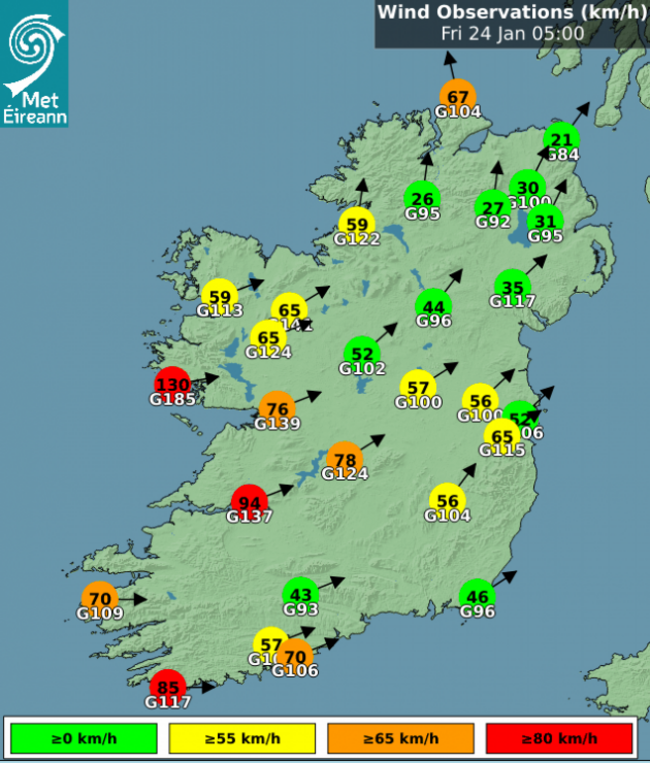
Top wind speeds are over 50km/h faster than what was recorded during Storm Ophelia in 2017 and 10km/h faster than what was recorded during Storm Debbie in 1961 – both of which caused significant damage to structures around the country.
Mean speeds are during Éowyn are also higher-than-normal, with many weather stations recording speeds in the low 90s to the high 80s (km/h) around the country. Average speeds recorded during Ophelia levelled out at 80km/h.
However, Éowyn has not broken mean speed records created after Storm Darwin, in 2014, which were clocked at 117km/h. That storm was classified as a cyclone (Tini) by Met Éireann at the time and was a one in 20 year weather event.
Éowyn’s winds have also broken records seen during the Hurricane Charley in 1986 – when a massive storm made its way across the Atlantic to Ireland after hammering parts of the Caribbean and southeast US.

Charley had significantly weakened by the time it reached Ireland, with winds reaching maximum speeds of 101km/h, though severe rainfall led to areas in the east being flooded.
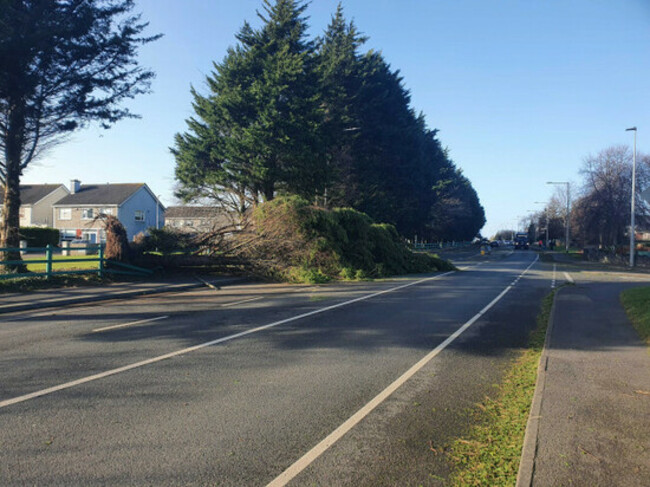
While today’s storm has significantly impacted public transport services, blocked roads around the country, caused significant damage to structures and resulted in nearly 1 million homes being left without power in Ireland, long-term disruptions are unlikely.
Compared to other storms, such as the snowstorm Emma – the Beast from the East – in 2018, the nationwide disruption is not as severe.
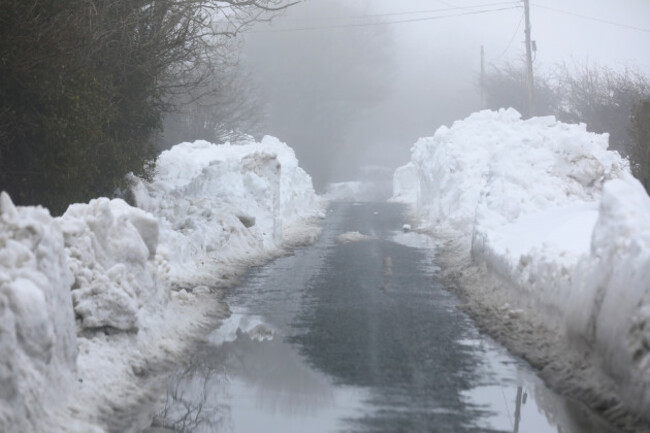
Planes took off and landed from Dublin Airport this morning, while almost 700,000 flights were cancelled in 2018. The snow during Emma, and the most-recent snowfall during Storm Darragh, caused major and long-term disruptions in Ireland.
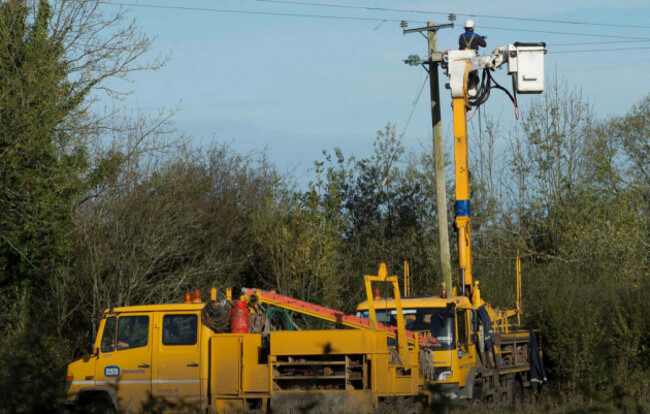
Éowyn could be compared to Ophelia, as long-lasting impacts were most seen in the south and west of the country and caused the most amount of damage to delicate structures and to power lines.

To embed this post, copy the code below on your site













have your say