Sign in. It’s quick, free and it’s up to you.
An account is an optional way to support the work we do. Find out more.
Sign in. It’s quick, free and it’s up to you.
An account is an optional way to support the work we do. Find out more.
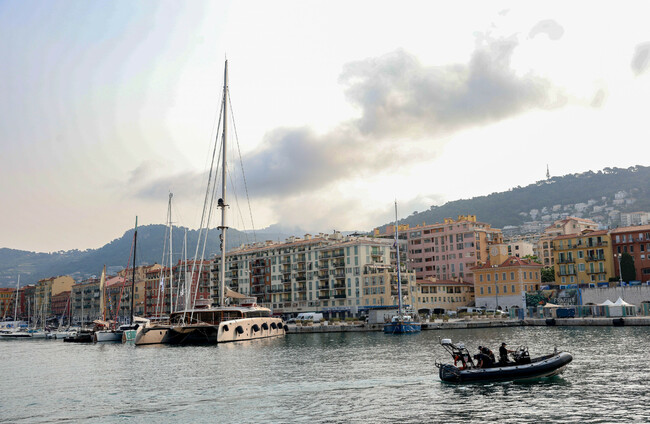
TAOISEACH MICHEÁL MARTIN is travelling to Nice to attend the UN Ocean Conference.
The high-level UNOC3 summit, which is taking place until Friday, is aimed at tackling a deepening crisis in the oceans driven by overfishing, climate change and pollution.
The United Nations says oceans face an “emergency” and leaders gathering in Nice will be under pressure to commit much-needed money and stronger protections for the ailing seas and the people that depend on them.
Some 50 heads of state and government are expected to attend, including Brazilian President Luiz Inacio Lula da Silva and his Argentine counterpart Javier Milei.
French President Emmanuel Macron is today expected to sail to Nice from Monaco, where he is attending a related event aimed at raising private capital for ocean conservation.
He will be joined on the Mediterranean Sea by other vessels in a colourful maritime parade, before touring an exhibition centre on land transformed into the cavernous belly of a whale. He will also host leaders for a dinner ahead of the summit’s formal opening tomorrow.
The Taoiseach will spend two days at the summit. This evening, he will attend the inauguration of the Ocean Conference ‘Green Zone’ alongside other world leaders.
Tomorrow, Martin will take part in an event to launch the EU Ocean Pact, hosted by European Commission President Ursula von der Leyen and Macron.
He will also deliver a national statement on behalf of Ireland at the main plenary session of UNOC3.
While in Nice, Martin will also take part in a number of bilateral meetings, including with the King of Jordan, Abdullah II bin Al-Hussein, Prime Minister of Barbados Mia Mottley, and former US Secretary of State John Kerry.
“I look forward to joining with fellow world leaders over the coming days to discuss and collaborate on ways to secure the future of our oceans and seas,” he said ahead of his departure.
As an island nation, Ireland is keenly aware of the importance of the marine environment and the other roles our waters play, including as a vital trade route.
“It will be a vital opportunity to discuss these matters with my counterparts, along with important global issues, including the Middle East and Ukraine”.
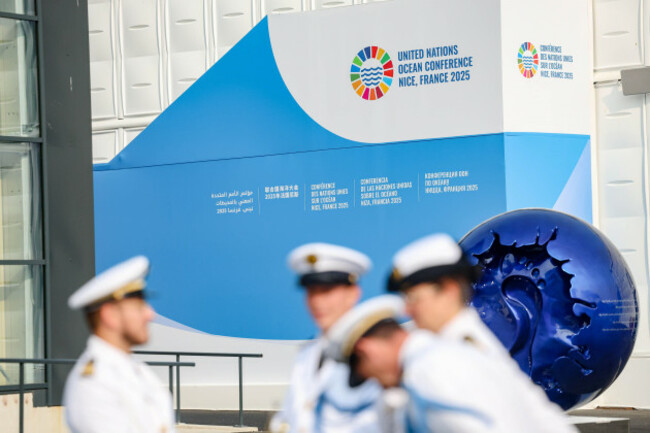
Peaceful demonstrations are expected over the five-day event and France has deployed 5,000 police to the heritage-listed city where scientists, business leaders and environmental activists are also attending in big numbers.
A strong turnout is also expected from Pacific Island nations, whose delegations will demand greater financial assistance to fight the rising seas, marine trash and plunder of fisheries that threatens their very survival.
The United States under President Donald Trump – whose recent push to fast-track seabed mining in international waters sparked global outrage – is not expected to send a delegation.
Conservationists have warned the summit – which will not produce a legally binding agreement – risks being a talk fest unless leaders come armed with concrete proposals for restoring marine health.
Chief among these is securing the missing finance to get anywhere near protecting 30 percent of the world’s oceans by 2030, a globally agreed target.
“We’ve created this sort of myth that governments don’t have money for ocean conservation,” Brian O’Donnell, director of Campaign for Nature, told reporters.
“There is money. There is not political will,” he said.
So far, only around eight percent of oceans are designated marine conservation zones and even less are considered truly protected.
Greenpeace says at this rate, it could take another 82 years to reach the 30% goal.
In a boost this week, Samoa declared 30% of its national waters under protection with the creation of nine new marine parks.
Conservationists hope others at Nice follow suit.
“All eyes should be on the many Pacific leaders attending… Their ambition and dedication to ocean protection can serve as inspiration to all countries,” said Kevin Chand from the nonprofit group Pristine Seas.
There has also been a concerted push for nations, including France, to ban bottom trawling – a destructive fishing method that indiscriminately scrapes the ocean floor.
On Saturday, Macron told the Ouest-France newspaper that bottom trawling would be restricted in some national marine protected areas.
Inching closer toward the numbers required to ratify a global treaty on harmful fishing subsidies, and another on high seas protection, will also be a summit priority.
France is spearheading a separate push in Nice to build support for a moratorium on deep-sea mining ahead of a closely-watched meeting of the International Seabed Authority in July.
Today, an expert scientific panel will hand Macron a list of recommendations for leaders at the summit, including pausing seabed exploration when so little is known about the deep oceans.
With reporting from © AFP 2025

To embed this post, copy the code below on your site















have your say