Sign in. It’s quick, free and it’s up to you.
An account is an optional way to support the work we do. Find out more.
Sign in. It’s quick, free and it’s up to you.
An account is an optional way to support the work we do. Find out more.

THE UNITED KINGDOM has gone to the dogs. No, it’s not Brexiteers nor immigrants who are to blame. It’s influencers who are the problem now, it seems.
Andy Burnham invited about 60 influencers to Downing Street earlier this month to figure out how to appeal to people who don’t care about politics or consume legacy media. Great Idea.
But a risky one.
One social media star, Max Balegde, posted a video in which he saluted and mouthed ’52 bomboclaat pussywagon chicken nuggets’.
If you didn’t know, this phrase comes from a meme in which a child builds a tower of chicken nuggets, which in turn spawned a rather terrible song.
Conservative leader Kemi Badenoch accused Burnham of degrading Downing Street.
Balegde took down the post and apologised.
Broadcasters found themselves explaining the etymology of some of the lyrics to viewers. The highlight was former cabinet minister Michael Gove defining the Jamaican patois term bomboclaat as “a Jamaican patois term that refers to a feminine hygiene product, but particularly in its post-use manifestation” on Sky News.
This would never have happened if people still trusted us harrumphed opinion writers in newspapers. It was all a bit silly – a bid to reach people beyond Westminster ended up giving Westminster something to argue with itself about.
Aside from the political handbags, Burnham’s premise was sound.
TV and radio are still important communication channels for politicians, but so too are YouTube, TikTok, Twitch and Instagram.
There was less of an uproar over here when Tánaiste and Finance Minister Simon Harris invited personal finance creators to a Department of Finance roundtable on the government’s proposed Personal Investment Account earlier this year.
Maybe we’re less worried about the influence of influencers. Or maybe our influencers are just less likely to spout questionable lyrics outside Government Buildings.
Either way, the Reuters Institute’s 2026 Digital News Report found that 27% of respondents internationally got news from creators who focus on news. In Ireland, the figure was 23%. People cite ease of understanding and a sense of connection among the reasons they turn to creators. Most use them alongside established media. Just 3% of respondents said they rely on creators alone for news.
But if you want to find out how influential creators are now, a good maxim is to follow the money. And the money is flowing into their coffers. A recent report from advertising consultancy Madison & Wall estimates that marketers worldwide will spend $116 billion on creator-related activity in 2026, up 15% from $101 billion in 2025. It’s projecting that number will reach $178 billion by 2030.
Of this year’s $116 billion, about $52 billion goes on paid distribution of content made by or with creators. i.e. paying social channels to ensure potential customers see the influencer made content. Paying influencers directly to reach their own followers accounts for about $33 billion.
Brands aren’t just spending more on sponsored posts. They are integrating creators into paid media, creative production, commerce and broader marketing operations. And it’s a zero-sum game. Creator spending is growing at a faster rate than the broader advertising market. But brands are funding the growth in spending on creators, by reducing budgets in other parts of the marketing mix.
Unilever, which owns brands like Vaseline, Lynx and Hellmann’s has been at the forefront of working with creators to promote its products.
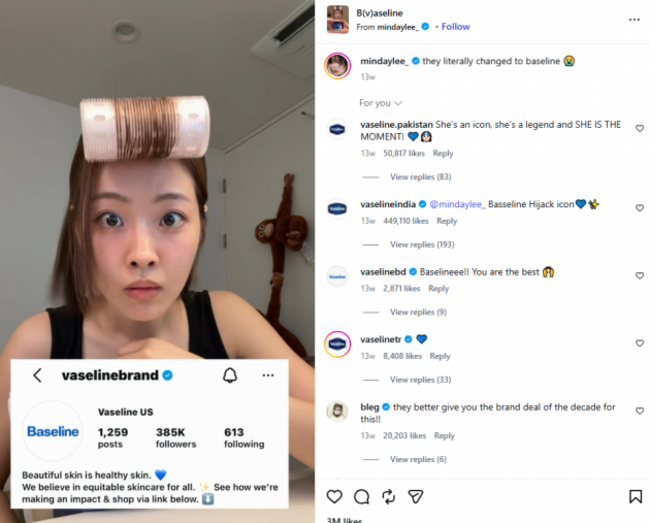
This month chief executive Fernando Fernandez said the company was working with 500,000 creators worldwide, up from about 20,000 two years ago. He gave the rise of locally relevant creator content as one reason to give country teams more responsibility for media, marketing and sales.
It seems that targeted messages from people who customers already like beats generic, internationally devised campaigns rolled out across multiple markets.
The Unilever CEO also gave a frightening stat on how long marketing content now stays fresh.
The lifespan of a video today is four days.
How does he know this? Because the digital channels they’re using to share this content from Meta, Google, TikTok, Amazon, Walmart and others, show “negative levels of return” after four days.
“So, this implies that you have to create an incredible amount of content that has to be optimised all the time,” Fernandez stated.
If this is the case, big budget advertising ain’t gonna cut it. You need fast, fresh stuff. Perfect for an army of creators with relatively low overheads.
So if businesses are buying into influencers, why isn’t the establishment?
Well, to the broadcasters and newspapers, these influencers are a threat. First Google, Facebook and the big online corporations hoovered up all their advertising revenue; now this horde of fresh-faced upstarts with their hot ones and chicken shop dates are moving in on what’s left.

The powerhouses of yesteryear are being torn apart by a handful of giant companies and a plethora of individual media personalities that are growing in importance. Political parties, with the exception of some individuals who have understood the immediacy social media offers, are still built to deal with important journalists and influential editors, not mouthy influencers.
Perhaps the term influencer is also a problem.
It’s rotten phrase for someone who informs and entertains a loyal audience. Wait, isn’t that what a journalist should do?
Maybe we need a better way to refer to people who understand the zeitgeist and who can take the public with them when they discuss a topic. But isn’t that what politicians should be doing?
Maybe both journalists and politicians are feeling undermined by a new type of cultural persona that’s stolen their thunder and is using relatively new platforms to talk directly to what used to be their audiences.
Steve Dempsey is a media and technology expert and commentator.
To embed this post, copy the code below on your site














have your say