Sign in. It’s quick, free and it’s up to you.
An account is an optional way to support the work we do. Find out more.
Sign in. It’s quick, free and it’s up to you.
An account is an optional way to support the work we do. Find out more.
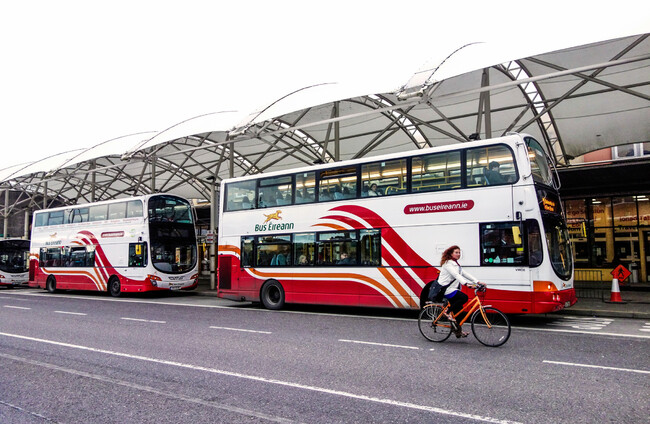
THE GOVERNMENT HAS officially approved BusConnects Cork, a multibillion-euro overhaul of the city’s bus and cycling network that promises faster, greener and more reliable public transport for residents.
The move clears the way for the National Transport Authority (NTA) to submit planning applications to An Coimisiún Pleanála next year for the construction of new bus corridors and active travel routes.
It’s anticipated that delivery of the programme will range from between €2.3 billion and €3.5 billion.
The programme, developed following extensive public consultation, will deliver 11 ‘Sustainable Transport Corridors’, spanning 90km of new bus lanes and 95km of segregated cycle tracks, along with new bus shelters and a zero-emission fleet.
The plans also include a cashless ticketing system for buses.
Transport Minister Darragh O’Brien said the project would be “transformative” for Cork, enabling an additional 13,000 people to reach the city centre by public transport within 30 minutes of leaving home.
“BusConnects Cork will make it faster and easier to get to school, work, or visit family and friends. And by reducing congestion, it will make our streets safer for all,” he said.
Minister of State and Cork native Jerry Buttimer described the scheme as “a game-changer” for how people move around the city.
“There will of course be challenges, as with any ambitious project, but the benefits for Cork and its residents will be considerable,” Buttimer said.
According to the NTA, the redesigned network will provide over 50% more bus services across the city, including two new 24-hour routes running east-west and north-south.
The project is part of the Cork Metropolitan Area Transport Strategy (CMATS) 2040, which aims to create an integrated, sustainable transport network to support Cork’s projected population growth.
Hugh Creegan, interim CEO of the NTA, described the project as “a significant step forward” for sustainable transport in Cork.
“The BusConnects programme will deliver a cleaner, faster and more efficient system, improving journey times, reducing congestion, and supporting the city’s growth,” Creegan added.
The NTA expects to submit the full planning documentation in 2026, with delivery of the programme to follow once procurement is complete.
Even at its upper cost estimate, the project’s benefit-to-cost ratio stands at 1.5 — meaning for every €1 spent, it is expected to return €1.50 in social and economic benefits.
Labour councillor Peter Horgan, chair of Cork City Council’s transport committee, welcomed the announcement but called for the immediate publication of the final plans.
“The people of Cork deserve to see the full details now that Cabinet has signed off,” he said.
Once complete, BusConnects Cork will represent the largest investment in public transport in the city’s history.

To embed this post, copy the code below on your site












have your say