Sign in. It’s quick, free and it’s up to you.
An account is an optional way to support the work we do. Find out more.
Sign in. It’s quick, free and it’s up to you.
An account is an optional way to support the work we do. Find out more.
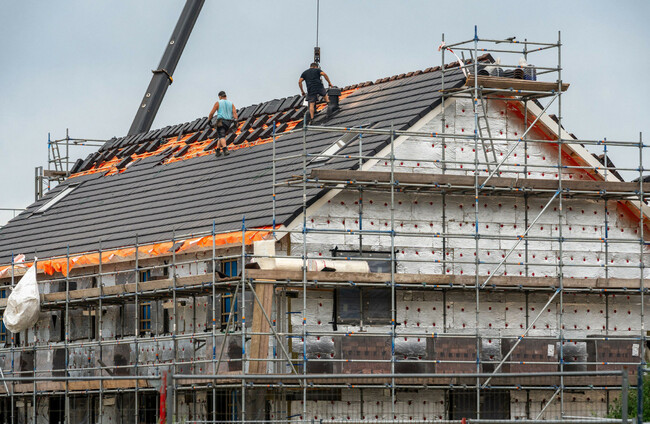
THE CENTRAL BANK has said that it now takes four years on average to build a home in Ireland – twice as long as it did a decade ago.
In its latest quarterly report, the Central Bank said that, for housing which has already been approved or commenced, the average time from the initial lodgement of a planning application to completion is four years.
The time it takes to build a house is increasing, despite the number of annual planning permissions remaining “broadly stable”, the bank said.
It also said there has been a “welcome rise” in residential construction activity with housing completions more than doubling between 2017 and 2025 and further increases in housing output expected out to 2028.
However, the bank warned that these future increases rest on “achieving progress across several dimensions”, including the length of time it takes for a new house to be built.
“These considerations weigh on the overall outlook for housing completions and emphasise the importance of timely implementation of reforms to speed up the delivery of key national infrastructure,” it said.
“These reforms, if actioned in an effective and timely manner and combined with measures to increase productivity, should facilitate the delivery of increased housing supply outlined in our central forecast.”
The quarterly report also found that higher energy prices caused by conflict in the Middle East have added significantly to headline inflation in 2026.
It also warned that domestic services inflation remains elevated and tensions in the Middle East mean there are further risks to inflation.
The bank advised that to avoid stoking inflation, the expenditure ceilings in the Summer Economic Statement should be followed in Budget 2027.
“This would help to limit fiscal exposure to potentially transitory corporation tax receipts, concentrated among a small number of multinational firms,” the report said.
It said maximising the delivery of new public infrastructure will boost the economy’s growth potential, while investment targeted at increasing the decarbonisation of the economy would help reduce exposure to imported fossil fuel prices and support a more stable cost of energy.
For households particularly exposed to the effects of higher energy prices, the bank said temporary and targeted measures can protect the most vulnerable.
The report also found the economy grew by 4.7% last year, based on real modified Gross National Income (GNI). The bank said the “rapid pace of growth” means that the overall size of the economy increased by 35% or €89 billion between 2019 and 2025.
The growth in the economy has delivered employment growth, higher incomes and increased government revenue.
Meanwhile, employment growth for 2026 is projected to remain below rates observed in recent years. It is forecast to grow by 1.2% this year, before rising to 2.1% in 2027.
The bank said: “Net inward migration will remain a key source of labour supply in the coming years.”

To embed this post, copy the code below on your site














have your say