Sign in. It’s quick, free and it’s up to you.
An account is an optional way to support the work we do. Find out more.
Sign in. It’s quick, free and it’s up to you.
An account is an optional way to support the work we do. Find out more.
LAST UPDATE | 16 Sep
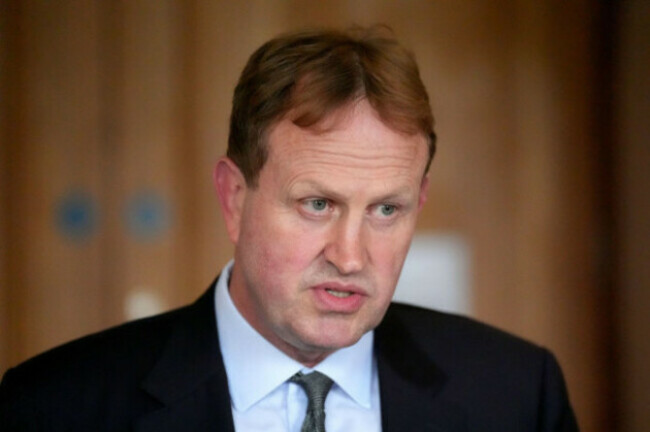
JUSTICE MINISTER JIM O’Callaghan has rejected calls for an independent mediator to resolve the criminal legal aid dispute.
In a letter addressed to law society president Rosemary Loftus, O’Callaghan ruled out bringing in an independent mediator for now.
“I do not believe that mediation would assist in resolving the issues at this stage”, O’Callaghan said.
With the matter before the High Court next month, O’Callaghan added that it would not be appropriate to enter mediation before the court delivers its judgment on 13 October.
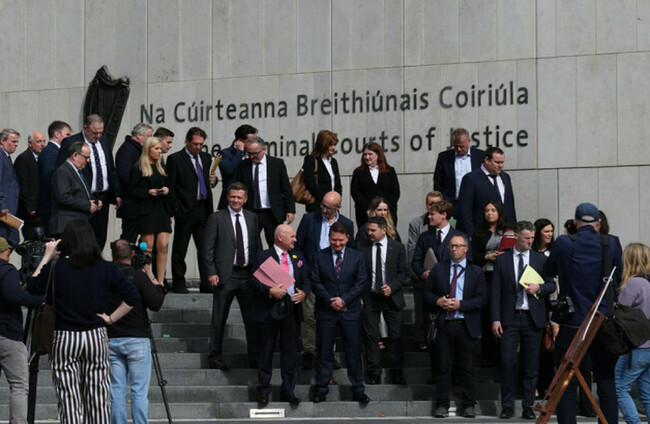
O’Callaghan’s new flat-fee payment scheme has caused disruption to court hearings and led to defence solicitors withdrawing their services.
In the letter, he assured that legal representation remains available since the new scheme began.
“Over 600 solicitors remain on the Criminal Legal Aid panel. Certificates have been assigned across 39 court areas and there has been a notable increase in participation in the panel”, he said.
In addition, O’Callaghan said early evidence suggested that the new scheme was achieving its objective of reducing the number of court appearances.
In response, the Law Society said that over 240 solicitors took part in an information meeting today and that O’Callaghan’s letter was among the issues discussed.
The Law Society said it was “deeply disappointed” by the letter and added that O’Callaghan “failed to offer any mechanism to resolve the dispute”.
It has renewed its call for the appointment of an independent mediator.
Loftus remarked that the concerns are “not confined to criminal defence solicitors” and noted that the Council of The Bar of Ireland “echoed our call for the matter to be resolved with the utmost urgency”.
Elsewhere, Shane McCarthy, chair of the Law Society’s Criminal Law Committee, said the Law Society “remains committed to finding a workable solution”.
“The Law Society does not accept the Minister’s view that it would be inappropriate to address these issues in advance of the judicial review judgment due next month,” he added.
“Every day that passes sees people denied meaningful access to justice.”
The Law Society said it welcomed a call made earlier today by the Bar of Ireland which “urged” O’Callaghan to “bring about a resolution” to the solicitors’ strike before the new legal year begins.
In a statement, the Bar of Ireland called on O’Callaghan to “engage further with the Law Society and with criminal defence practitioners on the genuine issues which have been raised by them”.
The new legal year commences on 5 October and the Bar said it is “extremely concerned that the dispute has not yet been resolved”.
A spokesperson for the Bar of Ireland remarked that the “prospect of continuing disruption on the advent of the new legal year is of the utmost gravity”.
It called on the government to “ensure that the criminal justice system is functioning in order to vindicate the rights of victims and accused persons and to protect the public”.
Meanwhile, the spokesperson for the Bar of Ireland warned that the flat rate introduced in July “risks reducing the willingness of practitioners to take on criminal legal aid work, particularly in more complex cases”.
This spokesperson explained that this risk exists because the flat rate “doesn’t appropriately reflect the fact that criminal proceedings vary so widely in length and difficulty”.
“This has already happened in the civil legal aid system, to the lasting detriment of those most in need of legal assistance,” warned the Bar.
The spokesperson added that the criminal legal aid scheme provides access to experienced and independent legal practitioners “in a manner that is both efficient and cost-effective”.
“Its continued viability is therefore essential to the proper functioning of the criminal justice system,” said the spokesperson.
The Bar of Ireland remarked that in expenditure terms, the scheme, as it operated before 1 July, was “broadly similar or slightly cheaper compared to Northern European peers”.
It added that criminal legal aid is a “fundamental part of ensuring access to justice and the right to a fair trial” and that without solicitors working in this area, “the right of an accused person to a fair trial cannot be vindicated”.
“Just as importantly, the State’s basic obligation to maintain a functioning criminal justice system for the protection of all citizens cannot be met.”
The dispute has resulted in large-scale adjournments of criminal business across all court jurisdictions, including the Circuit Criminal Court and the Central Criminal Court.
In Dublin alone, the Bar of Ireland said hundreds of people who stand convicted of serious criminal offences remain in the community awaiting sentence, due to their scheduled sentence hearings being adjourned throughout the month of July.
“Trials of serious criminal offences across the country have been adjourned,” said the Bar of Ireland.
It meanwhile warned that the “full effect of this disruption has yet to be felt as the backlog of cases remains to be dealt with”.

To embed this post, copy the code below on your site














have your say