Sign in. It’s quick, free and it’s up to you.
An account is an optional way to support the work we do. Find out more.
Sign in. It’s quick, free and it’s up to you.
An account is an optional way to support the work we do. Find out more.
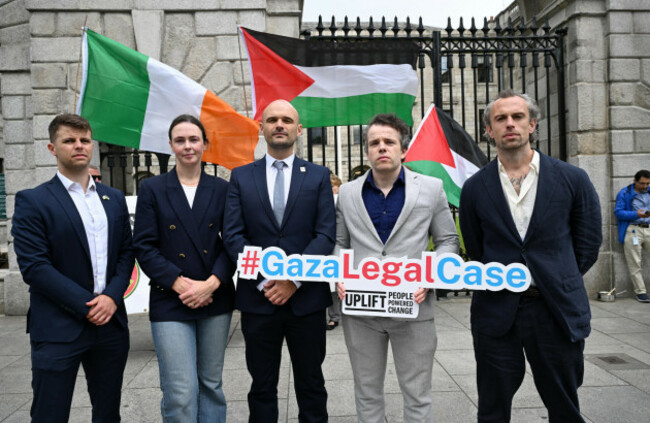
LAST WEEK THE Irish government was accused of being “complicit in Israel’s genocide” in a High Court case taken by The Ditch, Uplift and surgeon Ahmed El Mokhallalati.
The case argues that Ireland is violating international law by not inspecting flights reportedly carrying arms to Israel that have passed through Irish airspace during its war on the Gaza Strip in Palestine.
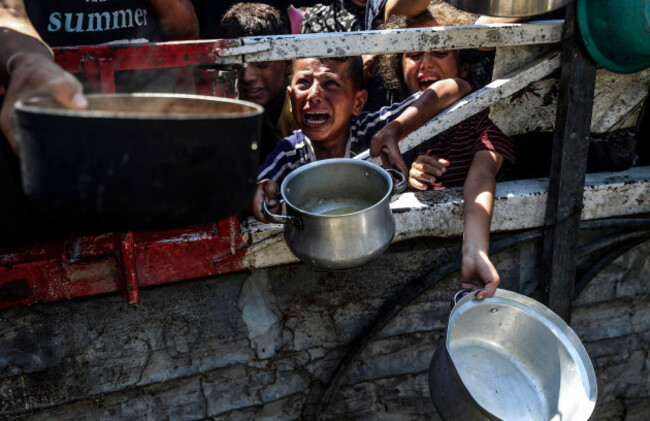
The case was the latest example of a state being accused of complicity in the gravest of crimes because of its alleged facilitation of Israel’s campaign, which has killed more than 60,000 people since October 2023.
The European Union’s former chief diplomat Josep Borrell issued a stark warning to the European Commission and member state leaders recently about the consequences of supporting Israel.
“Those who do not act to stop this genocide and these violations of international law, even though they have the power to do so, are complicit in them,” Borrell wrote in an article in The Guardian newspaper.
European foreign ministers failed to agree to any sanctions against Israel last month, even though it had been found to have breached the human rights clauses of an association agreement with the bloc.
There has been some movement from individual member states allied to Israel this week, though. In response to Israel’s plan to take over Gaza City, Germany, one of Israel’s largest weapons suppliers, suspended the sale of arms that could be used in Gaza until further notice.
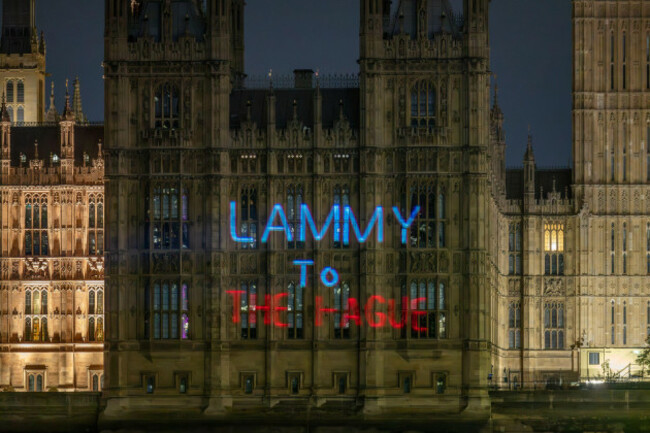
And last month the UK House of Commons was the scene of a striking exchange between Conservative MP Kit Malthouse and Foreign Secretary David Lammy.
Malthouse asked if Lammy could not see the potential “that he may end up at The Hague because of his inaction,” in relation to halting the supply of arms to Israel.
Lammy dismissed the question as “unbecoming”.
Against the backdrop of global outrage at Israel’s conduct in Gaza, its allies in Europe and North America have remained largely steadfast in their support for almost two years, both materially and diplomatically.
Complicity is a crime punishable under Article III (e) of the Convention on the Prevention and Punishment of the Crime of Genocide, most often referred to as the Genocide Convention.
So what risks do supportive states and government officials face if Israel is found guilty of genocide in the case taken against it by South Africa at the International Court of Justice (ICJ), and what form could the consequences take, if any?
According to international law experts who spoke to The Journal, powerful Western countries and their leaders could, at least in theory, find themselves facing charges in The Hague.
“If Israel is found to have violated the Genocide Convention by a competent court, it is possible that third states might themselves face liability or be deemed responsible under international law for related violations,” said Michael Becker, assistant professor of international humanitarian law at Trinity College Dublin.
But for John Reynolds, associate professor of law at Maynooth University, the inherent flaws and historical power imbalances in the international legal system mean states and their leaders are unlikely to face real consequences.
“Hopefully it’s not going to deteriorate further. But if it does, I suppose we’re into new territory, and if circumstances evolve in a certain way, for sure it’s legally possible,” Reynolds said.
But whether it is politically possible is another matter.
The conclusion that Israel is committing genocide against the Palestinian people in Gaza has been reached by some of the world’s most eminent scholars who study the crime of crimes.
An essay published in the New York Times on 15 July by Israeli genocide and Holocaust scholar Omer Bartov was a recent, high-profile example.
“I’m a genocide scholar. I know it when I see it,” the headline read.
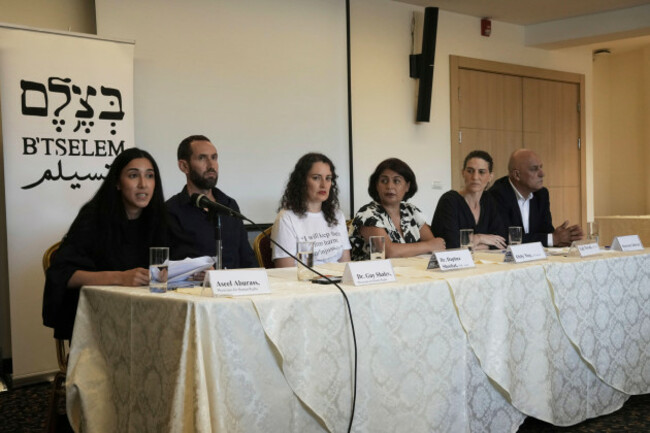
Since then, Israeli human rights NGO B’Tselem has come to the same conclusion.
Amnesty International and Human Rights Watch had already reached the same verdict within months of Israel’s retaliation for the Hamas-led attack against it, in which almost 1,200 people were killed and roughly 250 were taken hostage.
On top of the South African case at the ICJ, in which Ireland has formally intervened, the International Criminal Court (ICC) has issued warrants for the arrest of Prime Minister Benjamin Netanyahu and his former defence minister Yoav Gallant.
It also issued warrants for Hamas leaders for their alleged crimes during the attack against Israel, all three of whom are now dead.
In a less publicised ICJ case, Nicaragua has accused Germany of complicity in genocide through its material support for Israel.
Israeli leaders and their supporters have rejected all of these accusations and described them as antisemitic, and even “Holocaust inversion”.
As Becker outlined, if the ICJ determines that Israel has committed violations of the Genocide Convention, a possible outcome of South Africa’s case, “it would then be possible to find that another state that has provided arms to Israel (if such arms were used to commit or facilitate genocidal acts) has violated international law”.
“As a legal matter, there is some debate about whether complicity requires weapons to have been provided with both the knowledge that they will be used to commit genocide and the intent that they be used for that purpose,” Becker said.
“The better view, however, is that full knowledge that the weapons will be used to perpetrate genocide is sufficient.”
A different legal argument, he said, could focus on the obligation of states to prevent genocide, which is the duty of all signatories to the Convention.
“The question will be at what point did the state know, or at what point should the state have known, that weapons or bombs would likely be used in ways that violate international humanitarian law,” Becker said.
He also noted that this is not to say that suspending arms supplies prior to a finding of genocide, or other violations of international law, would absolve a state of complicity.
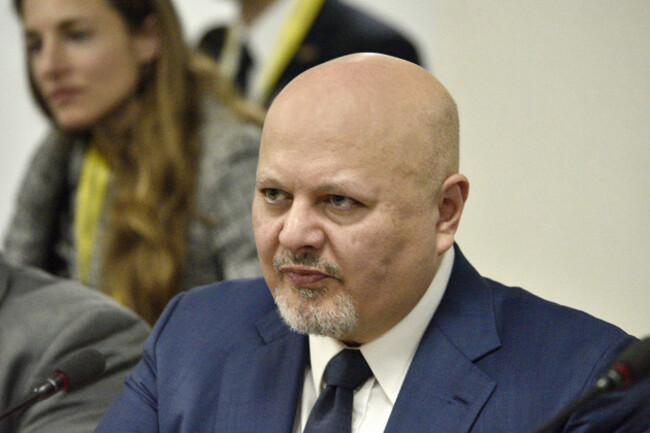
The ICJ deals with disputes between states, while the ICC is responsible for prosecuting individuals.
So, when Malthouse referred to the “personal” risk to Foreign Secretary Lammy, he was referring to the potential for prosecution in the ICC.
Reynolds said that it is “theoretically” possible that UK Prime Minister Keir Starmer and David Lammy could be prosecuted in the ICC.
“It’s also possible for Joe Biden or Donald Trump or others in other countries as well. But it’s practically very unlikely, because the way these ICC prosecutions go is by trying to target the most senior people involved at the most direct level of the commissions of the crimes.
“So in the case of Gaza, that would be the most senior people in the Israeli government and Israeli military.”
International law may sit atop the global legal order in theory but political realities have historically imposed informal limits on its efficacy.
See the long list of African generals and warlords indicted by the ICC, and the absence of – for example – US and UK leaders who presided over a war of aggression in Iraq.
The ICC will have to calculate the risks and rewards associated with taking on some of the most powerful world leaders, Reynolds explained.
He said it would have to weigh the likelihood of success against the length and cost of such proceedings, as well as the potential impact of any rulings that might be handed down.
Because there is no police force available to courts like the ICJ and ICC, they rely on states to implement their decisions, and their rulings are more likely to be cited in cases brought against governments and state officials in domestic courts, which do have enforcement powers.
Still, Reynolds did note that few international legal scholars, lawyers and other experts would have predicted that an Israeli prime minister would be the subject of an ICC arrest warrant.
At the same time though, the court has already faced consequences for its decision.
The US – which does not recognise the ICC – has sanctioned its lead prosecutor and a number of judges on the court, while some states in Europe (Hungary and Germany) have simply ignored the court’s authority despite being signatories to it.
The issue of state complicity, Becker said, “is distinct from questions relating to the potential criminal prosecution of state officials in those states that have provided support to Israel”.
“In principle, the ICC could seek to do so if certain additional conditions were met. In reality, however, it is extremely unlikely that the ICC would choose to allocate its resources to such a prosecution.
“In democratic states, the better remedy may be the ballot box.”

To embed this post, copy the code below on your site














have your say