Sign in. It’s quick, free and it’s up to you.
An account is an optional way to support the work we do. Find out more.
Sign in. It’s quick, free and it’s up to you.
An account is an optional way to support the work we do. Find out more.
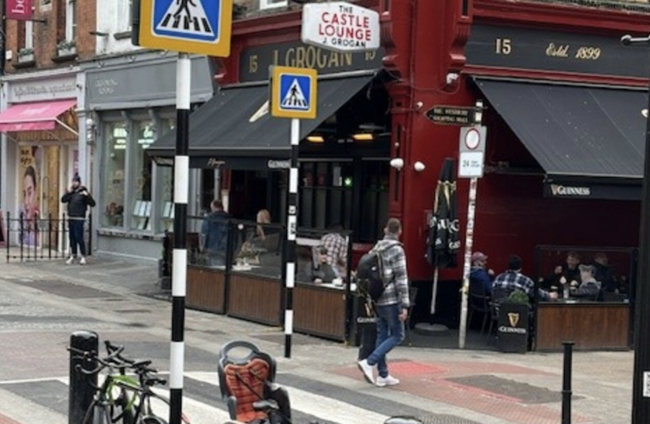
BUILDING WORK BEGAN last week in Dublin city on 10 new zebra crossings, as part of a major shake-up of roads in the capital city.
Work on the 10 crossings are set to be completed by September, while an additional 10 crossings will be built by the end of the year.
The new crossings will be different to those traditionally seen on Irish roads, as they will not have flashing amber lights and will be more in line with those seen in other European cities like Paris and Lisbon.
Dublin City Council said the design change is due to the need to reduce costs associated with traditional flashing amber beacon crossings.
Rather than flashing beacons, the new crossings will be accompanied by signage on either side.
The proposal was first announced by the Council last year, with trials of the crossing carried out by the Department of Transport the previous year in conjunction with the National Transport Authority.
Following the success of the trials, updated legislation was brought in by Green Party leader and then Transport Minister Eamon Ryan, which changed who has priority on zebra crossings.
Under the updated law, all vehicles must stop and yield to any pedestrian who is waiting to cross the road at the zebra crossing. Previously, vehicles needed only to stop when a pedestrian was already on the crossing.
The 10 new sites for the crossing in the city are:
South City
Cambridge Road
Clougher Road
Gloucester Street
James’s Walk
Luby Road
North City
Ashington Park
Buckingham Street Upper
Crawford Avenue
Seafield Road West
Saint Peter’s Road
The locations were chosen following assessments of traffic volumes and speed of road users.
Speaking to The Journal, Green Party Dublin City Councillor Feljin Jose welcomed the construction of the zebra crossings.
Jose explained that before the law change in 2024, it was prohibitively expensive to install zebra crossings because of the requirement to have flashing amber beacons attached, but that the new style is widely used across Europe.
“Most other countries have them, and it’s a really kind of cheap and easy way to give pedestrians priority and make crossings safe,” he said.
“Especially outside schools and in busy urban areas, without spending hundreds of thousands of euros.”
Jose added:
“I remember I had a meeting with the fifth-class children, in the school on Crawford Avenue, twice in the last year who had done a project on zebra crossings… they wrote to all the councillors asking for zebra crossings outside their school because they want to be able to walk and cycle to school.
“So I’m really glad to see that is one of the first ones being done,” he said.
Of the 25 locations mooted earlier this year by the Council for zebra crossings in the city, five have been dropped following safety assessments.

To embed this post, copy the code below on your site











have your say